
In March, a series of challenges emerged, stemming from heightened tensions in the Middle East and impacting Sri Lanka’s economic outlook, raising alarms about potential difficulties in the near future.
The escalating conflict involving the US-Israel alliance and Iran, along with the broader instability in the Gulf region, has had significant repercussions for Sri Lanka.
Domestically, tensions escalated following the attack on an Iranian tanker in the Indian Ocean by the United States, which prompted Sri Lanka to fulfill its international maritime obligations by participating in rescue and repatriation efforts.
Additionally, domestic issues have exacerbated existing problems, particularly a worsening shortage of domestic gas, which some attribute to local supply challenges, including alleged ‘mafia’ activities.
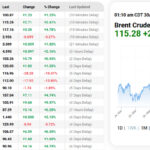
The price of Brent crude oil soared, surpassing $100 per barrel in the second week of March, marking the highest level since November 2022.
This surge had immediate local repercussions, leading to two increases in fuel prices since then, which has placed additional strain on both households and businesses.
The tourism sector is also anticipated to suffer; estimates suggest that a week-long closure of airspace in the Middle East could result in nearly $15 million in lost foreign exchange earnings for Sri Lanka. Moreover, remittances from overseas workers are at risk.
While there are concerns about the global economic stability in light of the conflict, President Anura Kumara Dissanayake has expressed confidence that Sri Lanka is capable of weathering the potential impacts of the Middle East crisis through at least the end of April.
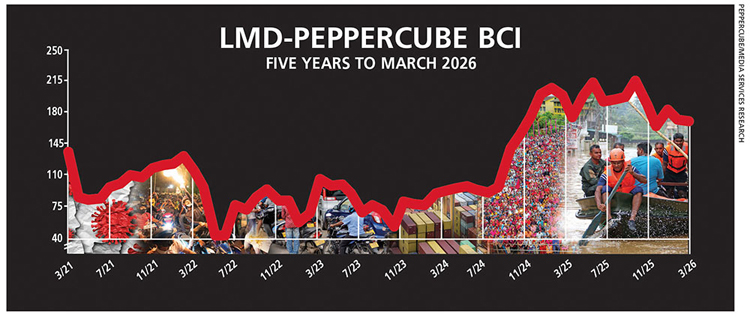
Amid these challenges, the latest LMD-PEPPERCUBE Business Confidence Index (BCI) has seen a decrease, dropping three points from 171 in February to 168 in March.
Despite this decline, the index remains significantly above its historical median of 125, although it is 19 points lower than the 12-month average of 187. For context, the index was at 197 in March of the previous year.
PepperCube Consultants noted that the March BCI is indicative of the initial systemic shock caused by the onset of the conflict.
In the meantime, Central Bank of Sri Lanka Governor Dr. Nandalal Weerasinghe remarked that the country is now better positioned than during the past economic crisis to handle shocks related to oil price fluctuations.
Looking ahead, the future trajectory of the BCI will largely depend on the evolution of global geopolitical tensions and how effectively Sri Lanka navigates the domestic repercussions.
If energy prices stabilize and supply chain disruptions diminish, the index may recover in the coming months. However, ongoing uncertainties in global markets could continue to dampen corporate confidence.
For now, businesses are expected to exercise caution, closely observing external developments while devising strategies to manage an unpredictable economic landscape.