
Japan has committed to maintaining a standard level of fuel supply to Australia amidst ongoing blockages in the Strait of Hormuz. The Australian government is actively engaging with regional fuel exporters to ensure a steady flow of fuel.
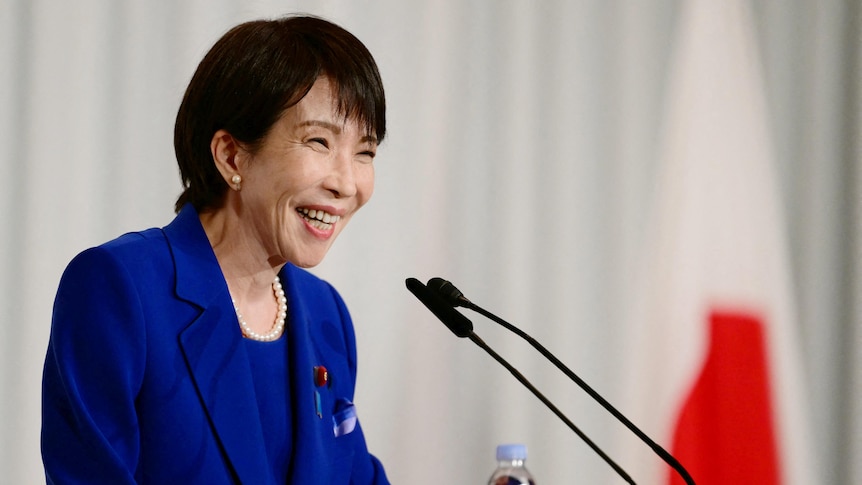
Reports from Japanese media indicate that Prime Minister Sanae Takaichi of Japan is set to visit Australia to discuss the situation in the Strait of Hormuz, along with matters regarding rare-earth minerals. This visit is anticipated as leaders in the region seek to strengthen fuel security and supply chains.
While Prime Minister Anthony Albanese has not officially confirmed Takaichi’s visit, a spokesperson mentioned that announcements regarding visits from foreign leaders will be made at the appropriate time.
Assistant Trade and Foreign Affairs Minister Matt Thistlethwaite confirmed that he had recently spoken with his Japanese counterpart concerning fuel supplies. He stated, “I met with the Japanese minister last week and requested that our supply continue. They assured us that normal supply levels will be upheld.” Thistlethwaite also noted that similar assurances have been received from South Korea and Singapore.
Australia and Singapore already have a mutual agreement in place to sustain fuel trade. The Prime Minister emphasized that Australia aims to remain a trusted exporter of liquefied natural gas (LNG) to Asia, relying on its regional partners to fulfill the majority of its liquid fuel requirements. “Supply is contingent on maintaining these relationships,” he remarked during a speech at the National Press Club. He added, “It is essential that our agreements with supplier nations are honored; this is fundamental for our future cooperation.”
Roughly 20% of the global oil supply has historically passed through the Strait of Hormuz, which is currently under blockade. Asian markets are indicating a potential need to seek crude oil from alternative sources, including Russia, should the strait remain inaccessible.
The assurance from Japan came after remarks from its ambassador to Australia, Kazuhiro Suzuki, who recently cautioned against imposing a windfall tax on LNG exports, citing concerns over investor confidence. At a Mineral Council event, Suzuki indicated that Japan’s domestic fuel reserves would take precedence for his country.
There are ongoing discussions within the Prime Minister’s office regarding a new tax on gas and thermal coal exports ahead of the federal budget slated for May.
According to the NRMA, Australia imports only 0.7% of its petrol and 6.8% of its diesel from Japan, with the majority sourced from Singapore and South Korea. Currently, Australia has fuel reserves sufficient for 39 days of petrol, 29 days of diesel, and 30 days of jet fuel. Over 50 fuel shipments are en route to Australian import terminals and are expected to arrive within the next month.
Thistlethwaite noted that efforts to diversify Australia’s fuel sources include shipments arriving from the United States. “We are making every effort to ensure a diversified supply and maximize our imports,” he stated.
Dave Sharma, the shadow assistant minister for international development, expressed that Australia should have taken greater measures to secure its domestic fuel supplies in the past. “Our dependence on international supply chains for liquid fuels has significantly decreased,” he remarked. He defended the previous coalition government’s choice to store emergency fuel supplies in the United States, emphasizing that uninterrupted maritime traffic between the west coast of the U.S. and Australia remains viable. “If we had to choose between having no reserves or some in the U.S., I would opt for the latter,” he concluded.