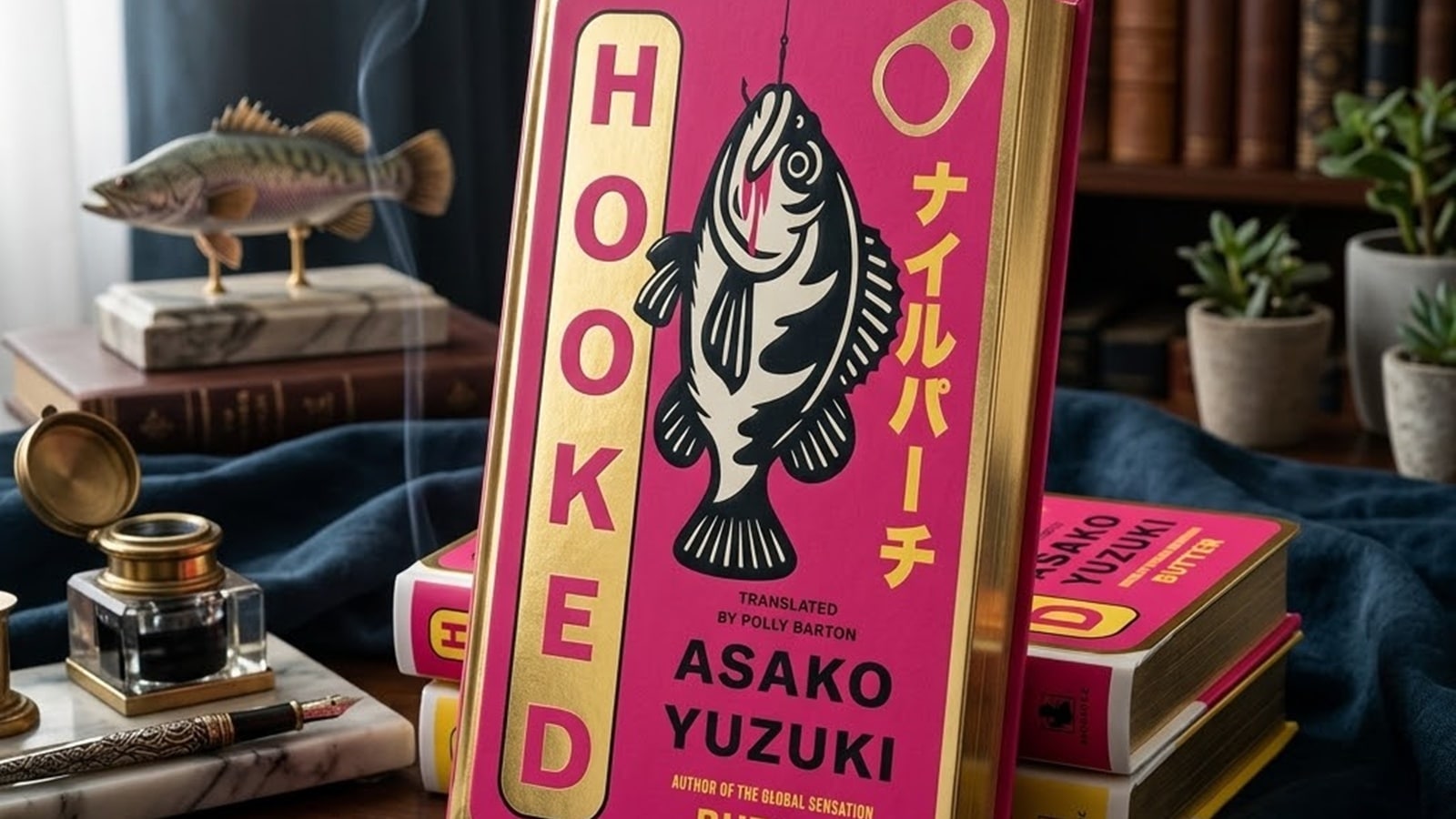

Asako Yuzuki gained widespread recognition in 2024 with her novel “Butter,” which intricately weaves a narrative about the tumultuous dynamics between a gourmet chef and a serial killer. Beneath its suspenseful exterior, “Butter” serves as a poignant exploration of human connections, artfully infused with culinary references. One critic aptly characterized it as a blend of “Martha Stewart and The Silence of the Lambs.”
“Hooked” marks Yuzuki’s second work to be published in English, although it predates “Butter,” having been penned in 2015 with “Butter” following in 2017. This new novel retains many of the thematic elements found in its predecessor. While it lacks any criminal undertones, it presents a compelling mix of relationships and emotional nuances, interspersed with references to food.
The story revolves around two women striving to forge a friendship, yet their journey quickly becomes complicated.
Unlike “Butter,” “Hooked” does not delve into the crime genre; instead, it focuses on the evolution of relationships that begin with promise but spiral into toxicity, whether gradually or abruptly. The protagonists are Eriko, a high-powered executive at a seafood firm, and Shoko, a housewife. Both women are in their early thirties but exhibit starkly contrasting personalities—Eriko is driven and meticulous, while Shoko embodies a more relaxed and slightly lazy demeanor.
Shoko runs an anonymous blog titled “The Diary of Hallie B, the World’s Worst Wife,” where she candidly shares details of her daily life. Although her writing is informal and self-deprecating, it captures Eriko’s admiration, prompting her to seek out the blog’s creator, envious of Shoko’s seemingly easygoing lifestyle. Following clues from the blog, Eriko tracks Shoko to a café, and their initial meeting feels like a connection between soulmates. Eriko is enchanted by Shoko’s carefree nature, and Shoko is impressed by Eriko’s polished appearance and professional commitment.
However, this budding friendship begins to unravel after several encounters. Shoko starts to perceive Eriko’s intense interest in her and her blog as bordering on obsession. Attempting to distance herself, Shoko is met with Eriko’s persistent efforts to become her closest companion, offering unsolicited advice on her life and blogging. Eriko insists that her intentions stem from a desire for companionship and a longing for attention.
Shoko delicately suggests that Eriko’s actions resemble those of a stalker, leading to an outraged response from Eriko, who feels her friendly intentions are being misinterpreted. As their once-strong bond deteriorates, Shoko reflects on the situation, questioning Eriko’s motives, while Eriko believes her admiration for Shoko is genuine and supportive.
The impact of their relationship extends beyond the two women, affecting their respective circles. Colleagues and family members notice changes in Eriko, while Shoko’s husband becomes apprehensive about her increased focus on her blog, which she previously regarded as a mere pastime.
The narrative alternates between Shoko’s and Eriko’s viewpoints, allowing readers to empathize with both characters—Shoko, who seeks simplicity and fulfillment through her writing, and Eriko, who yearns for a meaningful friendship. Readers can almost sense Eriko’s anxiety as she obsessively rehashes every interaction with Shoko during a train ride, fearing loss, while Shoko transitions from excitement about the new friendship to genuine discomfort regarding Eriko’s intensity.
Both women grapple with loneliness, despite Shoko being married. Shoko has no friends at all, while Eriko finds herself isolated from those she attempts to connect with. “Hooked” takes readers on an exploration of their minds as they navigate cycles of joy, despair, confidence, and insecurity. In various moments, each woman believes she has a grasp on her identity, only to realize the complexity of their situations. They judge not only each other but also themselves, all while searching for happiness amidst the turmoil. As one character questions:
“She just wanted a relaxed relationship with another person, free from any sexual intentions and calculations of gain and loss. Someone to accompany her to the cinema; someone to share tea with and discuss personal dilemmas; someone to invite to her wedding, who would also invite her to theirs. Someone to talk to for hours on the phone. Was that such a tall order?”
“Hooked” lacks a central conflict; there are no criminals to apprehend or mysteries to unravel. Instead, it offers a deep dive into the psyche of its two main characters, illustrating their personal transformations as they seek companionship and understanding in their unique ways. While a few unexpected twists arise, the book primarily serves as a character study rather than a suspenseful thriller. Yuzuki’s narrative style is fluid, effectively tackling intricate themes without veering into preachiness. Although the pacing begins slowly, it accelerates, captivating readers throughout its 376 pages.
Some narrative digressions may seem extraneous—most notably Eriko’s interactions with a colleague exhibiting unsettling tendencies—but overall, “Hooked” stands as a gripping read. The engagement stems not from suspense about future events but from a deep-seated concern for Eriko and Shoko, as they navigate the complexities of their lives and gradually come to terms with the possibility of having misjudged their circumstances.