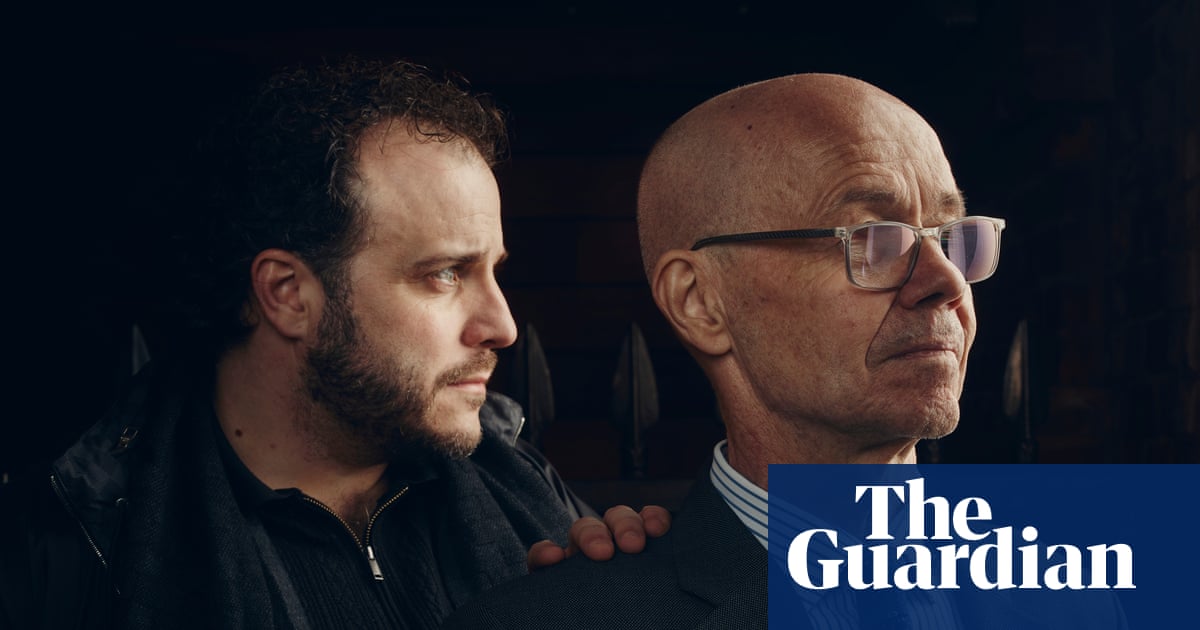

Along the UAE-Oman border stretches a four-meter-high barbed-wire fence. In the early hours of February 17, 2021, Albert Douglas, a 58-year-old British entrepreneur, was stealthily navigating this barrier in search of an escape route. Douglas, who has a slender build, wears glasses, and possesses a warm, earnest smile, found himself in a situation he never anticipated. He had to leave his residence on Dubai’s luxurious Palm Jumeirah and go underground. Once accustomed to cruising in a Rolls-Royce, he was now in a pickup truck, accompanied by human traffickers who had driven him to the Al Ain border at night. It was astonishing how quickly his former life had vanished; his only priority was to cross that fence.
A few weeks prior, Douglas had been at home, participating in his Supreme Court appeal via video link. He was under pressure from Dubai authorities over financial obligations linked to his son Wolfgang Douglas’s company. While Wolfgang was in the UK, Albert faced arrest and was confronted with a potential £2.5 million fine and a three-year prison sentence. This appeal was his last chance at redemption. Despite his belief in justice, as he observed the proceedings unfold, his confidence in the legal system began to wane. He opted to stay in a friend’s apartment while contemplating his next steps but soon realized he had limited options. “That’s when I decided to leave,” he recounted. “I didn’t wait until the last minute, but rather until the last second.”
With an escape plan in motion, Albert began his journey to the border, changing vehicles along the way. They settled in a nearby village to wait for nightfall. As he neared the fence and searched for a pre-cut hole, everything seemed to be progressing without issues. Suddenly, the stillness of the desert was shattered by shouts and gunfire. Laser sights from UAE soldiers converged on Albert’s body. Meanwhile, Wolfgang, monitoring the situation from his home in Kensington, London, was on the line with one of the smugglers on the opposite side of the fence. Gunfire echoed through the phone before it abruptly cut off. In the desert, soldiers surrounded Albert, and he pleaded for his life as a hood was placed over his head.
Albert is unsure of his exact location after that, but his family suspects it was a military facility. He found himself in a dark, filthy cell, where he was stripped, physically assaulted, deprived of sleep, and interrogated for several days. Repeatedly, he was asked about the smugglers. “I wasn’t withholding information,” he asserted. “I simply didn’t know anything.” Consequently, he was subjected to beatings and torture. Later, he was transferred to Al Ain Central Prison in Abu Dhabi. During his detention there, three guards entered his cell, and when they left, he was unconscious with severe injuries, including a broken shoulder. Albert, who still wakes up in terror from the ordeal, described the experience as surreal. “You assume it will stop,” he commented. “It doesn’t stop, but you keep thinking it will, and eventually, you believe you’re going to die.”
Meanwhile, Wolfgang was in turmoil. Unable to reach Albert directly, he activated his contacts in the UAE to search for him. Initially, he suspected the gunfire had come from the smugglers rather than soldiers. Aware of the dangers along the border, including reports of bodies being discarded, he organized a search for his father. They reached out to hospitals and the police, but to no avail. Days turned into a week as Wolfgang desperately sought answers while Albert remained in solitary confinement. Approximately ten days later, Wolfgang received a call from an unfamiliar UAE number. “Son,” Albert’s voice came through the line, amidst a cacophony of shouts and screams, “I am not OK.”
Dubai has long been viewed as a sanctuary, either for arrival or departure. The contrasting images of the city—its polished social media portrayal versus its complex realities—have become increasingly evident, particularly in recent weeks. The pristine facade has been disrupted by Iranian missile threats, prompting expats, tourists, and the often-criticized “influencer class” to scramble for flights out of the country. The ongoing conflict has shaken the perception of the UAE as a bastion of stability in the Middle East, diminishing its allure for foreigners. It has also revealed the extent of control exerted by its leaders over public image. Influencers, who have needed government licenses since 2025, along with the general populace, were cautioned about potential fines or imprisonment for sharing footage from “unverified sources.” Reports indicate that twenty-one individuals, including a 60-year-old British tourist, face charges for disseminating content related to the attacks.
Prior to the US-Israel conflict with Iran, it was estimated that around 250,000 British expatriates resided in the UAE, a significant increase over the years. Most of them live in Abu Dhabi or Dubai, with Dubai being the most heavily marketed of the seven emirates. For many, the UAE serves as a desirable alternative to high taxes, deteriorating public services, and harsh weather conditions back home. However, this is set against a backdrop of the criminalization of homosexuality, the absence of political parties, the prosecution of married victims of sexual assault for extramarital relations, and the city’s extensive surveillance system, which makes it one of the most monitored places globally.
Successive UK governments have advocated for stronger economic ties with the UAE, which stands as Britain’s primary trading partner in the Middle East. In 2021, the UK initiated a collaborative partnership aimed at enhancing relations across various sectors; however, the recent turmoil presents challenges to this objective.