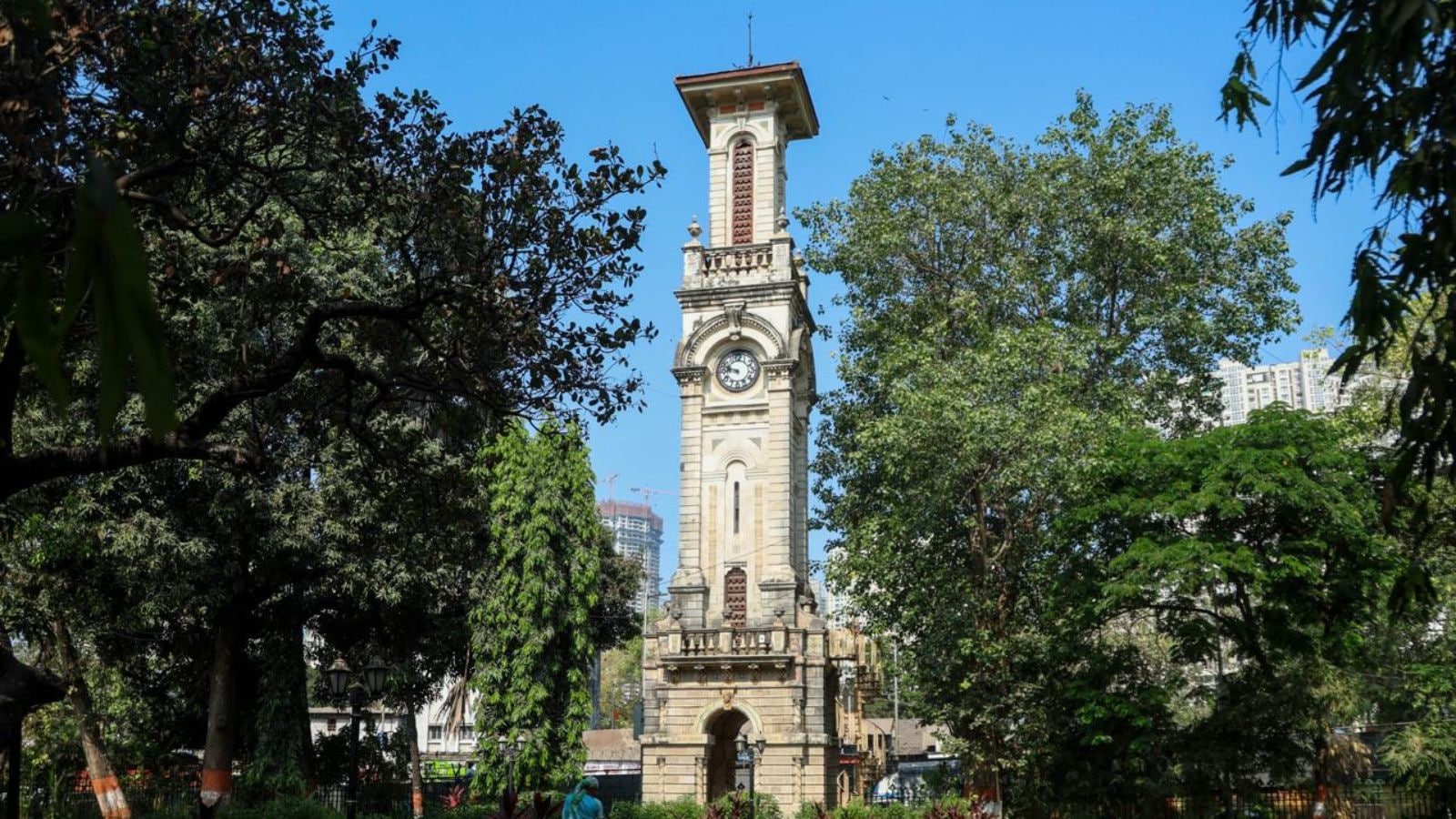

After being disassembled and relocated nearly a century ago to accommodate road expansion, Mumbai’s oldest clock tower, the David Sassoon Clock Tower, is poised for significant restoration. The Brihanmumbai Municipal Corporation (BMC) has approved a budget of ₹2.5 crore for the rejuvenation of the 67-foot structure located in Byculla’s Ranibaug, along with a two-year maintenance plan.
This clock tower, named in honor of philanthropist David Sassoon, was the first of its kind to be built in Mumbai (formerly known as Bombay) in 1866, predating the renowned Rajabai Clock Tower by twelve years. Despite its historical importance, which underscores the contributions of Baghdadi Jews to the city, the clock tower has been in a state of neglect for several decades. To restore its former glory, the BMC is undertaking a comprehensive renovation of the structure and will hire a contractor for ongoing maintenance over the next two years.
David Sassoon announced plans for the clock tower when the Victoria Garden, also referred to as Ranibaug, opened in 1862. He intended to construct the tower at Parel Road, now known as Dr. Babasaheb Ambedkar Road. Historian Nitin Salunkhe states that while the construction began in 1864, financial difficulties caused delays in obtaining materials from England, leading to the tower’s completion in early 1866, shortly after Sassoon’s death. The total expenditure for the tower was ₹51,653, with Sassoon contributing ₹30,000.
The clock and the tower were built by John Moore and Sons, a London-based company known for creating notable clock towers, including the Dufftown Clock Tower in Scotland and the one at Newby Hall in North Yorkshire.
In 1896, the outbreak of the Bubonic plague resulted in the establishment of the Bombay Improvement Trust (BIT), which aimed to enhance sanitation and reduce congestion in the city. At that time, Parel Road was only 25 feet wide, and plans were proposed to widen it to 120 feet, which would have necessitated the demolition of the clock tower. However, the municipality and the Trust found this unacceptable. Instead, the Trust recommended carefully dismantling the tower and relocating it within the garden area.
The dismantling process commenced in 1925, but was delayed until December due to a hold-up in acquiring replacement tiles. The incomplete clock tower was finally completed in December 1926 upon receipt of the tiles and was officially handed over to the municipality on January 10, 1927. The BIT records from the Asiatic Society indicate that each stone block was numbered and removed systematically using lime as an adhesive, allowing for its reassembly at the new location, where its foundations remain intact today.
The BMC plans to clean and refurbish the entire Italianate-style structure, update the clock dials, and enhance the illumination of the facade. The clock features four dials, oriented in each cardinal direction, and operates from a single gearbox. The tower is constructed with limestone and black basalt rock, adorned with terracotta designs and keystones on its columns. A wooden staircase inside provides access to the top of the tower.
Conservation architect Pankaj Kathole has been engaged to oversee the restoration project. He explained that the design of the tower includes ventilator channels at the top to promote airflow and prevent heat build-up. This design is crucial for ensuring adequate air circulation to avoid moisture accumulation that could damage the clock mechanism. The existing clock dials will be replaced with new acrylic versions, and the wooden rim will also be updated, along with waterproofing measures to be undertaken inside the structure. Kathole will additionally oversee the clock’s maintenance for two years following the restoration.
A previous restoration attempt in 2019 fell short due to inadequate planning and budget constraints. This time, however, the project has been meticulously planned to ensure a comprehensive facelift to preserve the tower’s historical significance. The restoration is part of a broader initiative to restore various heritage structures within Ranibaug, with an expected completion timeline of 18 months and a budget allocation of ₹2.5 crore from the BMC.
Pratip Acharya, a veteran journalist based in Mumbai, contributes to The Indian Express, bringing over a decade of experience in reporting on urban issues, civic affairs, and electoral politics throughout Eastern and Western India.