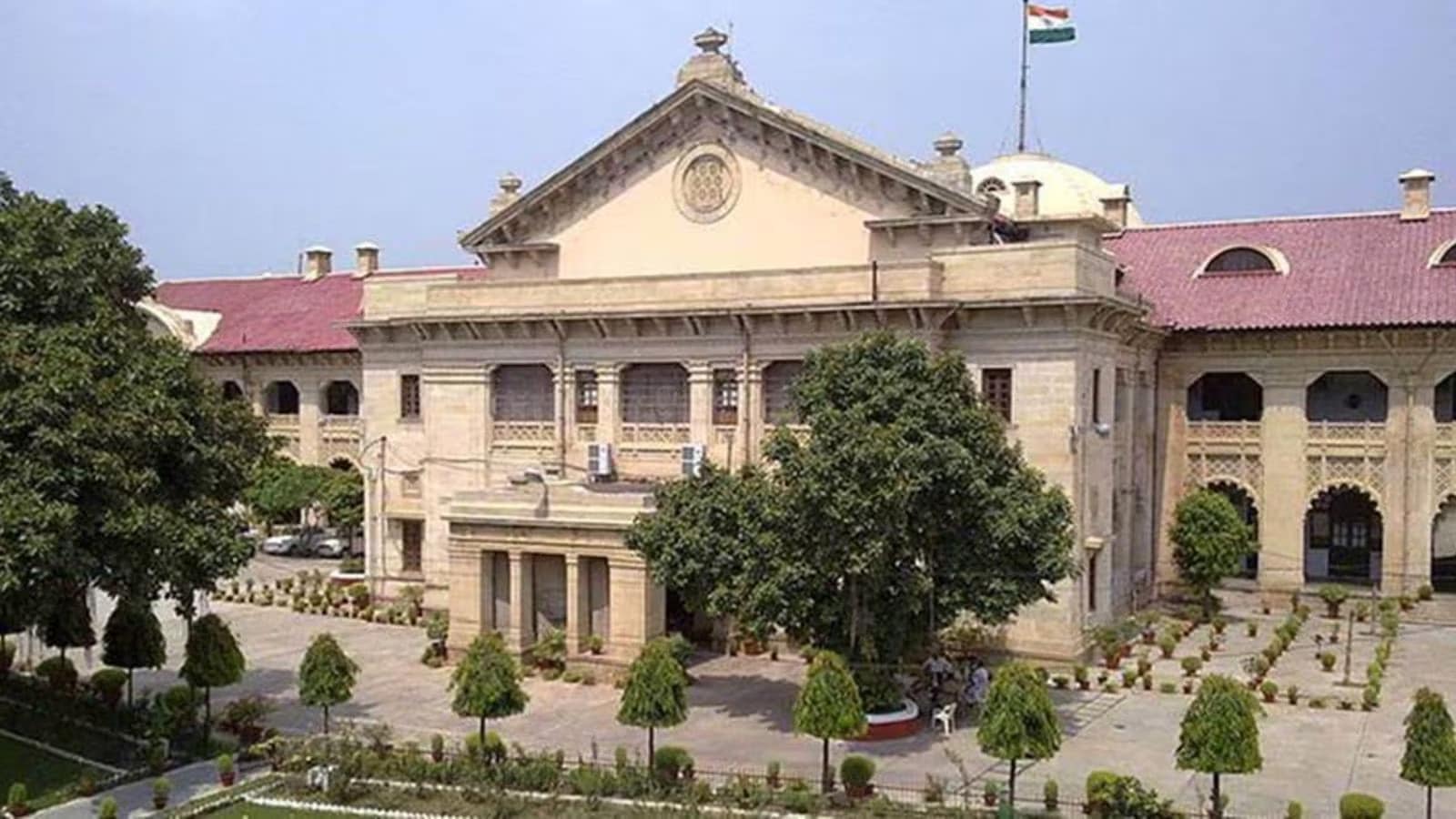

The Allahabad High Court has delivered a significant ruling regarding a commercial tenancy in Kanpur, determining that a landlord is not obligated to provide justification or demonstrate necessity when seeking to occupy their rented property. The court emphasized that the landlord serves as the sole authority in determining their requirements.
A panel led by Justice Dr. Yogendra Kumar Srivastava stated in its ruling on Thursday that, in the absence of the term “bona fide requirement,” a landlord must only establish that they need the property for personal use, whether in its current state or following demolition. Once the landlord asserts this need, the responsibility shifts to the tenant to specifically refute the claim and provide substantial evidence to support their denial. A vague or unsupported argument is inadequate to counter the statutory basis for eviction.
The court further clarified that the term “requires” does not impose an obligation on landlords to prove the reasonableness or necessity of their claim in an objective manner. Instead, it is sufficient for them to show a genuine and legitimate intention to occupy the premises.
The ruling also indicated that the court does not have the authority to evaluate the landlord’s need against any objective standards, asserting that as long as the landlord’s intention is authentic and not merely pretextual, they retain the exclusive right to determine their requirements. Thus, the inquiry is limited to the authenticity of the intention rather than its rationality, as stated by the bench.
The case involved a tenant renting a shop on Gandhi Nagar, P Road, Kanpur, for a monthly fee of Rs 500. The tenant approached the high court after the Rent Authority rejected his application contesting the landlord’s eviction notices from June of the previous year, and the Rent Tribunal dismissed his appeal in January.
Under the Uttar Pradesh Regulation of Urban Premises Tenancy Act 2021, the landlord initiated proceedings to reclaim the property, citing inheritance as the basis for ownership and indicating a need for business expansion.
In 2023, the landlord communicated that the rent would be adjusted to Rs 1,00,000 per month based on the applicable circle rate, a significant increase from the initial Rs 500.
The tenant argued against this increase, claiming that the original rent was Rs 500 and that the proposed rent hike was unlawful under the Act. He contended that the landlord’s need was not genuine and that he had alternative accommodation, asserting that the shop was his sole means of livelihood.
During the proceedings, both parties submitted affidavits to support their positions, with the landlord reaffirming his need for the premises for personal use. The tenant, meanwhile, contested this claim and raised issues regarding the validity of the process, including notice delivery and adherence to statutory requirements.
The court noted that the primary question was whether the landlord needed to merely demonstrate a requirement for the property or also satisfy the definition of “bona fide need” as previously established under the repealed UP Urban Buildings Act of 1972, which governed rental agreements and prevented unjust evictions.
In light of the revised legal framework, the bench observed that the court was not required to compare the hardships faced by both parties or to assess the legitimacy of the landlord’s need as previously mandated by the now-obsolete legislation. Instead, the court’s role was restricted to verifying the existence of the landlord’s claimed need.
The court concluded that the tenant’s defenses did not raise significant doubts regarding the legitimacy of the landlord’s assertion. It affirmed that the decisions made by the Rent Authority and the Rent Tribunal were consistent with the statutory provisions of the 2021 Act and did not exhibit any errors in judgment or jurisdictional missteps. Therefore, there were no grounds for the court to intervene under Article 227 of the Constitution of India.
While dismissing the petition, the court granted the tenant an additional eight months to vacate the premises, responding positively to a request from the tenant’s legal representative. The landlord’s counsel agreed to this extension.
The court stipulated the following conditions: the tenant must submit an undertaking to the Rent Authority in Kanpur, promising to vacate by December 2, 2026, within two weeks; the tenant must pay Rs 2,000 monthly as ‘use and occupation charges’ by the 7th of every month for the duration of the extension. The court warned that failure to comply with these conditions would result in the expiration of its protective order, allowing the landlord to pursue enforcement of the eviction judgment legally.
Bhupendra Pandey serves as the Resident Editor for the Lucknow edition of The Indian Express. With extensive experience in Uttar Pradesh’s journalism sector, he supervises the bureau’s reporting on the state’s critical political landscape, focusing on the intricate dynamics of governance and legislation.