
Recent proposals to implement reflective mirrors and increase the number of satellites in low Earth orbit by up to one million have raised significant concerns regarding their potential impact on human health and ecosystems, according to experts in sleep and circadian research.
Presidents of four global scientific societies, representing a collective of about 2,500 researchers from over 30 nations, have communicated their apprehensions in letters addressed to the U.S. Federal Communications Commission (FCC).
The FCC is currently evaluating a project by the start-up Reflect Orbital, which aims to use reflective satellites to light up certain areas of the Earth at night. Additionally, SpaceX has submitted applications that could lead to a substantial increase in the number of satellites in low Earth orbit.
The leaders of the European Biological Rhythms Society (EBRS), the Society for Research on Biological Rhythms, the Japanese Society for Chronobiology, and the Canadian Society for Chronobiology expressed that the scale of these proposed satellite deployments would significantly modify the natural nighttime lighting globally. They highlighted that changes to the light-dark cycle could interfere with biological clocks that govern sleep and hormonal regulation in humans and animals, affect the migration patterns of nocturnal species, disrupt seasonal cycles in plants, and alter the rhythms of marine phytoplankton essential for oceanic food networks.
They called on regulatory bodies to perform comprehensive environmental assessments and to establish restrictions on satellite reflectivity and the overall brightness of the night sky. Professor Charalambos Kyriacou, a geneticist at the University of Leicester and president of the EBRS, emphasized the need for careful consideration, warning that such changes could have worldwide repercussions on food security, as plants rely on nighttime darkness for growth.
Reflect Orbital envisions deploying satellites fitted with large reflective mirrors to direct sunlight onto areas spanning approximately 5 to 6 kilometers, with the ability to adjust brightness from levels akin to a full moon to midday. The company argues that this system could prolong solar energy generation into the evening and provide lighting for various applications, including construction, disaster relief, and agriculture, with illumination restricted to areas sanctioned by local authorities.
In parallel, SpaceX intends to launch up to one million satellites to establish an enormous solar-powered computing network aimed at facilitating artificial intelligence operations. The firm asserts that this network could alleviate the energy and cooling requirements of ground-based data centers.
Ruskin Hartley, CEO of DarkSky International, a non-profit organization dedicated to preserving natural night skies, also expressed his concerns in a letter to the FCC. He remarked that while concepts like satellites equipped with mirrors transmitting ‘sunlight on demand’ or massive constellations for AI data processing may appear to be futuristic, they are indeed tangible proposals.
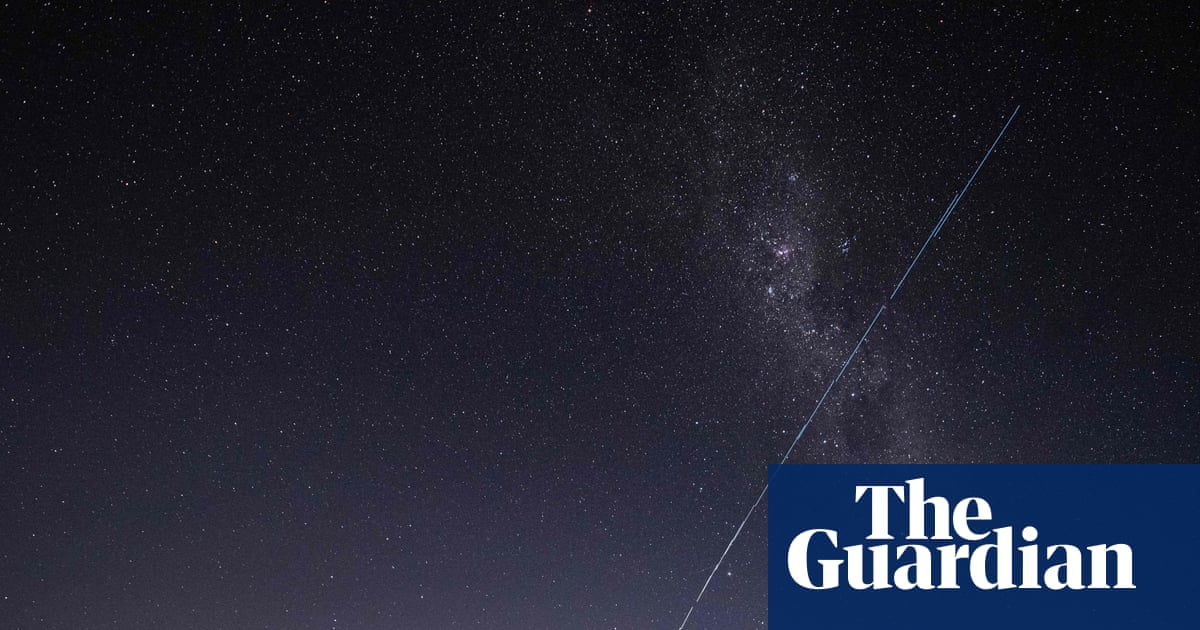
Hartley noted that research has already indicated that the current satellite population has caused a 10% increase in diffuse night sky brightness, known as sky glow.
Dr. Miroslav Kocifaj from the Slovak Academy of Sciences explained the two primary ways satellites influence the night sky: individual satellites can create streaks in astronomical images, while sunlight bouncing off satellites and space debris contributes to overall brightness. His research indicates that these objects currently add between 3 and 8 microcandela per square meter to night sky luminosity, with projections suggesting an increase to between 5 and 19 microcandela by 2035, potentially nearing the brightness threshold set by astronomers to maintain naturally dark skies.
Although this additional brightness is still less intense than moonlight, Dr. Kocifaj asserted that the phenomenon is genuine, global, and unavoidable, predicting a significant escalation in the coming decade if satellite launches and debris continue at their current pace.
Professor Tami Martino of the University of Guelph, who chairs the Canadian Society of Chronobiology, stated that the critical issue regarding the effects on life on Earth is not the comparison of brightness to moonlight, but rather whether biological systems can perceive these changes. She emphasized that circadian systems are sensitive to light levels far lower than what humans consider bright, and if the night sky becomes permanently illuminated, the ecological consequences could be profound and not fully understood.
A separate letter authored by leaders of the World Sleep Society, European Sleep Research Society, Sleep Health Foundation, Australian Sleep Association, and Australasian Chronobiology Society warned that disruptions to circadian rhythms could lead to significant health issues. They do not oppose advancements in space technology but argue that changes to the night sky should be regarded with the same seriousness as other major environmental challenges like climate change and ocean acidification. They stressed that the alternation of light and dark is a fundamental principle of life on Earth.
Hartley further pointed out that as the number of satellites increases, these rapidly moving artificial objects could dominate the night sky, potentially outnumbering visible stars in certain areas. This shift could disrupt the navigation of birds and insects that rely on the stars, fundamentally altering human experiences of the night sky.
Moreover, Reflect Orbital’s initiatives could introduce a new kind of light pollution with largely unexplored repercussions, including potential risks to public safety. Hartley cautioned that as these light beams traverse landscapes, they could cause intense glare or blinding flashes, especially if systems malfunction. He emphasized the need for thorough studies to assess these risks, advocating for a complete environmental review before advancing such proposals.