
A recent study has revealed that a single tree located within 10 meters of a residential property in the City of Sydney Local Government Area (LGA) could lead to a decrease in the property’s market value by as much as 2.69%. This finding underscores the challenges of integrating more greenery into urban planning while preserving existing infrastructure, according to various experts.
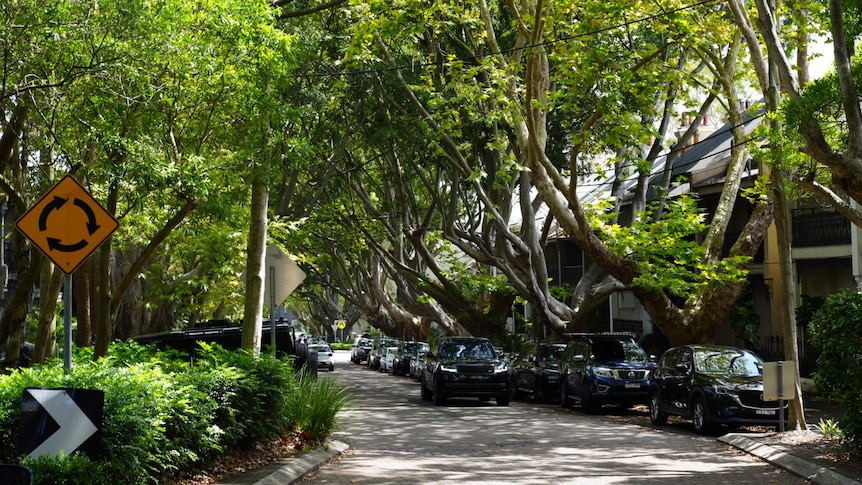
Local councils across major Australian cities have committed to enhancing tree canopy coverage in urban areas over the next few decades. In the City of Sydney, neighborhoods like Paddington feature streets adorned with London plane trees and weeping figs, creating a vibrant green canopy that provides shade for historic terrace houses.
Approximately one kilometer away, Centennial Park boasts over 15,000 trees, including Moreton Bay figs and paperbark trees, enriching the tranquility of the inner suburb. While efforts to expand canopy coverage continue, a detailed analysis has identified a relationship between property values and the proximity of trees to homes within the local government area.
The City Council is actively planting more trees to enhance the livability and resilience of the city by mitigating urban heat, improving building cooling, and elevating overall air quality. The Climate Council forecasts that the number of days exceeding 35 degrees Celsius could double by 2050, while the CSIRO anticipates an increase in the severity and duration of heatwaves and droughts.
As city councils aim to increase tree canopy, some experts argue that the study’s conclusions point to the intricate balance required in planning greener urban spaces without disrupting existing frameworks. The research published in the journal Cities examined the impact of trees on property values based on their distance from residential properties.
The investigation indicated that a tree planted within 10 meters of a home’s center could lower its selling price by 2.69%, while a tree situated between 10 and 20 meters away could potentially elevate the property value by 1.16%. This analysis was based on the sale prices of 1,568 properties in the City of Sydney LGA from January 2021 to August 2024, matched with data on over 48,000 street-side trees.
Researchers accounted for various significant factors influencing property prices, such as the number of bedrooms and bathrooms, parking availability, land size, and proximity to essential services like public transport and schools. The average house price in this area was reported at $2,613,000, indicating that a tree within 10 meters of a home’s center could reduce its value by approximately $70,289, while a tree located further away could add around $30,310 to the home’s worth.
According to the report, only 129 properties sold in the analyzed period had trees positioned within 10 meters of their center. The LGA covers about 26 square kilometers and is home to approximately 211,000 residents, representing just 0.21% of Greater Sydney’s total area.
There is no evidence to suggest that this trend is observable across other local government areas within Greater Sydney or in other capital cities, regions, or rural areas. Associate Professor Song Shi, a co-author of the study from the University of Technology Sydney, highlighted that the findings reflect residents’ attitudes toward tree placement. He noted that while trees can enhance urban environments, their proximity to homes in densely populated areas like Sydney can generate resistance from residents.
Dr. Shi emphasized the importance of understanding the potential pushback from residents regarding tree placement and suggested that city planners consider this feedback to optimize urban design. The report also identified specific tree species, such as brush box, London plane, and tuckeroo, as having negative impacts on property values due to their extensive root systems, potential allergenic properties, or debris production.
Matthew Ng from the UNSW City Futures Research Centre cautioned against over-interpreting the findings due to the limited number of properties analyzed. He pointed out that only 129 homes with trees within 10 meters were included, which may not provide a comprehensive view of property value dynamics. Ng also stressed the need to consider various individual property characteristics when assessing the impact of trees on home values.
Despite these reservations, Dr. Ng concurred that the study highlights the necessity for local councils to thoughtfully plan tree planting initiatives, taking into account the characteristics of different tree species, their root systems, and their potential interactions with existing infrastructure.