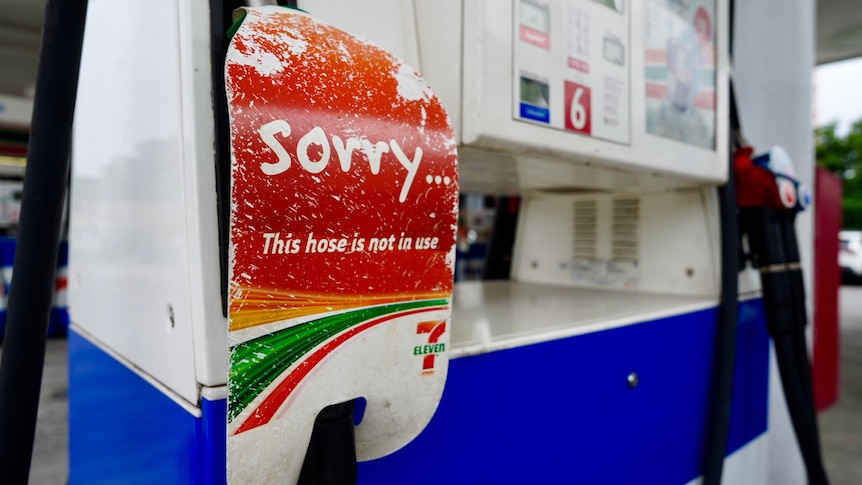

The union that represents petrol station employees has reported a noticeable increase in instances of customer abuse since the rise in fuel prices began. Petrol station proprietors contend that they are not benefiting financially from these price hikes and are suffering losses in the sales of convenience items such as food, beverages, and coffee, which are essential for their profitability.
The Shop, Distributive and Allied Employees Association is conducting a nationwide survey to gather more concrete data on the uptick in aggressive behavior from customers and aims to collaborate with petrol station operators to enhance worker safety.
In a recent incident at one of Eddy Nader’s petrol stations, a driver reacted aggressively after learning that the station was not part of a discount program. Mr. Nader recounted that the verbal assault left one of his female employees in tears. Fortunately, a large truck driver intervened to protect her from further abuse and removed the aggressor from the premises.
In another troubling episode, a truck driver left without paying for $1,000 worth of diesel fuel. Mr. Nader managed to contact him, only to hear the driver dismiss the theft by claiming that Ampol, the fuel brand, could “afford it.” Mr. Nader clarified that his business is a family-owned operation, not a corporate giant.
Owning six service stations in New South Wales, some affiliated with Shell and Ampol, Mr. Nader has spent his entire career in the fuel sector, and his son has recently joined the family business. He shared that there are photos of him in a bassinet at his father’s first service station.
Mr. Nader pointed out that, in addition to fuel theft and customer hostility, his third-generation family business is facing challenges due to rising living costs, which have led customers to forgo purchasing snacks or drinks—sales that are crucial for profitability. He explained, “If someone fills up with $80 worth of fuel but doesn’t buy anything from the store and pays by credit card, we barely break even after considering staff wages, insurance, and utilities.”
He reflected on the changing landscape of small business ownership, questioning, “Is it really worth doing this?”
In response to the growing concern over worker abuse, the Shop, Distributive and Allied Employees Association has launched a national survey to verify reports of customer aggression directed at petrol station staff. National Secretary Gerard Dwyer emphasized, “This is a serious issue,” noting that employees are facing increasingly stressful situations while serving customers.
Dwyer reported a significant rise in incidents of verbal and physical abuse, as well as damage to equipment and property. He stated that the survey findings would provide valuable insights for operators on improving worker safety. “Rising fuel prices driven by international conflicts should not be an excuse for mistreating the individuals serving you,” he added, urging customers to remain calm during their visits to petrol stations.
The Australasian Convenience and Petroleum Marketers Association advocates for fuel retail operators in Australia and highlighted that fewer than one-third of petrol stations are owned by large corporations; the majority are small to medium-sized enterprises, even if they have branding agreements with larger distributors. CEO Rowan Lee pointed out that the perception of station owners profiting from price increases could be contributing to customer abuse.
He noted that prior to the federal government’s reduction of the fuel excise, 52 cents of every dollar spent on petrol went to taxes, while wholesale and distribution costs accounted for another 33 cents per litre. This leaves retailers with a mere 15 cents to cover their operational costs, resulting in a profit margin of only 2 to 3 cents per dollar.
Lee remarked that the recent weeks have been particularly taxing for the industry, with many business owners working excessive hours to stay afloat. “We are navigating uncharted waters,” he stated, while also condemning the mistreatment of petrol station employees, asserting that they are not responsible for setting prices or tax rates.