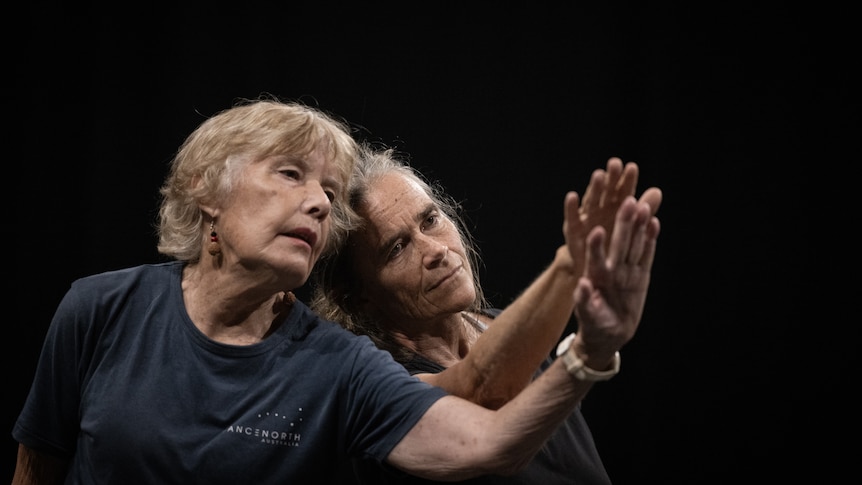

Every Thursday morning, a vibrant community assembles in the main theatre of a dance company located in North Queensland.
Women aged 55 and older come together to engage in movement and foster connections, led by experienced dance instructors.
The dance sessions are crafted to encourage expression and physical activity through immersive experiences.
Judy Taylor, 79, has been participating in the Still Dancing classes for four years. “Initially, I had no idea that dancing would become such an important part of my life. I was unsure of my movements and didn’t like how I moved,” Ms. Taylor reflected. “Now, I can’t imagine my life without it. It brings me immense joy.”
Andi Gillham, the community class coordinator at Dancenorth, noted the growth of the program, expanding from a small group of six to around 30 participants. “This class is designed for those who want to revisit dancing, whether due to injury or simply seeking a welcoming dance environment,” she explained. “While we used to conduct many activities while seated, the class has evolved to include more physical engagement.”
In contrast to Ms. Taylor, 84-year-old Peggy Robertson has a long history with dance, having trained in ballet during her youth. The classes have provided her with the opportunity to explore movement beyond traditional dance forms. “In ballet, you must focus intensely on each movement, but here, you can simply listen to your body,” Ms. Robertson shared. “There’s no judgment, and it feels wonderful.”
Amber Haines, co-artistic director of the company, described the atmosphere of the group as “inclusive and exploratory.” She emphasized that the focus is more on experiential movement rather than strict choreography. “This class caters to older adults who want to remain active without adhering to conventional exercise routines,” she stated. “Exercise in later years often comes with pressure, but many traditional forms can feel monotonous. Dance stimulates both the mind and the imagination, creating a profound sense of joy.”
Ms. Taylor expressed her appreciation for the community aspect of the classes, highlighting the importance of shared interests and friendships. “Knowing that there are others who enjoy the same activities and value these connections is vital,” she remarked. “This experience of togetherness and community is a remarkable gift.”
According to Ms. Gillham, the friendships formed in the class extend beyond the studio. “Participants often connect outside of class, socializing on weekends. The relationships that develop here are deep and enriching,” she noted. “Dance is for everyone; once people discover the possibilities, they usually find joy in it.”
Dr. Maddison Mellow, a postdoctoral research fellow at Adelaide University, has conducted extensive research on brain health and the impact of lifestyle changes on dementia risk. She pointed out that physical inactivity is a significant risk factor for dementia, which is projected to be the leading cause of death in Australia by 2025, according to the Australian Bureau of Statistics. “The heart and brain are closely linked; what benefits your heart is also good for your brain,” Dr. Mellow stated. “Staying physically active improves cerebral blood flow and can reduce neuroinflammation.”
Moreover, Dr. Mellow highlighted the importance of social interaction in mitigating the risks associated with social isolation, another contributor to dementia. “Individuals who enjoy their physical activities are more likely to maintain those habits over time,” she added. “The most significant improvements in physical and cognitive benefits typically occur when moving from inactivity to just a few minutes of exercise each day.”
Both Ms. Robertson and Ms. Taylor reported that the class has positively influenced their lives, prompting them to dance outside of scheduled sessions. Ms. Taylor shared, “When I’m at the store and hear music, I find myself dancing, much to the surprise of others around me. I move much more now; it’s become a necessity and feels great.”
They both intend to keep dancing for as long as possible. “Even if I can’t move my legs, I’ll keep moving from a chair,” Ms. Robertson affirmed. “Life is too short — enjoy it and keep moving, or you’ll lose the ability.”
“I never want to stop dancing. I’ll keep going for as long as I can,” Ms. Taylor concluded.