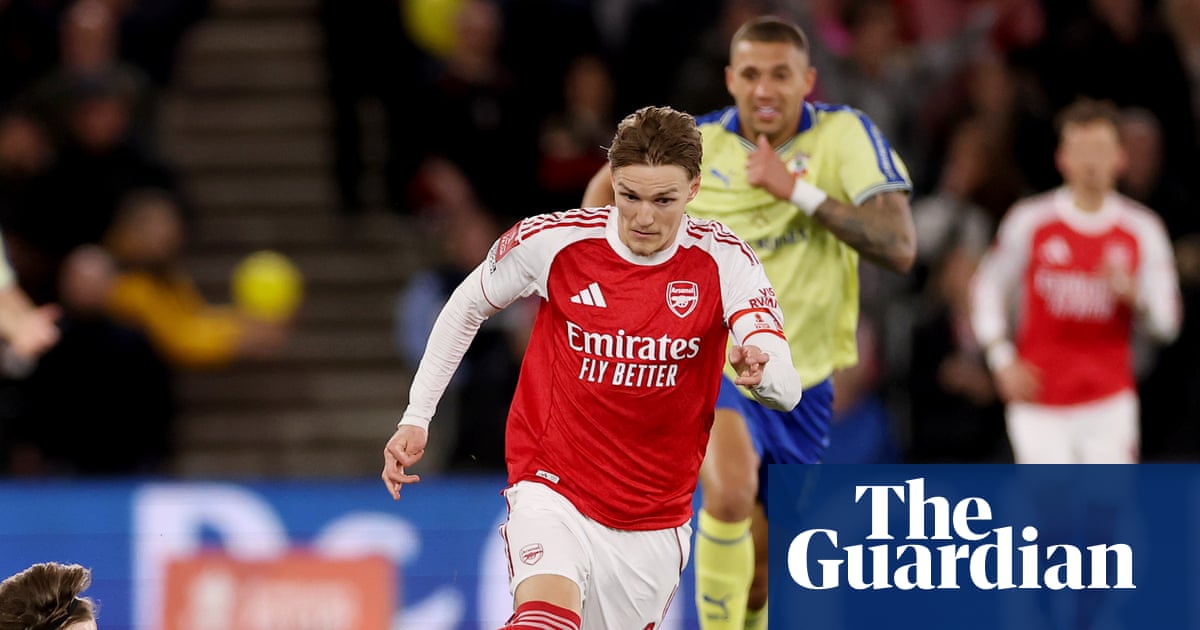

As the final moments of the match unfolded at St Mary’s Stadium on Saturday night, even the stray yellow balloons on the field seemed to mock Arsenal’s attempts at creating dynamic football. These balloons, seemingly incongruous, served as a metaphor for the team’s struggles; they represented dreams that, like air-filled objects, were ultimately fragile and easily deflated. Each effort by Arsenal to transition from pressure to creativity was met with frustration, as if their aspirations were slipping away just out of reach.
Despite this setback, Arsenal still has the chance to achieve an unprecedented feat this season, as no English team has ever won a quadruple. However, the prospect of losing that opportunity has never appeared quite so imminent. In just six matches, Arsenal has seen their ambitions falter: they faced defeat in the Carabao Cup final and were eliminated from the FA Cup by Southampton, marking a troubling start to this critical period.
Upcoming matches against Bournemouth and Manchester City could further diminish their once-commanding nine-point lead in the league. With a recent stumble against Sporting Lisbon added to the mix, the team finds itself on the brink of a significant decline, transitioning from a potential quadruple to a situation where their aspirations seem almost out of reach. This period is a stark reminder of the unpredictable nature of football.
However, it is important to maintain perspective. The idea of losing everything is unlikely to materialize. Historically, teams experience ups and downs, and setbacks can occur even amid success. By harnessing their frustrations and fielding their strongest lineup, Arsenal could still contend for the league title, which remains within their grasp.
Moreover, reaching this level of competitiveness is already a noteworthy accomplishment. Unlike teams that are merely a collection of star players or those led by legendary coaches, Arsenal represents a genuine effort to build a cohesive unit. Southampton, a formidable opponent, illustrated the challenges of winning in modern football, emphasizing the difficulty of achieving success.
Yet, one must ponder why the narrative surrounding Arsenal’s potential failure garners more attention than their pursuit of a first league title in over two decades. The fervor surrounding their struggles often feels akin to a disaster scene in a blockbuster film, where the audience anticipates impending doom.
This fascination stems from a culture that revels in the misfortunes of others, where every mistake is scrutinized and dissected. In an era dominated by schadenfreude—taking pleasure in another’s misfortunes—celebrating personal victories has become a rarity. It’s essential to acknowledge the unique joy found in simply enjoying the game without the cloud of mockery overshadowing it.
Mikel Arteta’s visible distress on the sidelines has already become iconic, drawing attention to the emotional toll of the team’s performance. Clips of his frustration have circulated widely, highlighting the intensity of fan expectations and the weight of their historical context.
However, the narrative of harm-joy does not encapsulate the entire experience. Arsenal’s journey reveals a compelling story of resilience and struggle, reflecting broader themes in both modern football and life itself. This is not merely about faltering under pressure; it involves understanding the complexities of the game and the challenges faced by teams striving for success.
Arsenal’s current situation is unique. Throughout his tenure, Arteta has implemented a rigorous system that emphasizes controlled movement and strategic play. The team’s approach relies on sustained intensity and positional awareness, yet the pressure from opponents can disrupt this carefully crafted system. At times, Arsenal appears to be overly reliant on their structured tactics, losing sight of the spontaneous creativity that often defines successful teams.
The most pressing issue is their struggle to generate opportunities during open play, especially when faced with opponents who have successfully neutralized their strategies. Despite holding a nine-point advantage earlier in the season, Arsenal now ranks fourth in terms of chances created from open play. This decline is evident in the performances of key players, as they have not found the back of the net consistently. Gabriel Martinelli, for instance, has not scored in the Premier League since September, while other prominent players have also faced goal droughts.
This decline in offensive production is not surprising upon reviewing recent performances. The match against Southampton highlighted these issues, revealing the underlying challenges that Arsenal must address as they strive to regain their form and aspirations for the season.