
Bluebells are blooming, swallows are returning, and orange-tip butterflies are taking flight, marking what appears to be the earliest spring on record for Britain. According to Nature’s Calendar, which has tracked citizen science observations of seasonal changes since 2000, 2026 could set new benchmarks for various springtime events, including frogspawn laying, blackbirds nesting, brimstone butterflies emerging, and hazel flowering.
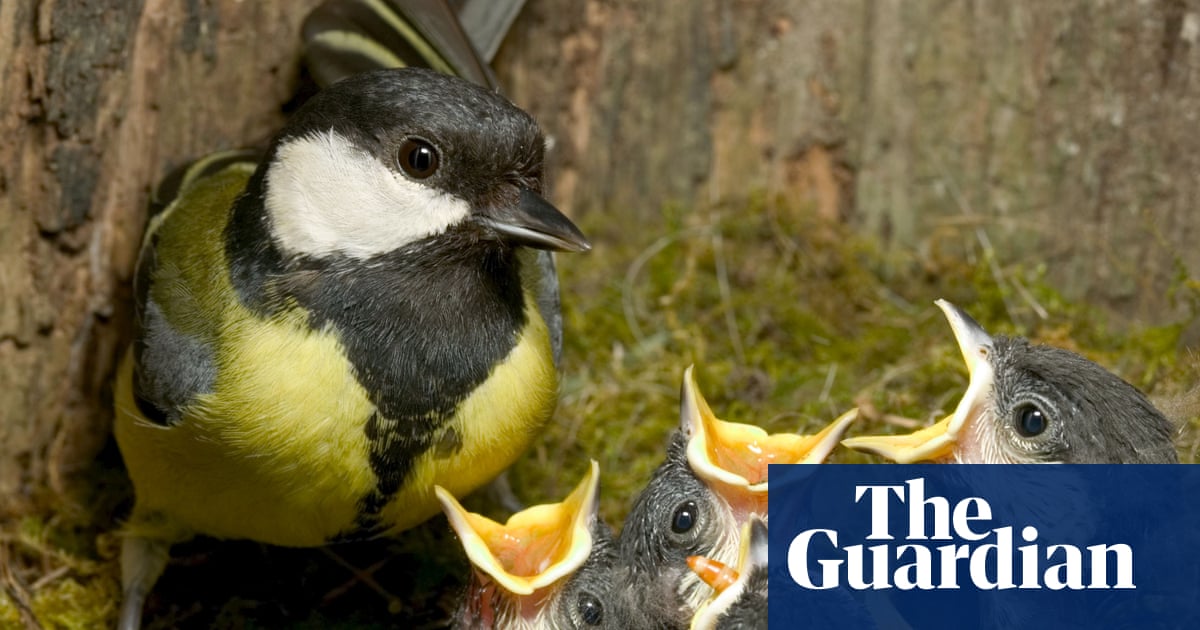
This spring has witnessed the earliest egg-laying of great tits recorded over an 80-year study at Wytham Woods in Oxfordshire, with the first eggs spotted on March 23, surpassing the previous record by three days. Since the 1960s, the average egg-laying date for these birds has advanced by 16 days, as they must align their reproductive cycles with the availability of caterpillars that hatch alongside new spring foliage.
Dunsford Woods in Devon recorded the earliest coal tit egg since observations began in 1955, and similar trends have been noted in the Netherlands, indicating significant climate changes impacting northern Europe.
While some scientific research has pointed to the danger of “phenological mismatch”—where one species cannot adapt quickly enough to changes affecting another—these early-laying tits suggest that some species may be adjusting to earlier seasonal patterns.
Caterpillars are also emerging earlier than expected; naturalist Matthew Oates discovered relatively large caterpillars of summer butterflies, such as purple emperors, white admirals, and silver-washed fritillaries, much earlier in the season than usual. “Typically, these caterpillars would be so small they are barely noticeable,” he remarked. “A ministerial update on the status of our caterpillars is warranted!”
The first orange-tip butterfly, often seen as a sign of true spring, was spotted on March 18. Oates noted his first sighting in the Cotswolds on March 31, whereas fifty years ago, the first emergence was typically recorded around April 16. He anticipates that some midsummer butterflies may appear as early as May this year, which would be unprecedented since the exceptionally hot and dry summer of 1893.
Nature’s Calendar, run by the Woodland Trust and supported by the Postcode Lottery, relies on volunteers across the country to document up to 150 seasonal events. Alex Marshall, a citizen science officer with Nature’s Calendar, commented, “This spring appears to be arriving early, and the overall trend of earlier springs is consistent year after year.”
Last year, only one recorded event— the first sighting of a red-tailed bumblebee—occurred later than average. “It seems we may be on track for a similar or even earlier spring than last year,” Marshall added.
Preliminary data from Nature’s Calendar indicates that frogspawn was laid on average on February 23, significantly earlier than the prior earliest average of March 5; blackbirds were nesting by March 4, and hazel trees were flowering as early as January 14—eight days ahead of the previous earliest average of January 22 in 2024. These averages are subject to change as more data comes in.
This spring’s growth is reportedly fueled by a relatively mild winter, one of the wettest Januarys on record in various regions, and one of the warmest Marches recorded in Britain. Concerns that climate change may threaten wildlife—such as cold snaps harming frogspawn or premature blossoms being damaged—have not yet materialized this year, although spring species may still be vulnerable to adverse weather from Storm Dave.
Grahame Madge, a spokesperson for the Met Office, noted that the cold snaps experienced during March are typical for this transitional month. “March often exhibits fluctuations between winter and spring, and encountering occasional cold spells is not unusual; nature is generally resilient and can handle these brief fluctuations without significant concern,” he explained.
Nick Acheson, a country diarist for The Guardian, expressed his astonishment at the number of chiffchaffs singing in southern England, as many are now overwintering rather than migrating. He pointed out the near disappearance of the willow warbler, a notable consequence of climate change, indicating shifting patterns in spring wildlife.
While global warming poses challenges for certain species and ecosystems, scientists and naturalists continue to approach spring with enthusiasm and renewed energy. As violets, celandines, stitchwort, dandelions, and cowslips bloom abundantly, writer Richard Mabey remarked on the extraordinary displays of early spring flowers. Both he and Oates agree that the combination of last summer’s heat and heavy winter rains has likely contributed to this spring’s remarkable floral bounty.
“These are thrilling times for naturalists,” Oates concluded. “The nation truly needs its naturalists to help interpret these changes.”