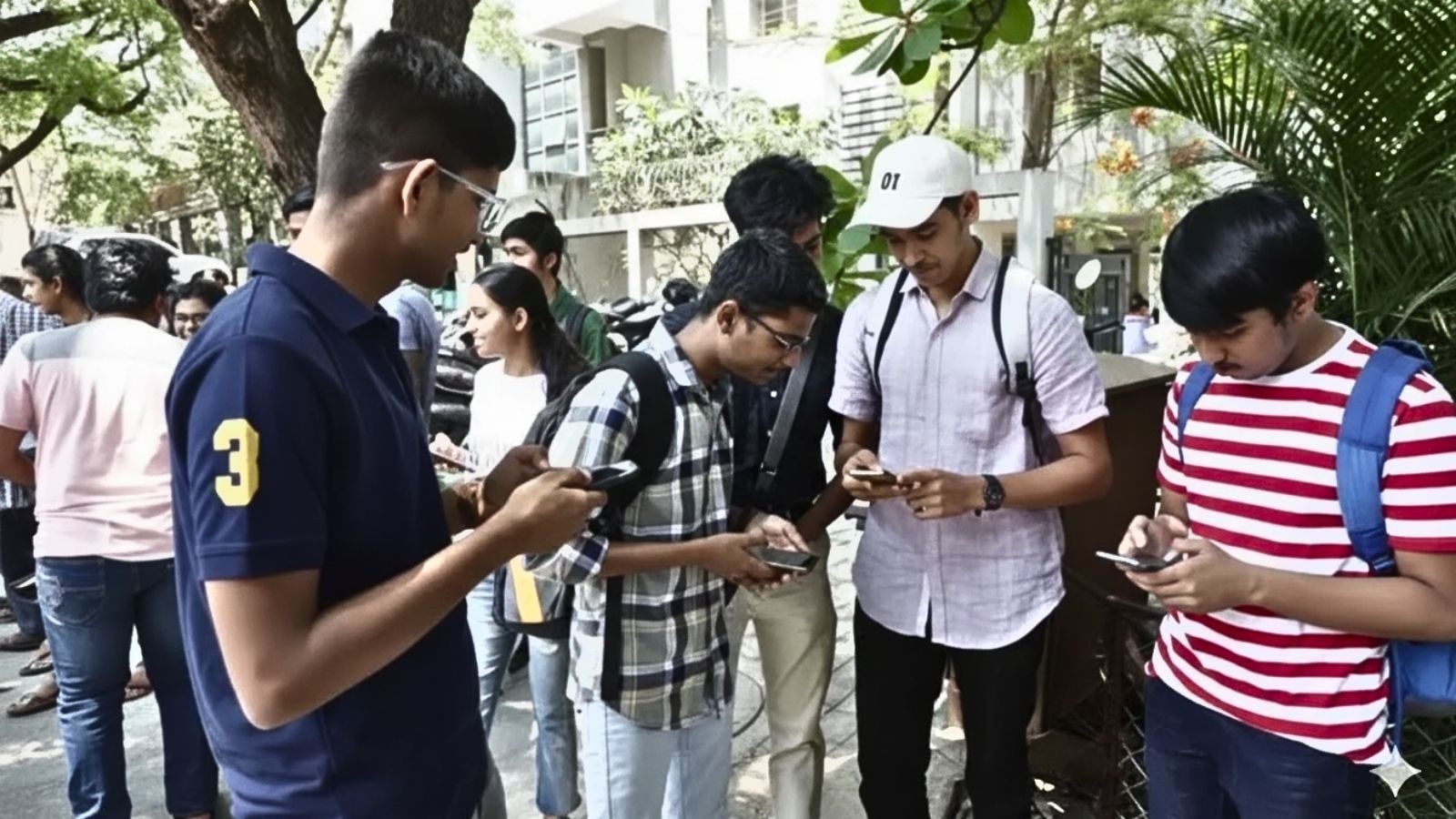

The Staff Selection Commission (SSC) has announced the availability of admit cards for the Junior Engineer (JE) 2025 Tier-II examination. Those who successfully passed the Tier-I examination can now download their hall tickets from the official SSC website at ssc.gov.in. For further details, candidates are encouraged to refer to the Education Indian Express.
To retrieve the admit card, candidates must log in using their application number along with their date of birth. The hall ticket will include essential information such as the candidate’s name, photograph, signature, registration number, exam date, time, and designated exam center. It is crucial for candidates to verify all details listed on the admit card carefully.
Here’s how to download the admit card:
- Visit the official website: ssc.gov.in
- Click on the link labeled “SSC JE Tier-II Admit Card 2025”
- Input your registration number and date of birth
- Submit the information provided
- Download the admit card that appears on your screen
- Print a copy for use on the examination day
According to the official timetable, the SSC JE Tier-II (Paper 2) exam is scheduled for April 7, 2026, and will be conducted in a computer-based format. Only candidates who have passed the Tier-I examination are eligible to participate in this phase.
The admit card is a mandatory document, and candidates must present a printed version along with a valid government-issued photo ID at the examination venue. Entry will be denied without these documents.
The Tier-II examination focuses on technical subjects relevant to the candidates’ chosen engineering discipline. It is administered as a computer-based test featuring objective multiple-choice questions. Candidates will only attempt one section tailored to their selected stream during the application process.
The examination is divided into three segments: Civil and Structural Engineering, Electrical Engineering, and Mechanical Engineering. Each section encompasses specific subject matter. Civil engineering topics include building materials, surveying, soil mechanics, and structural design. Electrical engineering covers circuit theory, machines, power systems, and basic electronics. Mechanical engineering focuses on subjects such as thermodynamics, theory of machines, fluid mechanics, and production engineering.
Those who successfully pass the Tier-II examination will advance to subsequent stages of the recruitment process, which include document verification and additional formalities.