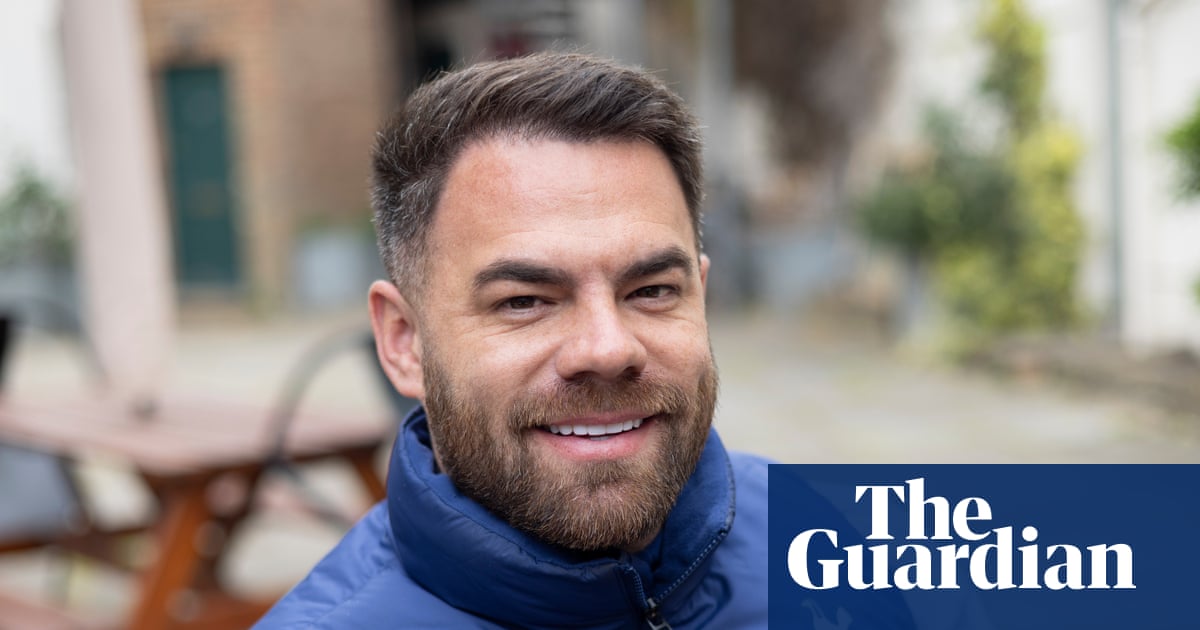

After a light-hearted reprimand from a waiter at a café in South London for leaving a solitary tomato on his plate, Martin Ho is eager to engage in conversation. “It contains more vitamin C than orange juice,” the waiter jokes while clearing the table.
This season has been eventful for the 35-year-old head coach of Tottenham, who assumed his role in July. He inherited a team that had recently endured a disappointing finish, ending up in 11th place in the Women’s Super League after a sixth-place finish and an FA Cup final appearance the previous year.
Now, with three matches remaining, Spurs are positioned fifth in the standings and are just three points shy of equaling their highest WSL score of 32 points, which they achieved during the 2021-22 season.
On Monday, they will compete in an FA Cup quarter-final against Chelsea, having reached the same stage in the League Cup, where they were eliminated following a 2-1 loss to Manchester United.
“If the season were to end now, I would consider it a success,” Ho states. He began coaching at the age of 17 after not advancing as a young player in Everton’s academy. “Given the transformation from where the team was to its current state, we have accomplished much of what we aimed for. While we have not reached our ultimate goals, this first season has laid a solid foundation for growth and stability.”
Although it may seem premature to declare the season a success before its conclusion—especially after suffering back-to-back 5-2 defeats against Manchester City and Arsenal—Ho’s assertion aligns with the prevailing sentiment that Spurs are progressing positively, allowing for those losses to be viewed in perspective.
When Ho joined Tottenham, following his inaugural head coaching role at the Norwegian club SK Brann, he faced a significant challenge. However, he opted for minimal changes, bringing in only two new players during the summer: Norway’s Cathinka Tandberg and Japan’s Toko Koga. This decision was intentional.
“I made it clear to the club that I wanted to evaluate the players myself,” Ho explains. “While I value the opinions of the staff, it was crucial for me to observe the players firsthand, in my environment, and aligned with my coaching philosophy.”
This methodology stems from his time as an assistant coach at Manchester United, where he progressed from Casey Stoney’s deputy to working under Marc Skinner. Ho focused on thoroughly understanding the club, the fanbase, the squad, and the wider football culture in Norway.
At Tottenham, he communicated that changes would be minimal. “I wanted to give everyone a chance to showcase their skills in the first few months. I believed that a new environment and coaching style could elicit different performances, and indeed it did. The players deserve credit for their significant improvements.”
Ho recognized the enormity of the task, noting that finishing near the bottom of the league did not reflect Tottenham’s status. He assessed all facets of the club, including training processes and alignment with the club’s values. “There was a noticeable disconnect, so we worked to realign expectations for both players and staff,” he says.
Rebuilding morale was another critical aspect of his approach. The psychological impact of losing, especially without a clear recovery strategy, can be severe. “There was a lot of mental work to do after a disappointing season,” Ho reflects. “I emphasized to the players that we must focus on the future, not dwell on the past.”
Ho encouraged the team to adopt a new, bold style of play, which naturally led to mistakes and challenges. “We understood that to achieve success, we had to endure failures. During pre-season, we concentrated on fostering unity and a strong mentality,” he notes.
The 5-1 defeat to Manchester City three games into the season marked a pivotal moment. “The response to that loss demonstrated a shift in mindset. From that point, it was crucial to reinforce their belief, challenge them, and remind them of their progress.”
Tottenham only suffered one additional loss in the WSL before Christmas. While new players joined in January, achieving consistency has been elusive, with three victories in eight league matches. Nevertheless, promising signs of potential remain, and the vision for growth is clear.
Ho faces the challenge of managing expectations as the team approaches what is likely to be their best finish in the top division. “Honesty and realism are paramount. Setting unrealistic goals only leads to disappointment. My focus is on taking the necessary steps toward sustainability and then ensuring continuity,” he asserts.
While early-season discussions hinted at a possible Champions League spot for Spurs, the team’s subsequent performance has tempered those aspirations. “We must be realistic; European competition might be premature for us at this moment,” Ho acknowledges. “We do not want to qualify only to drop out; we aim for lasting success at that level. It took Manchester United years to establish themselves in the Champions League.”
“Progress is not instantaneous; it requires evolution across the squad, staff, and operational processes. I firmly believe we will reach our goals, but I prefer gradual improvement rather than fleeting success,” he adds.
Given the limited pool of elite talent and the challenges of not participating in Champions League football, any team aspiring to reach the top faces difficulties. A successful season can attract attention from clubs competing in Europe, presenting its own set of challenges.