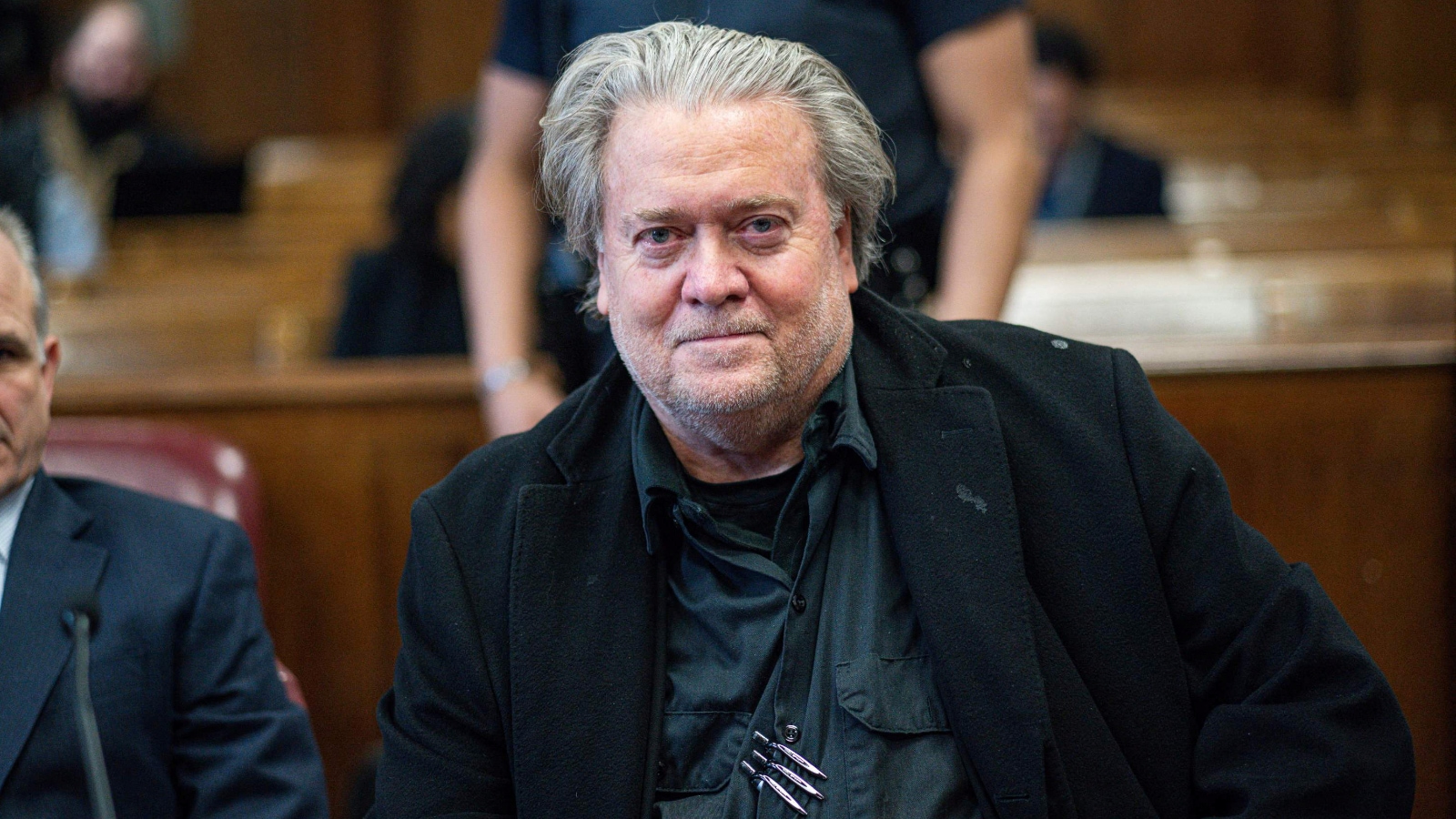

On Monday, the US Supreme Court allowed the Justice Department to proceed with plans to dismiss a criminal case against Steve Bannon, a prominent supporter of former President Donald Trump, who had been convicted for ignoring a congressional subpoena.
The justices overturned a lower court’s ruling that had affirmed Bannon’s 2022 conviction for his refusal to provide documents or testify before a congressional committee investigating the January 6, 2021, assault on the US Capitol by Trump’s supporters.
The Justice Department requested the Supreme Court to reverse the lower court’s ruling, stating in legal filings that dismissing Bannon’s case would serve “the interests of justice.” The department had previously submitted a motion to dismiss the case at the trial court level.
In a concise, unsigned order, the Supreme Court remanded the case back to the lower court for further examination “in light of the pending motion to dismiss the indictment.”
Bannon was found guilty by a jury in Washington on two counts of contempt of Congress for not complying with a request for documents or testimony from a Democratic-controlled House committee investigating the Capitol incident.
The rioters aimed to obstruct the congressional certification of Joe Biden’s election victory over Trump during the latter’s unsuccessful campaign for reelection in 2020. Bannon has characterized the House committee’s investigation and the subsequent charges against him as politically motivated actions taken by the Justice Department under President Biden.
At 72, Bannon was a crucial adviser during Trump’s 2016 presidential campaign and served as his chief strategist in the White House in 2017 before their relationship soured, although they later reconciled.
During the sentencing hearing, prosecutor J.P. Cooney remarked that Bannon chose to “thumb his nose at Congress,” emphasizing that “he is not above the law, which underscores the significance of this case.”
Following the Supreme Court’s decision in June 2024 to deny Bannon’s request for release from prison while his appeal was pending, he served a four-month sentence at a low-security federal facility in Danbury, Connecticut. He was released just a week before Trump’s victory over Kamala Harris in the 2024 election.
Upon his release, Bannon portrayed himself as a political prisoner, asserting to reporters, “I am far from broken. I have been empowered by my four months at Danbury federal prison.” He subsequently resumed hosting his “War Room” podcast.
A controversial figure, Bannon has been a vocal advocate of the “America First” movement and has been a staunch opponent of immigration policies, both of which have significantly influenced Trump’s administration. He has been actively involved in right-wing media and has supported various right-wing initiatives and candidates domestically and internationally.
According to the House committee, Bannon had multiple communications with Trump the day before the January 6 riot, attended a planning meeting at a hotel in Washington, and stated on his podcast that “all hell is going to break loose tomorrow.”
In 2024, the US Court of Appeals for the District of Columbia Circuit upheld Bannon’s conviction, leading him to appeal to the Supreme Court.
Bannon’s legal team has raised several arguments contesting the subpoena, including points related to executive privilege—a doctrine that allows a president to keep certain communications confidential—and the congressional committee’s authority to issue such subpoenas.
In addition to his previous legal troubles, Bannon pleaded guilty in February 2025 in New York state court to a fraud charge, having been accused of misleading donors in a 2019 fundraising campaign for Trump’s wall along the US-Mexico border. He managed to avoid incarceration in that case.
Trump pardoned Bannon in 2021 after he faced federal charges related to the fundraising for the border wall.
Stay informed with the latest updates – follow us on Instagram.