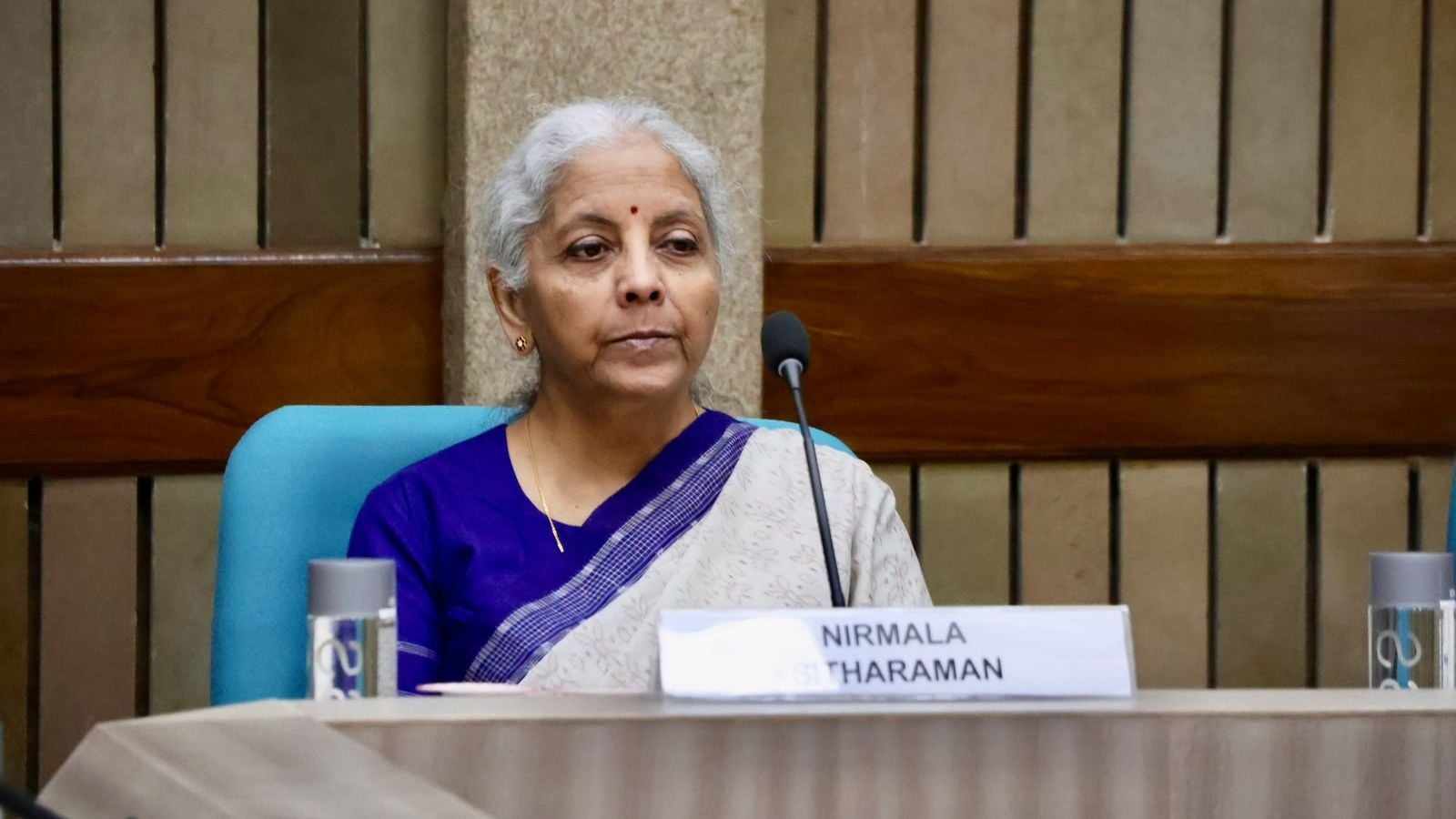

Union Finance Minister Nirmala Sitharaman articulated on Monday that the conflict in West Asia has transitioned from a “regional security concern” to a “systemic tremor,” indicating that this year presents heightened challenges as India navigates from a “landscape of shocks” to one defined by “permanent volatility.” She highlighted that a decade of fiscal discipline has afforded India the flexibility to provide fiscal and monetary support to counteract economic downturns, a luxury that numerous other nations, burdened by high debt and substantial deficits, lack.
“A sound public finance policy enhances the ability of fiscal policy to act counter-cyclically, particularly in times of economic distress. Today, many countries grappling with significant debt and large deficits are forced to make difficult choices between austerity measures and potential instability,” she stated.
In contrast, Sitharaman emphasized that India enjoys fiscal space, which allows for the continuation of its capital expenditure program, the Reserve Bank of India’s capacity to lower interest rates, and targeted support for affected industries. “This is the outcome of a decade characterized by fiscal prudence and discipline. The strategic importance of maintaining fiscal discipline yields benefits over the long term. Consequently, we have been able to reduce excise duties on diesel and petrol, and provide specific exemptions for critical petrochemical products and special economic zones to operate within the domestic tariff area,” she noted.
Addressing the audience at the ‘Golden Jubilee Celebrations’ of the National Institute of Public Finance and Policy (NIPFP), the finance minister remarked that India’s debt profile is favorable compared to other nations that have constrained policy options after years of expansive fiscal policies. She pointed out that India’s general government debt-to-GDP ratio, which encompasses both state and central government debt, stands at approximately 81%, the lowest among major economies following Germany. “Significantly, India is the only major economy where the International Monetary Fund projects a substantial decline in this ratio — estimated to be 75.8% by 2030 — while the debt outlook for advanced economies like the US, China, and Germany is expected to deteriorate,” Sitharaman added.
According to her, India’s external debt-to-GDP ratio was recorded at 19.1% as of September 2025, marking it as one of the lowest within emerging markets. Additionally, the country’s foreign exchange reserves, exceeding $688 billion as of March 31, 2026, provide an import cover for around 11 months, which she described as “a significant buffer.”
Sitharaman attributed these achievements to “deliberate, sustained, and at times politically challenging decisions” taken throughout years of fiscal management. “For a rapidly advancing economy like India, effective fiscal management is essential,” she asserted.
The finance minister pointed out that public finance encompasses not only expenditures but also revenue mobilization, stressing that a robust, equitable, and efficient revenue system is vital for proper governance. “Revenue mobilization transcends mere ‘tax rates’; it involves how the government minimizes compliance obstacles for honest taxpayers while enhancing detection and deterrence for tax evasion,” she explained.
She noted that the previous tax administration system relied heavily on high rates, a narrow tax base, discretionary assessments, and adversarial enforcement. In contrast, the current framework is built on four foundational pillars: simplification, technology, trust, and transparency. When queried about the necessity to expand the tax base rather than depending on a limited number of taxpayers for revenue, Sitharaman acknowledged the considerable effort required to broaden the base, which is “not an ideal route.”
Using the earlier implementation of Tax Deducted at Source (TDS) for various transactions as an example, she explained that the intention was to monitor high-value transactions and align them with tax assessment data, although it met with resistance. “In the initial phases of utilizing AI in the Central Board of Direct Taxes, we discovered that many TDS payers were not even registered as taxpayers. Thus, we aimed to ensure that we were tracking transactions indicative of significant expenditures, identifying whether individuals were taxpayers or not, while avoiding harassment. We would simply notify them via mail regarding the TDS — an existing requirement that can be reconciled with any taxes owed,” she elaborated. “However, even TDS has generated discomfort among people who perceive it as ‘tax terrorism’ from the current government. In truth, if you are a taxpayer, this will ultimately be reconciled,” she concluded.
Aanchal Magazine serves as a Deputy Associate Editor at The Indian Express, recognized for her expertise in macroeconomic issues and fiscal policy. With 15 years of experience in journalism, she is noted for her ability to elucidate intricate economic data and government policies for a broader audience.
Her reporting focuses on key areas including:
- Macroeconomic Policy: In-depth monitoring of GDP growth, inflation patterns, and actions taken by central banks.
- Fiscal Metrics: Evaluation of taxation, revenue collection, and governmental spending.
- Labour & Society: Coverage of labor trends and the interplay between economic policy and employment.
Aanchal’s proficiency lies in interpreting high-frequency economic indicators to explain the overarching trajectory of the Indian economy. Outside of her professional interests, she is passionate about the history of Kashmir, dedicating her spare time to exploring the region’s culture and traditions while mapping the complex narratives of displacement associated with it.