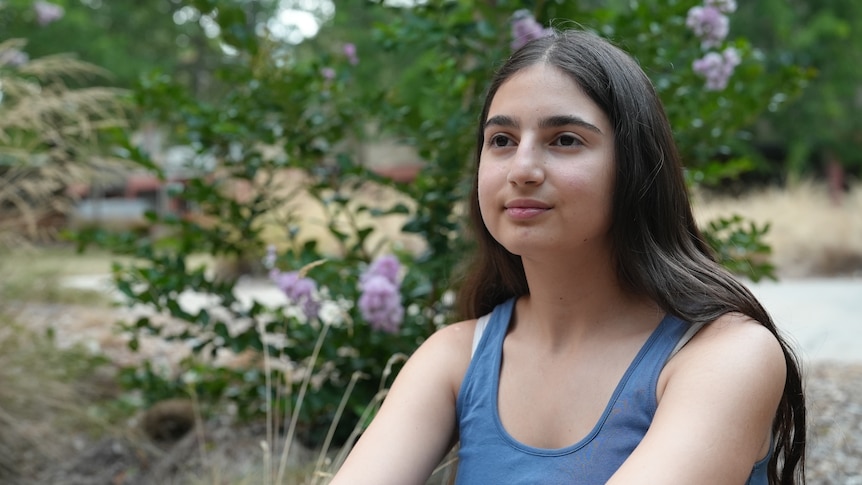

Zein cherishes her memories of Syria through small, everyday elements.
These memories are evoked by the scent of jasmine, the sight of rose bushes, or even the presence of a tabby cat.
These fragments connect her to family members who are approximately 12,000 kilometers away.
Although she speaks with her grandfather every Sunday, the last time they were together in person was when she was just five years old.
Zein and her parents fled Syria as the civil war erupted, first seeking refuge in Iraq before ultimately moving to Wollongong, located on the southern coast of New South Wales.
Now 17, Zein is among the 8.6 million first-generation Australians navigating the complexities of dual identities.
For her, this means balancing the Arabic culture of her roots with her current life in regional Australia. Here, she shares her story in her own words.
Reflecting on her last moments in Syria, Zein recalls the chaos that marked their departure.
She vividly remembers the first bomb that struck Aleppo, which fell perilously close to where her father was working after dropping her off at her grandparents’ home.
Communication during that time was fraught with fear; they were unable to reach him, and she recalls sobbing until he finally walked through the door.
She also recalls the air raids that occurred just nights before they fled, sleeping on the floor of her grandmother’s house while witnessing missiles fall.
As they left, she can still picture her grandparents’ expressions. Her father had left earlier to avoid being kidnapped due to his profession as a doctor, and her mother warned her to remain silent during their escape, emphasizing the danger they faced.
While crossing the Syrian border, Zein remembers a bus explosion behind them, signifying their narrow escape as they were the last legal bus to depart.
To reach Iraq, they boarded an overcrowded metal dinghy, where the danger was palpable; a fall into the water would have been fatal.
Despite the cramped conditions, the overwhelming relief of reuniting with her father at the Iraq border overshadowed their discomfort.
The family lived in Iraq from 2012 to 2016, during which her parents shielded her from the hardships they endured.
Zein fondly remembers family dinners at their favorite pizza restaurant and her mother’s clinic, unaware of her parents’ struggles as freelance doctors due to lack of government support.
Now, reflecting on those times, she sees the worry etched in her parents’ faces, realizing the lengths they went to ensure her safety amidst their challenges.
The decision to move to Australia came suddenly, prompted by escalating violence in Iraq and the broader Middle Eastern region.
Australia represented hope for the family, and after settling in Wollongong, Zein observed her parents gradually finding peace, no longer living in fear of returning to danger.
However, she faced challenges in integrating with Australian peers, as her upbringing was steeped in Arabic culture.
For several years, they refrained from speaking Arabic at home, as her parents learned English for work and she needed it for school.
This shift impacted her language skills, and while she can still understand some Arabic, her fluency has diminished.
Yet, they continue to prepare Arabic meals weekly, a cherished tradition that helps preserve their cultural heritage. When friends visit, Zein sometimes requests Australian dishes to avoid judgment.
Identifying as both Arabic and Australian, she no longer feels the need to separate the two aspects of her identity.
Her English teachers were among the first to express interest in her story, which helped her embrace her dual identity with greater confidence.
Zein acknowledges that dismissing either culture would only lead to resentment, emphasizing the uniqueness of both sides of her life.
She reminisces about videos her grandfather made of her, including one in his garden filled with beautiful rose bushes.
Every time she sees roses, she feels a connection to him, recognizing that both her worlds can coexist harmoniously.
Zein also recalls the distinctive scent of Syria, a mix of jasmine, rubble, and earth that lingered on her mother’s clothes for years after their departure.
Whenever she encounters jasmine, it serves as a poignant reminder of her past, reinforcing that her experiences are indelible parts of her identity.
The ABC’s Heywire competition invites regional Australians aged 16 to 22 to share their stories and experiences. This annual initiative aims to provide a platform for young voices from less prominent areas of Australia.
For more information about the ABC Heywire Competition, please visit the ABC Heywire website.