
Investigative reports have revealed that internal documents from the Queensland government, obtained by the ABC through Right to Information laws, show a decision was made against investigating the dehydration deaths of over 100 cattle at AACo.
The Department of Primary Industries in Queensland has not provided answers to all inquiries but stated that it takes animal welfare matters very seriously. Meanwhile, AACo has acknowledged that the incidents occurred but has not confirmed or disputed specific details.
The Queensland government decided not to pursue an investigation into the luxury beef corporation AACo after receiving assurances from the company that the issues had been addressed. This lack of inquiry into the deaths at the $700 million beef enterprise has been criticized by legal experts, who claim that the industry has undue influence over government regulatory bodies.
Documents acquired by the ABC indicate that the decision to forgo a thorough investigation was made despite AACo only informing the Department of Primary Industries about the deaths more than a month after the incidents occurred last summer. Notably, the notification to the government coincided with the ABC’s inquiry into the matter.
The Department of Primary Industries is responsible for overseeing animal welfare in Queensland, which is the largest beef-producing state in Australia, generating over $20.4 billion in revenue last year. Other regions have actively investigated cases of cattle dehydration, resulting in prosecutions and measures aimed at preventing future occurrences. The farming sector has also taken steps to emphasize the importance of animal welfare.
Steven White, a lecturer at Griffith University specializing in animal protection law, criticized the department’s reliance on AACo’s assurances. He emphasized that the company has a conflict of interest and an incentive to downplay the significance of the events, stating, “A very significant number of animals have died unnecessarily.”
Although the department did not address all questions, it reiterated its commitment to animal welfare issues. A government employee reportedly collaborated with AACo to assess the situation and concluded that disease was not a factor. The company had claimed to have implemented new procedures to prevent similar incidents, and the department expressed satisfaction with these measures, asserting that no further investigation was warranted.
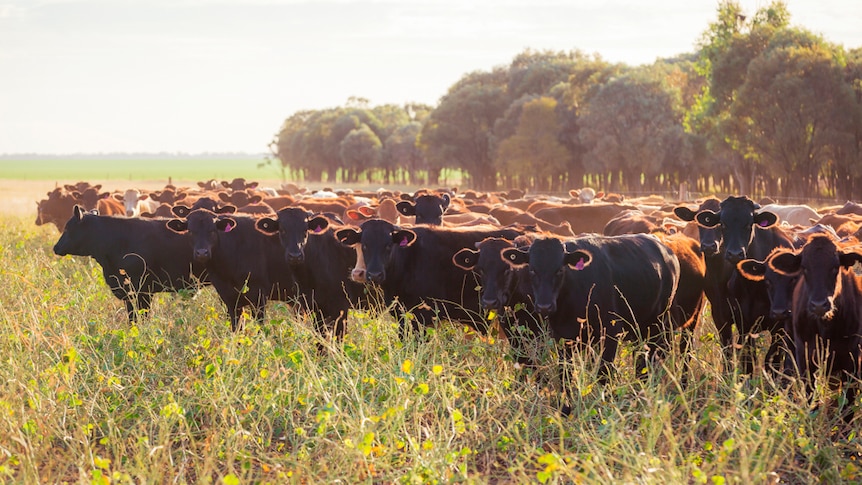
According to a knowledgeable source, approximately 140 cattle, including nearly 100 cows and 40 calves, died at an AACo property around the Australia Day weekend last year. One theory suggests that a water trough tap had been accidentally turned off. Additionally, another 90 cattle died at a different property that month, where they were kept temporarily for grazing. In this instance, some animals succumbed after being treated for buffalo fly and subsequently became disoriented in a new environment.
AACo has recognized that these incidents were unfortunate but has not provided specific information about them. A spokesperson for the company described such occurrences as tragic and distressing for everyone involved.
AACo counts among its major shareholders the convicted insider trader and British billionaire Joe Lewis, as well as Australian iron ore magnate Andrew Forrest. The company specializes in premium Wagyu beef, with a single 300-gram ribeye steak from AACo priced at approximately HK$868 (about $159) at upscale restaurants in Hong Kong. Their marketing claims that consumers can be assured of the animal’s welfare throughout its journey from farm to table.
Documents from the government indicate that officials first became aware of the cattle deaths on March 4, 2025, coinciding with the ABC’s inquiry. An AACo representative had reached out to a department official that day, explaining the situation involving cattle deaths on two properties and stating that they had identified the cause as a lack of water, with measures implemented to prevent a recurrence.
In another email, the official noted that, since the cause of death was known, further investigation was likely unnecessary. The official communicated that AACo had already consulted with the relevant managers about the incidents.
During an internal discussion, a senior bureaucrat noted that it was assumed a risk assessment had been conducted to determine that the incidents did not warrant further inquiry. They were confirmed on this point, as the assessment relied on AACo’s claims of adjusting their protocols.
Documents also illustrate some confusion within the department regarding the total number of cattle that died, with one bureaucrat stating, “My understanding was that we did not receive specific numbers — references to ‘mobs’ and ‘a number’.” Another official recalled being informed of around 120 cattle fatalities.