
In Germany, a common coaching adage used to be, “Follow your opponent right into the loo!” This phrase served as a directive for man-marking strategies, where defenders were expected to focus solely on their assigned opponents without overthinking their roles. Surprisingly, this traditional tactic has resurfaced, particularly following Atalanta’s victory in the Europa League in 2024, which employed this method effectively.
When facing a team with markedly superior individual talent, relying solely on man-marking can be ineffective. Atalanta experienced this firsthand during the Champions League round of 16, where Bayern Munich exploited expansive spaces to score an astonishing ten goals, resulting in a one-sided match rarely seen in knockout rounds.
It is crucial for German football to draw the right lessons from such experiences, as man-marking seems to be making a reappearance in the Bundesliga. However, it is important to recognize that this tactic should only be a temporary surprise strategy to pressure opponents, much like a handball team might do in the final moments of a match. It is not a feasible approach for an entire game, as the dimensions of a football pitch are simply too large.
In contrast, Spanish teams adhere to a more structured defensive strategy, emphasizing ball-oriented defending, clearly defined roles, and coordinated team play that shifts the action into the opponent’s half. This approach requires more cognitive engagement than simply engaging in one-on-one battles for the entirety of the match. Players must collaborate and position themselves appropriately, taking advantage of opportunities to engage in individual duels when necessary—such duels remain central to achieving excellence.
The Spanish footballing philosophy is deeply ingrained in the country’s identity, with demonstrable success supporting their methodology. Spanish clubs have collectively secured 24 titles across three major European competitions this century, outpacing England’s 11 titles and Italy and Germany’s five and four, respectively.
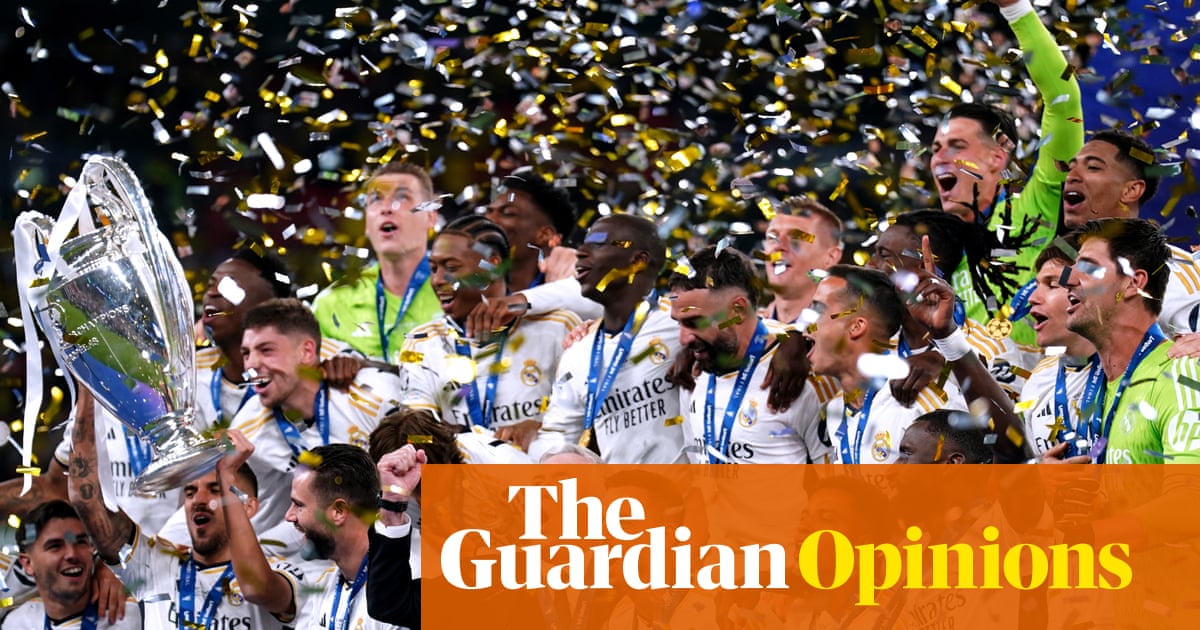
These accomplishments have been shared among six different Spanish clubs, while only two Bundesliga teams have achieved similar success in the same timeframe. Over the past 12 years, La Liga has dominated the Champions League, claiming the title in seven of those years, and this season, Real Madrid, FC Barcelona, and Atlético Madrid are among the top quarter-finalists.
While these three clubs may not be the outright favorites this year, they represent some of the strongest teams from the group stages, along with the reigning champions. Notably, the managerial influence of Spanish coaches is evident in teams like Arsenal under Mikel Arteta and PSG with Luis Enrique, both of whom reflect the stylistic nuances of Pep Guardiola’s teachings.
Spanish coaches are increasingly prevalent in European football; in the last 16 of all three major competitions, 11 were Spanish, more than double the number from the next highest country. In the quarter-finals, Spain again leads with three representatives. Notable Spanish managers continue to make headlines, such as Xabi Alonso, who ended Bayern’s dominance with Bayer Leverkusen, and Unai Emery, who has consistently elevated underperforming clubs like Aston Villa. Additionally, Cesc Fàbregas is making waves in Serie A with Como, influencing the landscape of Italian football.
After a successful run, Pep Guardiola’s winning streak in the Premier League came to an end last season as his team lost some of its creative spark. Recognizing the need for change, he is now constructing a new team dynamic in Manchester, focusing on different player profiles. Although he faced elimination from the Champions League this year at the hands of compatriot Álvaro Arbeloa, his squad remains competitive in the domestic title race and cup competitions.
Meanwhile, Luis de la Fuente has been a cornerstone of the Spanish Football Federation for over a decade, leading various youth teams to European championships and securing the senior title in 2024. Spain has claimed three of the last five European Championship titles, a feat unmatched by Germany during its peak in the 1970s and 1980s. Gary Lineker famously noted that Germans always find a way to win; however, the current narrative belongs to Spain, which is a strong contender in the upcoming World Cup.
The Spanish football model has overtaken the Italian approach as the dominant style in the game today. Despite Italy continuing to produce coaches for the global market, their teams have struggled to achieve the same level of success. In a previous column, I highlighted that Italian football lacks the intensity and dynamism required for world-class performance, a sentiment that was met with criticism from local media in Munich.
This season, however, not a single Italian club has made it to the Champions League quarter-finals. The near absence of Italian representation in the knockout stages was only prevented by Atalanta’s last-minute victory over Borussia Dortmund. Additionally, Italy’s national team has failed to qualify for the World Cup for the third consecutive time, having been eliminated by North Macedonia four years ago and Bosnia this year.
As Italy falls behind, Germany must be cautious not to follow the same path. It is concerning to see Bundesliga defenders increasingly reverting to man-marking tactics. Even Bayern Munich, under coach Vincent Kompany, occasionally employs this strategy. In the Bundesliga, where mistakes often go unpunished, such tactics can yield surprising results, as evidenced by their success against PSG in the group stage.
However, as Arsenal demonstrated in subsequent weeks, a distinctive managerial style is essential for achieving significant goals. Kompany, a disciple of Guardiola, appears to be navigating a transition from a possession-based defense to man-marking. Successfully managing this shift without compromising control would represent a remarkable achievement, yet no manager has yet accomplished such a feat, even among the elite.
This column by Philipp Lahm was crafted in collaboration with Oliver Fritsch from the German online publication Die Zeit.