
In the aftermath of Cyclone Koji, which struck between Bowen and Ayr, the coast of North Queensland continues to be littered with numerous boat wrecks months later. Maritime Safety Queensland (MSQ) has reported managing hundreds of damaged vessels over the past year, with salvage contractors facing significant strain in certain areas.
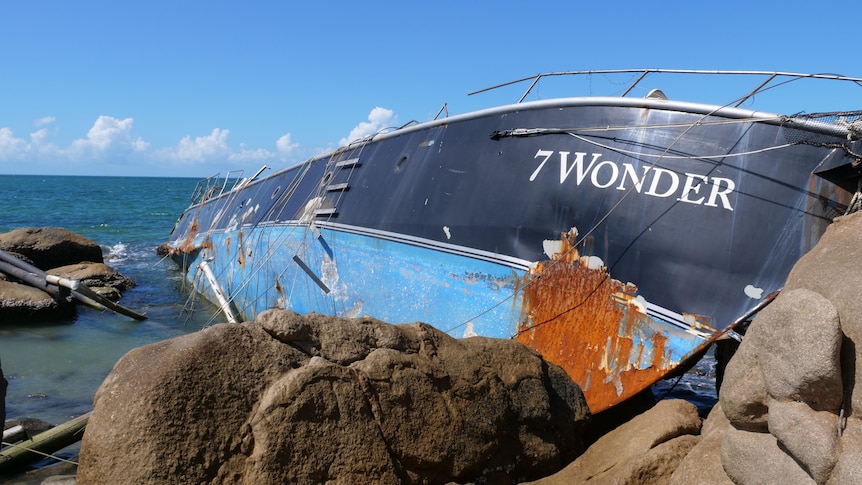
Local residents have urged for expedited salvage efforts to mitigate further environmental contamination. Authorities have committed to addressing the removal of a vessel, the “7 Wonder,” which has been stranded on rocks in Rose Bay since January 11, more than two months ago.
This particular boat is among the 25 that MSQ identified as either wrecked or damaged due to the cyclone’s impact on the region. Stuart Fisher, a local resident, expressed frustration over the delay in removal, suggesting that the wreck should have been prioritized to prevent deterioration and pollution.
“Following the incident, there were significant amounts of chemicals, partially full drums of diesel, and anti-fouling materials that posed immediate risks,” Fisher stated. He noted that over time, the debris transformed into larger items, including plywood. As the vessel’s condition worsened, it began releasing its contents into the surrounding reef.
According to Queensland regulations, the responsibility for cleaning up a wrecked boat typically falls on its owner, who is expected to engage a contractor for removal. In this instance, MSQ instructed the owners to remove the 7 Wonder by February 13, after which the agency initiated arrangements for its removal.
Kell Dillon, the general manager of MSQ, explained that the removal process was complicated by the vessel’s significant weight of approximately 70 tonnes and its precarious position wedged between rocks along a vulnerable shoreline. He noted the challenges posed by limited availability of specialized contractors, adverse weather conditions, and the logistical difficulties of transporting equipment to remote areas.
“The costs associated with such recoveries can be substantial, and we retain the right to seek reimbursement through legal means if necessary,” Dillon commented. Fisher, however, felt that despite their persistent outreach to MSQ, the severity of the pollution issue at Rose Bay was not adequately acknowledged.
“We have essentially taken it upon ourselves to manage the situation,” Fisher remarked, adding that the long-term accumulation of styrofoam debris has become increasingly difficult to address.
Further south, in Airlie Beach and its neighboring regions, several vessels also succumbed during the cyclone. Libby Edge, founder of Eco Barge Clean Seas, reported that her team was mobilized to swiftly remove approximately 11 tonnes of debris following the event.
“Our goal was to act before the next high tide, as debris can easily be washed out to sea when the tide rises,” Edge explained, noting that significant amounts of debris remain in the waters. She emphasized the need for boat owners to take preventative measures and for authorities to enhance coordination in salvage and clean-up efforts.
“When boats are not insured and break apart, it ultimately becomes a community issue or falls to MSQ to resolve,” Edge added. She described the community’s frustration during such events, highlighting the sluggish nature of salvage operations.
Adjacent to Airlie Beach, Cannonvale Beach, known for its seagrass meadows that attract turtles and dugongs, has also suffered damage from the cyclone. Alexandra Williams, a project officer for Reef Catchments’ Great Barrier Reef initiative, recounted efforts to restore the meadows, which were severely affected by Cyclone Debbie in 2017. She expressed concern for the current state of the meadows, which have been marred by boat debris.
“It’s disheartening, but I believe we will recover. These ecosystems are resilient and tend to rebound over time,” Williams stated.
Dillon noted that MSQ had to intervene in nearly half of the salvage operations along Queensland’s coastline, which have numbered in the hundreds over the past year. He indicated that removal costs for smaller vessels typically range from $20,000 to $40,000, although some cases have exceeded $600,000 due to the complexities involved.
“If contractors are needed to handle pollutants, safe disposal adds to the overall cost significantly,” Dillon said. He acknowledged that the shortage of specialized contractors has extended salvage timelines, but assured that vessels posing the greatest environmental risk are prioritized. Dillon expressed gratitude for public patience during the salvage process, recognizing the multitude of factors influencing these operations.