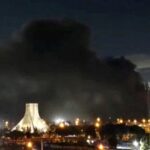
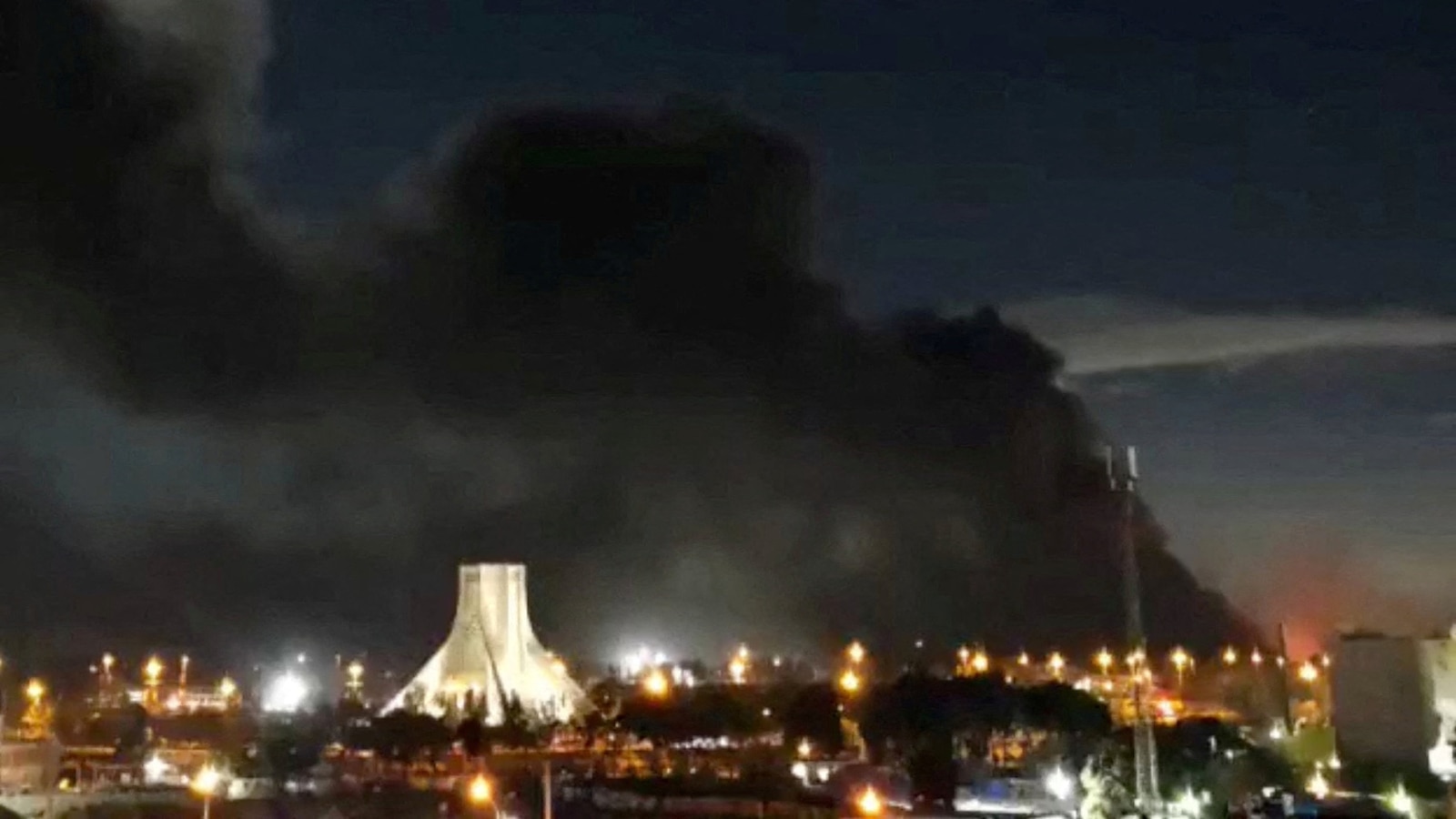

President Donald Trump has issued a warning to Iran, suggesting that a military action he is considering could violate international laws of warfare, according to various legal experts.
During a press conference on Sunday, Trump stated that if Iran does not accept terms that he deems favorable for a diplomatic resolution, they would face significant destruction: “They’re going to lose every power plant and every other plant they have in the whole country.” He further claimed that the Iranian populace would support such military actions, believing it would bring about the desired capitulation of the Tehran regime.
Trump elaborated on his plans, indicating that an attack could result in the destruction of all bridges in Iran by midnight and that every power facility would be rendered inoperative within a mere four hours. He expressed a desire for the Strait of Hormuz, a vital transit route controlled by Iran, to be reopened by Tuesday evening.
When questioned about whether his threats could constitute war crimes, Trump countered by stating, “You know the war crime? The war crime is allowing Iran to have a nuclear weapon.”
Legal analysts have pointed out that Trump’s sweeping threats may violate several tenets of international law. Collective punishment of a civilian population and targeting civilian infrastructure, which is deemed protected under international humanitarian law, are explicitly forbidden. Trump has also indicated a willingness to seize Iranian oil, an act that could be classified as pillaging, which is also prohibited.
The United States has embedded the Geneva Conventions, which establish standards for humanitarian treatment during conflict, into its domestic legal framework, thereby binding military personnel to these laws.
Retired Air Force Lieutenant Colonel Rachel VanLandingham, who previously served as the chief of international law at U.S. Central Command during the Iraq war, along with former Army JAG Corps attorney Margaret Donovan, expressed in an article for Just Security that Trump’s statements imply a readiness for “total war” against Iran, fundamentally disregarding legal constraints that the U.S. has integrated into its military conduct for both practical and ethical reasons.
Brian Finucane, an attorney who advised the State Department from 2011 to 2021, noted that determining whether Iranian forces were using civilian infrastructure for military purposes would be a complex issue requiring extensive investigation. He explained, “In principle, a power plant might be a military target if it can be demonstrated that it significantly contributes to the enemy’s military operations and its destruction would provide a clear military advantage.” However, he emphasized that not all power plants in Iran meet these criteria.
During the NATO airstrikes in Yugoslavia in 1999, the U.S. targeted power distribution facilities but did not strike power generation sites, according to Human Rights Watch. The attacks primarily employed carbon fiber bombs, which disabled infrastructure without causing total destruction, a practice described by VanLandingham as an essential adherence to legal obligations aimed at protecting civilian life.
Trump remarked that Iranians “want to hear bombs because they want to be free,” a claim that lacks any substantiating evidence.
In a recent congressional hearing, Air Force General Alexus Grynkewich, commander of U.S. European Command, highlighted the negative consequences of targeting civilian infrastructure, referencing Russia’s actions in Ukraine. He noted, “Historically, attacking civilian populations tends to strengthen their resolve.”
Experts in armed conflict law contend that the laws are designed not only to lessen civilian suffering but also to avert war in the first place. VanLandingham criticized the administration for what she termed “a dangerous shift” in rhetoric that glorifies violence and destruction.
Finucane reiterated the importance of the legal frameworks established after the catastrophic events of the two World Wars and the Holocaust, emphasizing that the United States played a pivotal role in developing the United Nations Charter, which strictly prohibits warfare without self-defense or U.N. authorization. He argued that the U.S. would be violating this fundamental principle by engaging in an offensive war against Iran.