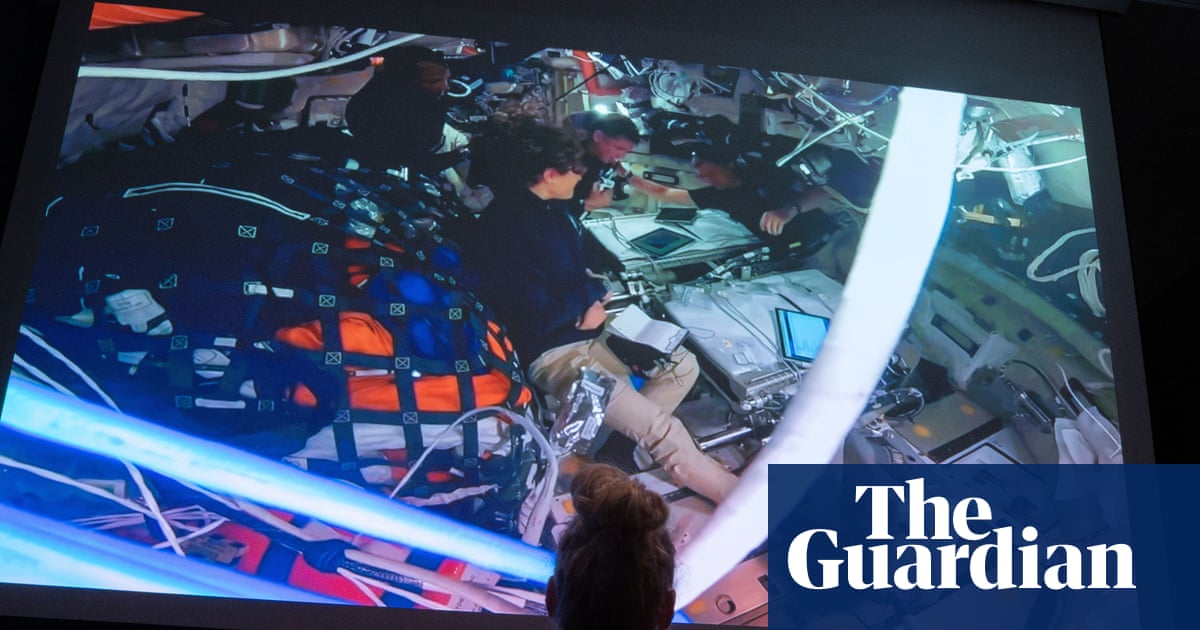

On the sixth day of a lunar expedition that has sparked renewed global enthusiasm for space exploration and revitalized NASA’s goals for returning to the moon, the Artemis II astronauts achieved a remarkable milestone by flying farther from Earth than any humans before them.
During a six-hour flyby, the crew aboard the Orion capsule captured unprecedented views of the moon’s far side, while also paying tribute to the astronauts who laid the groundwork for their groundbreaking mission.
Some highlights from this historic day include:
The four astronauts surpassed the distance record previously set by the Apollo 13 mission in 1970, reaching a remarkable distance from Earth of 406,778 kilometers (252,760 miles). They are believed to have exceeded the earlier record by 6,606 kilometers.
Despite this significant achievement, Canadian astronaut Jeremy Hansen appeared focused on future missions. After breaking the record, he encouraged “this generation and the next to ensure that this record does not stand for long.”
The trajectory of Artemis II closely resembles that of Apollo 13 following its “Houston, we’ve had a problem” moment, which effectively ended any hopes of a moon landing for that mission.
This flight path, known as a free-return lunar trajectory, utilizes the gravitational pull of both the Earth and the moon, thereby minimizing fuel requirements. It follows a figure-eight route that will guide the astronauts back home after they pass behind the moon.
The crew had more than six hours to observe and document the lunar landscape, providing a human perspective on features that have only been captured in images taken by robotic probes until now.
While relaying their observations to scientists in Houston, astronaut Reid Wiseman expressed his awe, stating, “Such a majestic view out here,” as he snapped photographs.
Some lunar peaks appeared so bright that pilot Victor Glover remarked they looked as if they were blanketed in snow. Mission specialist Christina Koch described the craters as resembling a “lampshade with tiny pinprick holes, with light shining through.”
In addition to using high-powered Nikon cameras for professional shots, the astronauts also utilized their iPhones for spontaneous photography.
The crew is anticipated to return with thousands of photographs, including images of the Apollo 12 and 14 landing sites from 1969 and 1971, as well as regions near the moon’s south pole, which is a preferred site for future landings.
Shortly after the Artemis crew set their distance record, the capsule moved across the moon’s far side, entering a communications blackout that lasted around 40 minutes.
During this blackout, the spacecraft made its closest approach to the moon and reached its maximum distance from Earth.
Astronomy professor Derek Buzasi described the astronauts’ period of silence as “exciting, in a slightly scary way,” recalling the same experience during the Apollo missions of the 1960s and 70s, which often left everyone holding their breath.
Once communication was reestablished with mission control in Houston, the first remarks from the capsule came from Koch, who stated, “We will always choose Earth, we will always choose each other.”
The crew began their significant day with a recorded wake-up message from Jim Lovell, the Apollo 13 commander, who had recorded the message two months prior to his passing last August.
“Welcome to my old neighborhood,” Lovell said, who also participated in Apollo 8, the first human mission to the moon. “It’s a historic day, and I know you will be busy, but don’t forget to enjoy the view.”
The crew traveled with a silk patch from Apollo 8 that Lovell took to the moon, displaying it proudly as they approached the crucial flyby. “It’s a real honor to have that on board with us,” Wiseman remarked. “Let’s go have a great day.”
Immediately after breaking Apollo 13’s record, the astronauts sought approval to name two new lunar craters they had observed. They proposed the names Integrity, after their capsule, and Carroll, in memory of Commander Wiseman’s wife, who passed away from cancer in 2020. Wiseman, a former fighter pilot, has been raising their two daughters alone since then.
“It’s a bright spot on the moon, and we would like to call it Carroll,” Hansen said. Wiseman was visibly moved as Hansen made the request to mission control, and the four astronauts shared a heartfelt embrace.
A NASA representative in Houston confirmed that the names suggested by the Artemis crew would be submitted to the International Astronomical Union, the organization responsible for naming celestial bodies and their features.
With contributions from the Associated Press and Agence France-Presse.