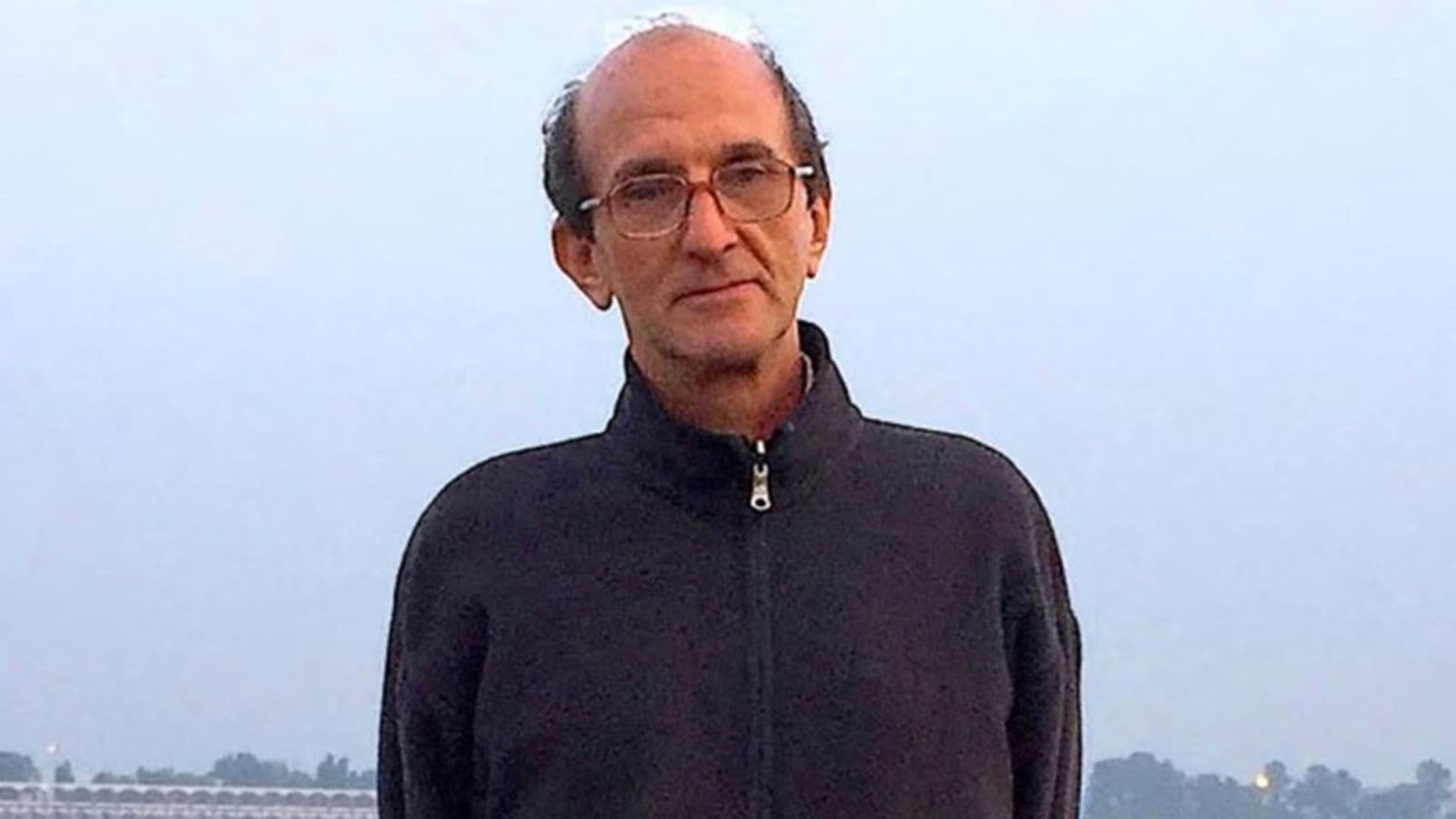

Professor Michel Danino, who chairs the NCERT curriculum and was placed on a blacklist by the Supreme Court due to a disputed chapter concerning the judiciary in an eighth-grade social science textbook, has submitted an affidavit to the court. In this document, he asserts that the chapter was developed through a “collective and collaborative” effort and emphasizes that no single author was responsible for it, nor was there any intention to disrespect the judiciary or any institution.
On March 11, the Supreme Court issued a directive mandating that the Centre, all state governments, and any publicly funded institutions sever ties with Danino, along with colleagues Suparna Diwakar and Alok Prasanna Kumar, in relation to the preparation of educational curricula or the finalization of textbooks. The court indicated that if the trio provided satisfactory explanations, there could be a chance for reconsideration of this directive, which they formally sought on Monday.
In his affidavit, Danino contends that the chapter related to the judiciary in Grade 8 Part 2 adhered to the same educational framework used throughout the textbook, applying uniformly to the executive, legislature, and judiciary. He argues that the chapter presented a predominantly positive view of the judiciary, emphasizing its role in safeguarding human rights, referencing Supreme Court interventions in social matters, the annulment of unjust legislation, and highlighting Justice Kuldip Singh’s contributions to environmental jurisprudence.
Danino challenges a statement made by NCERT Director Dr. Dinesh Prasad Saklani, who claimed that drafts were shared “only amongst a few members digitally.” The affidavit reveals that a Google Group comprising over 40 members was established early in the drafting process, facilitating discussions and revisions of the judiciary chapter on several dates, including September 1, October 23, November 4, and December 3, 2025. The affidavit also notes that Saklani, in his role as Director and Member Convener of the NOC, was included in these communications.
Moreover, the affidavit clarifies that the Textbook Development Team for Grade 8 Part 2 Social Science consisted of 15 active members, countering Saklani’s implication that only three were involved. It also disputes the characterization of Suparna Diwakar as a drafter, clarifying that she acted as Chief Consultant in the NSTC Programme Office since September 2023, focusing on research, coordination, documentation, editing, and proofreading, but did not play a role in finalizing chapters.
Danino notes that the chapter’s final content underwent discussion with Professor Manjul Bhargava, a recipient of the Fields Medal and Padma Bhushan, who expressed his approval of the material in late November 2025. The affidavit states that eight NSTC members, including chairperson Professor M.C. Pant, and five NOC members, including chairperson Professor Jagbir Singh, were consistently updated and invited to provide feedback on all drafts.
Senior Advocates Gopal Sankarnarayanan, Aravind Datar, and J. Sai Deepak, representing Diwakar, Danino, and Kumar respectively, presented their case to a bench led by Chief Justice of India Surya Kant, requesting that the applications be scheduled for discussion in the next hearing. Sankarnarayanan expressed to the court that the blacklisting had raised significant concerns regarding the credibility of the three individuals involved.
This controversy came to light in February when The Indian Express published details about the textbook titled *Exploring Society: India and Beyond* (Class 8, Vol. 2), specifically focusing on a section addressing “corruption in the judiciary” within a broader chapter on the judiciary’s societal role. Following this, the Supreme Court initiated its own proceedings, and NCERT released a statement acknowledging the inclusion of the contentious material as an inadvertent oversight, announcing plans to withdraw the textbook and revise the chapter after thorough consultation.
Ritika Chopra, an award-winning journalist with nearly two decades of experience in reporting on politics, governance, and public policy, currently serves as the Resident Editor of The Indian Express in Mumbai. She oversees editorial coverage and reporting for the publication in the city and surrounding areas.
Chopra has previously held roles as Chief of the National Bureau (Government) and National Education Editor in New Delhi, where she focused on government policy and education. Her journalism has closely monitored the Union Government, particularly sensitive institutions like the Election Commission of India and the Education Ministry, and she has produced investigative reports that have elicited official reactions.
Joining The Indian Express in 2015, Chopra’s career began in Kolkata with the Hindustan Times in 2006 as an intern before she transitioned to Delhi in 2007. Since then, she has reported on various topics including politics, education, social sectors, and the workings of the Election Commission of India.
Stay informed with the latest updates – follow us on Instagram.