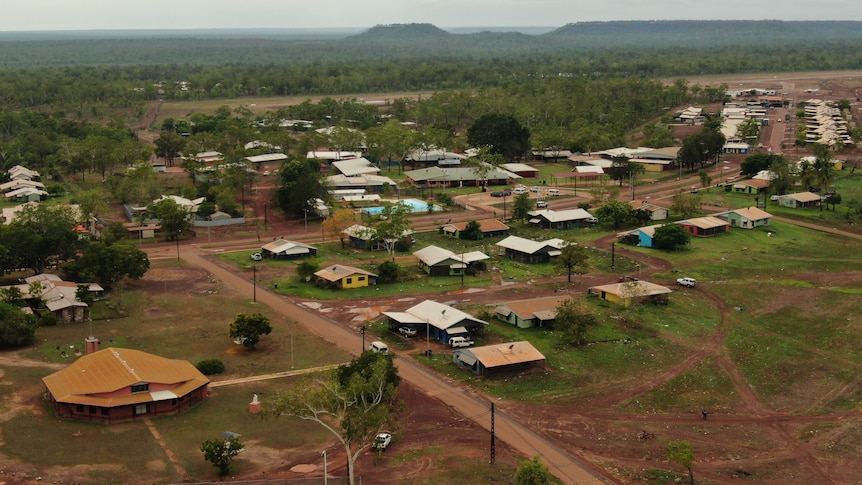

Over the past nine weeks, one of Australia’s largest Aboriginal communities, Wadeye, has been facing persistent outages from Telstra, leaving residents unable to make phone calls or connect to the internet.
Telstra has attributed these disruptions to severe flooding that has damaged essential infrastructure in the Daly River region. The company is actively working to address the situation and restore services as soon as possible.
The Thamurrurr Development Corporation has expressed concern that some vulnerable residents in Wadeye are turning to satellite service providers, which may not be financially sustainable for them.
The community of Wadeye, home to around 2,000 residents, has struggled with limited telecommunications access since early February. This situation has hindered their ability to make phone calls, both landline and mobile, as well as their internet connectivity, affecting crucial activities such as monetary transactions and topping up prepaid power meters.
Telstra has indicated that the ongoing flooding has severely impacted its infrastructure near the Father Leary Bridge, as well as in Palumpa and Wadeye. The company has stated that its technicians have been unable to reach the affected areas due to the flooding.
Despite these challenges, Telstra maintains that its satellite services remain operational, allowing residents to contact emergency services such as Triple Zero (000). Ryan Bettens, Telstra’s regional engagement manager, noted last Wednesday that while resources are on standby, access to the community remains impossible due to the flooding. He assured that restoration efforts would begin as soon as access is possible.
Recently, Telstra reported that its technicians had managed to reach the site and restore power using a generator; however, residents have continued to face intermittent mobile coverage, leading to widespread frustration.
Wadeye resident Rebecca Bunduck expressed her concerns, stating that the inability to make calls has heightened feelings of insecurity among residents. She recounted a recent incident where she was unable to contact emergency services for her sister-in-law, who was suffering from kidney failure, ultimately requiring her to transport the patient to a clinic herself.
In response to the ongoing issues, the Thamurrurr Development Corporation has criticized Telstra’s handling of the outages, labeling it “not good enough.” Deputy CEO Tracey Leo called for the deployment of mobile satellite towers in the area until full service restoration is achieved, emphasizing that such a situation would not be tolerated in urban centers.
Leo highlighted the impact of the outages on community safety and wellbeing, noting that the inability to reach emergency services exacerbates the already volatile environment in Wadeye. Corporation chair Mark Tunmuck-Smith added that the outages have hindered residents’ ability to communicate with loved ones and manage financial tasks.
A spokesperson for federal Communications Minister Anika Wells stated that the department is in contact with Telstra regarding the outages in Wadeye. They acknowledged that natural disasters can complicate site access but stressed the importance of prompt service restoration in remote communities, particularly during emergencies.
Amid the disruptions, some residents, like Ms. Bunduck, have turned to satellite service Starlink, a provider that uses a network of low-orbit satellites to deliver high-speed internet in remote regions. Although she typically spends $39 per month on a Telstra prepaid SIM card, the outages prompted her to explore alternative options.