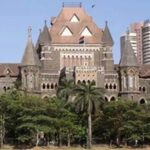

The Punjab and Haryana High Court has requested responses from the central government, Facebook, and the state government regarding a petition filed by journalist Maninderjeet Sidhu. This petition contests the removal of his Facebook pages, which included content related to Punjab Chief Minister Bhagwant Mann, and was reportedly flagged for copyright violations.
During a hearing presided over by Justice Jagmohan Bansal, the court examined Sidhu’s petition. Sidhu, an independent digital journalist, manages platforms named “Maninderjeet Sidhu” and “Lok Awaz TV.” His legal request aims to overturn the decision to delete his Facebook page.
In his petition, Sidhu stated that the deletion of his page “Lok Awaz TV” was based on alleged infringements of third-party intellectual property rights, which he claims were associated with content flagged by the official page of the Aam Aadmi Party Punjab. He argued that this deletion followed several copyright complaints lodged against his page.
The content in question allegedly included posts featuring comments made by Chief Minister Bhagwant Mann, wherein he expressed his disinterest in monetary gain and his lack of desire for media recognition or air travel, mentioning that he was just 17 when he was named Bhagwant Mann by the public.
Sidhu maintained that such material constituted legitimate journalistic reporting and did not infringe on copyright. He highlighted that his Facebook page had a following of 450,000 and was blocked without any prior notice or explanation. He stated that he was merely informed that the action was taken following a notification from the Indian government under the Information Technology Act of 2000.
Represented by attorney Nikhil Ghai, Sidhu emphasized that he is involved in independent digital journalism focusing on grassroots reporting, requests for information, governance oversight, and public-interest journalism.
He pointed out that his platforms play a significant role in disseminating news and engaging the public, forming a vital source of livelihood for him. Sidhu operates independently under the names “Maninderjeet Sidhu” and “Lok Awaz TV,” utilizing both Facebook and YouTube for grassroots and public interest journalism.
He expressed dissatisfaction with the sudden removal of his “Maninderjeet Sidhu” Facebook page, which he claims occurred without prior notice or an opportunity for a hearing, violating the principles of natural justice.
In his plea, Sidhu asserted that the actions taken by the authorities and Meta are unlawful, as they attempt to restrict free speech and press freedom by removing content based on ambiguous and subjective criteria.
Regarding the “Lok Awaz TV” page, Sidhu alleged that multiple posts were initially taken down by Meta in January 2026 due to copyright claims, leading to the eventual removal of the entire page.
He has requested that Meta provide an explanation and the specific reasons for the removal of his journalistic page.
Sidhu argued that the deletion of his Facebook page infringed upon his fundamental rights as outlined in Articles 14 and 19 of the Constitution and contravened the stipulations of the IT Rules. He noted that the suspension of his page significantly affects press freedom, digital livelihoods, and the public’s access to information.
Furthermore, Sidhu mentioned that on March 20, 2026, he discovered that his “Maninderjeet Sidhu” Facebook page had also been removed, allegedly at the state’s request. He expressed confusion over why the state would ask Meta to delete this page, asserting that such actions directly undermine his fundamental rights to free speech and the ability to practice his profession.
The independent journalist stated that he updates news content on his accounts hourly, deriving value from the visibility and sharing of his coverage on current affairs. He emphasized that even a temporary removal of his account can lead to substantial financial and reputational harm to his credibility and audience reach.
Richa Sahay serves as a Legal Correspondent for The Indian Express, where she specializes in demystifying the complexities of the Indian legal system. With a postgraduate degree in law, she effectively bridges the gap between intricate court decisions and public comprehension, ensuring that readers remain informed about the rapidly changing legal environment.
Her expertise includes:
Advanced Legal Education: As a law postgraduate, Richa possesses the depth of knowledge necessary to interpret complex statutes and constitutional details. Her educational background allows her to provide context-driven analyses of how legal developments affect everyday citizens.
Specialized Focus: She operates at the intersection of law and public policy, concentrating on:
Judicial Updates: Delivering timely reports on decisions from the Supreme Court of India and various High Courts.
Legal Simplification: Translating dense legal language into accessible narratives without compromising factual accuracy.
Legislative Developments: Monitoring new legislation, amendments, and regulatory changes that impact Indian society.