
For the past two months, Amadou Ndiaye has witnessed a troubling trend within his organization, UJEC (Union des Jeunes Engagés pour Notre Communauté), based in Dakar. Members have been disappearing, either fleeing to other countries, facing arrests, or going quiet altogether.
Ndiaye, who serves as the secretary-general of UJEC, oversees a refuge that offers emergency housing and community assistance for LGBTQ+ individuals who are victims of homophobic violence. Following an attack by his neighbors and relatives in February, Ndiaye himself sought safety in Gambia. Although he has returned to Dakar, the operations of UJEC remain halted. “We have ceased all activities. Our safety is no longer guaranteed,” he states.
Ndiaye’s situation reflects a broader crisis in Senegal, a nation that has historically upheld one of the most effective HIV prevention frameworks in Africa. This success has been partly attributed to outreach efforts targeting men who have sex with men (MSM), sex workers, and other vulnerable groups, who are now facing a surge in arrests amid escalating anti-homosexual sentiment.
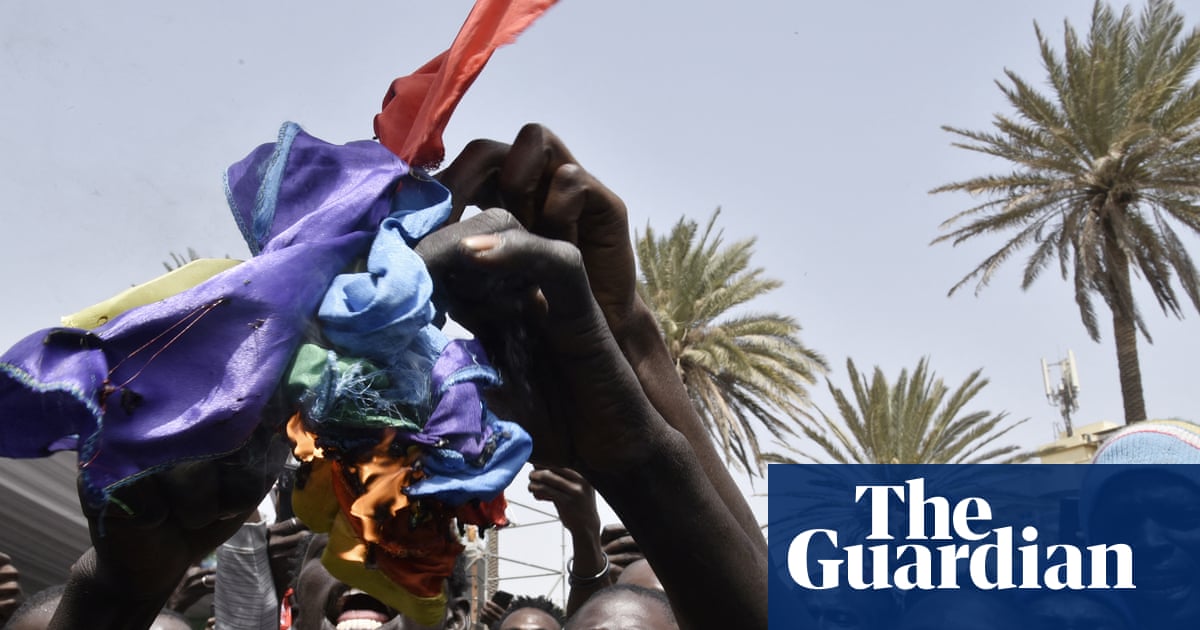
On March 27, President Bassirou Diomaye Faye enacted new legislation that increases the maximum prison sentence for same-sex sexual acts to 10 years and criminalizes the “promotion” of homosexuality.
Alice Bordaçarre, who works at the gender equality desk of the International Federation for Human Rights (FIDH), cautions that the law’s vague language could lead to any organization advocating for fundamental rights—including HIV prevention—being interpreted as promoting LGBTQ+ rights. “This poses a risk of criminalizing legitimate human rights work, including that of lawyers, healthcare professionals, journalists, and NGOs. It is extremely perilous,” she warns.
Between February 4 and 9, authorities arrested no fewer than 12 men in Dakar under Article 319 of the penal code, which criminalizes same-sex relations as “acts against nature.” This followed the detention of television host Pape Cheikh Diallo at a hotel, where police used his phone to trace individuals associated with him.
According to the HIV Justice Network, which monitors HIV-related criminalization worldwide, over 60 individuals have been detained since early February under Article 319, facing sentences ranging from one to five years. Of these, 42 cases are linked to the Diallo incident, as noted by Sylvie Beaumont from the HIV Justice Network.
Historically, arrests tend to spike during politically charged moments or public moral panics. Beaumont describes the current wave as “unprecedented in the region,” particularly due to the forced HIV testing of detainees and the automatic addition of intentional transmission charges for those who test positive. “This is a relatively recent development,” she asserts.
Reports from Senegalese media, as tracked by the HIV Justice Network, indicate that at least 22 of those arrested since February have been identified as HIV positive and may face additional charges for intentional transmission.
While HIV prevalence among Senegal’s general adult population is below 0.5%, it rises dramatically to 27.6% among MSM, according to the National Council for the Fight Against AIDS (CNLS). The same research highlights rates as high as 49.6% among MSM in certain areas of Dakar. A 2024 study published in the journal Aids estimated that male key populations accounted for as much as 79% of HIV transmissions in Senegal from 2012 to 2021.
The February arrests had an immediate adverse effect on HIV healthcare. A swift evaluation by CNLS conducted from February 26 to 28 across 22 treatment centers revealed a 34.5% drop in consultations, with 44% of MSM patients reporting feelings of depression or anxiety. Dr. Safiatou Thiam, executive secretary of CNLS, attributes this decline directly to the panic triggered by the early February arrests within MSM communities.
Cécile Kazatchkine from the HIV Legal Network warns that the increasingly hostile environment created by the new law will deter individuals from seeking treatment or testing. “No one will feel safe reaching out to MSM patients. They will be too afraid,” she asserts.
She further notes that Senegal’s law on HIV transmission imposes stringent proof requirements: it necessitates evidence that the accused were aware of their status, understood the transmission routes, took significant risks, and acted with intent to transmit the virus. Individuals charged who are on antiviral medication could not possibly meet this legal standard, as effective treatment makes transmission impossible.
“In Senegal, having sex while HIV positive is not criminalized,” Kazatchkine explains, a point that holds even under the new legislation. However, forced testing appears to be becoming routine, with an HIV-positive diagnosis automatically leading to intentional transmission charges.
Renapoc, another NGO in Dakar that supports high-risk populations, has been compelled by CNLS to close its offices and transition to remote operations. Many peer mediators, who assist patients through treatment, have ceased their activities altogether. “Patients express fear. They are reluctant to risk arrest,” Dr. Thiam remarks. “We are concerned that the epidemic may resurge.”
This crisis unfolds against the backdrop of an already weakened HIV response, exacerbated by funding cuts. The U.S. freeze on foreign aid in January 2025 abruptly curtailed community-based programs. The Alliance Nationale des Communautés pour la Santé (ANCS), a national coalition coordinating HIV prevention and treatment initiatives across Senegal, faced an immediate suspension of activities and diminished outreach capacity among its members. Contracts for community mediators, responsible for promoting testing, treatment adherence, and prevention, were terminated, while services such as condom distribution, PrEP access, and patient follow-ups have been significantly reduced.
On March 18, UNAIDS expressed deep concern regarding the implications of the new legislation and urged the president to reconsider signing it. The organization highlighted a 36% increase in new HIV infections in Senegal from 2010 to 2024, making it one of only four countries in West and Central Africa experiencing such a rise.