
Donald Trump issued a stark warning that “a whole civilization will die tonight” unless Iran complies with his demands, coinciding with a series of bombings as Israel cautioned Iranians about the dangers of using the nation’s railways.
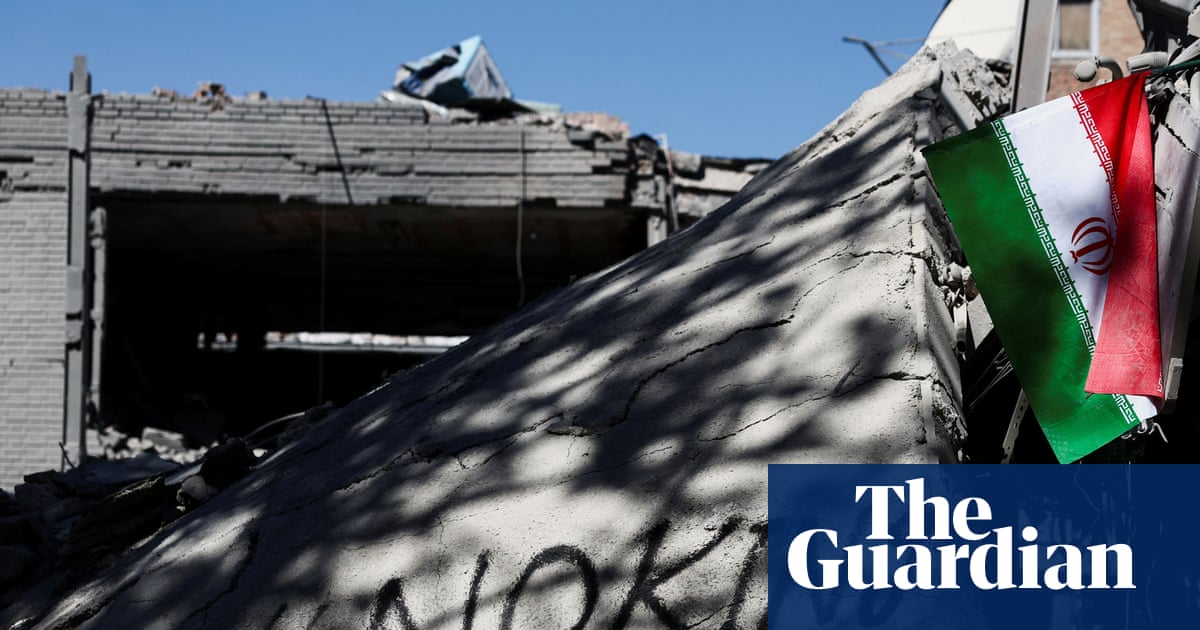
On Tuesday, Iranian state media reported that a rail bridge in Kashan was among the first targets hit, resulting in two fatalities. Israel’s armed forces announced the commencement of “a large-scale series of strikes aimed at numerous infrastructure locations.”
Reports from Iranian sources indicated that a bridge on a railway line near Karaj, northwest of Tehran, was struck, while the same city experienced power outages following attacks on a substation and transmission lines. Additional bridges in the vicinity of Qom and Tabriz were also reportedly targeted.
In a significant escalation, the United States targeted 50 military sites on Kharg Island, where Iran’s primary oil export terminal is located, ahead of a deadline set by Trump for 8 PM ET (1 AM BST). This escalation was a precursor to the ultimatum aimed at compelling Iran to make substantial concessions.
Trump emphasized in a morning post that he did not wish for such a catastrophic outcome but expressed concern that it might occur. He also expressed hope that “less radicalized minds” would take charge within Iran.
The ultimatum from Trump was set to expire at 8 PM ET on Tuesday (4:30 AM Wednesday in Iran, 1 AM UK time), as part of efforts to pressure Iran into compliance with U.S. demands. The president had previously stated that the U.S. was prepared to carry out concentrated airstrikes on Iran’s vital infrastructure unless Tehran reopened the Strait of Hormuz and ceased its nuclear ambitions, with indications that some attacks were already underway.
Legal experts have condemned the potential bombing of Iran’s infrastructure as a likely war crime due to the disproportionate impact it would have on civilians, a concern that the Trump administration has dismissed.
On Tuesday morning, Israel’s military advised Iranians via social media to avoid train travel for their own safety, warning that stations and railway lines frequented by civilians would be targeted.
On Monday, Iran rejected a ceasefire proposal that was intended to facilitate peace talks mediated by Pakistan, Egypt, and Turkey, asserting its desire for a permanent resolution to the conflict. Iran submitted a counterproposal comprising ten points, which Trump deemed “insufficient.”
While negotiations were ongoing on Tuesday morning, developments were minimal. Iranian President Masoud Pezeshkian stated on X that over 14 million Iranians had expressed their readiness to sacrifice their lives in defense of the nation, reiterating his own commitment to Iran’s cause.
An Iranian source informed Reuters that Iran sought compensation for damages and insisted on retaining control over the Strait of Hormuz, a condition the U.S. would likely find unacceptable.
U.S. Secretary of Defense Pete Hegseth indicated that the day would witness the most extensive strikes on Iran to date, with expectations for an even greater escalation on Tuesday.
Iranian media reported that Khorramabad airport in western Iran was targeted, while Israel confirmed another round of attacks on Tehran overnight. Israel claimed to have struck a petrochemical facility in Shiraz, where nitric acid, used in explosives production, was manufactured, as well as a ballistic missile launch site in northwestern Iran.
Reports from Iranian media also stated that a synagogue in Tehran was destroyed during the bombings, although Israel clarified that synagogues were not targeted.
U.S. officials disclosed that B-2 stealth bombers had deployed 30,000-pound “bunker buster” bombs on an Islamic Revolutionary Guard Corps facility in Tehran over the weekend. These munitions, GBU-57, were the same type used in a previous U.S. attack on Iran’s underground nuclear site at Fordow last June.
Israeli media reported that Prime Minister Benjamin Netanyahu informed his security cabinet that the conflict with Hezbollah in Lebanon would persist independently of the U.S.-Iran negotiations, citing a “separation of theatres.”
An attack in Saudi Arabia targeted a petrochemical complex in Jubail, prompting evacuations of workers from the facility.
In Israel, sirens were activated repeatedly as missile assaults continued, with five impacts recorded in the Tel Aviv region. Iran allegedly fired ballistic missiles equipped with cluster warheads, although there were no immediate reports of casualties.
The price of Brent crude oil experienced a slight increase, trading just above $110 (approximately £83) per barrel in the morning session.