
Reform UK has been reaching out to individuals through cold calls, encouraging them to serve as “paper” candidates for the upcoming local elections, as political parties rush to gather enough names ahead of the Thursday deadline.
Members of the public have reported receiving calls from the party, asking them to stand as candidates despite the callers having limited knowledge about them, aside from the fact that they are subscribed to Reform’s email notifications.
Among those approached were individuals affiliated with other political parties and even a journalist from The Guardian. During a recent call, the journalist was prompted with the question, “Would you be willing to become a paper candidate today and help us secure an election win?” The caller suggested that merely having their name on the ballot could lead to potential victory.
Individuals interested in becoming paper candidates are informed that their primary responsibility would be to provide their name and address. They are then questioned about any bankruptcies or criminal records before being given an application pack for candidacy.
This strategy of recruiting “paper candidates” is typically employed by parties that solicit known members rather than reaching out to unfamiliar individuals through phone calls.
A recent communication from Reform’s mailing list in London, directed at anyone who opted to receive updates, stated: “If you are interested in assisting as a ‘paper candidate,’ please help Nigel and our team by signing up today.”
The Conservative Party has also released audio footage of a cold call made by a Reform representative, which featured a somewhat awkward inquiry regarding a person’s willingness to stand as a candidate in a Birmingham area.
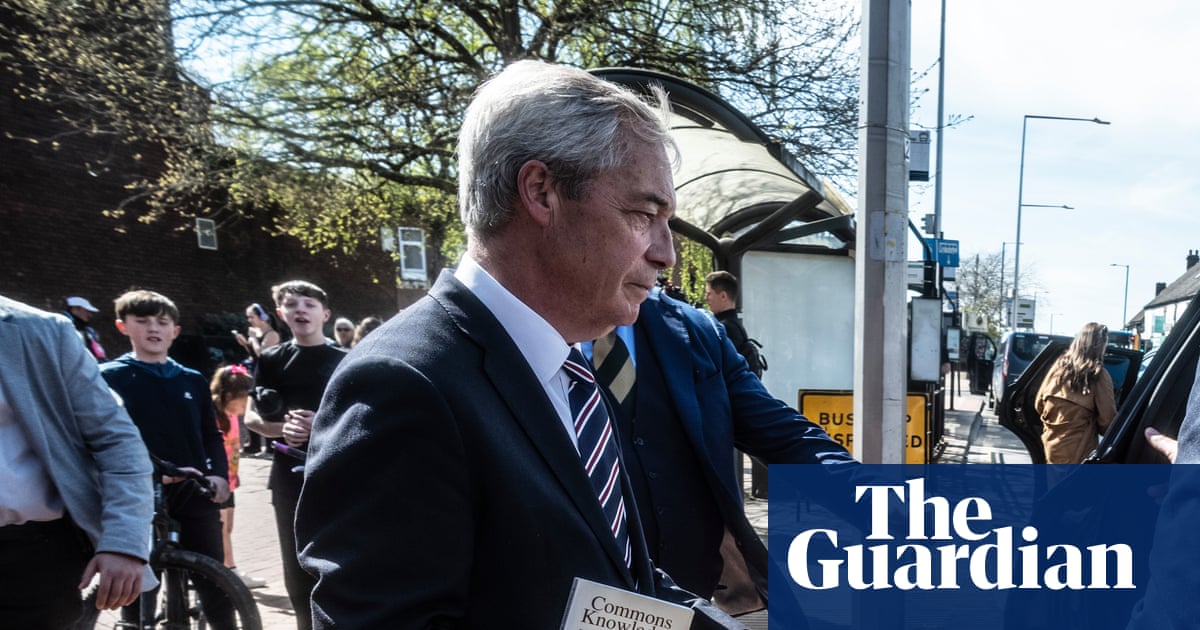
However, during an event in Warwickshire on Tuesday, Nigel Farage refuted claims that Reform was cold calling individuals in Birmingham to solicit their candidacy for local elections, labeling such actions as “very, very fruitless.” He assured that the party would present a full slate of candidates throughout the region.
Farage admitted that they had contacted registered party members to gauge their interest in participating, asserting that this is a common practice among all political parties, especially as they all strive to fill candidate slots before the April 9 deadline.
He further noted, “These elections wouldn’t even be occurring if we hadn’t applied for and received a judicial review in the high court, compelling the government to comply. There are 4.6 million individuals, including many in the West Midlands, who are eligible to vote solely because of our legal efforts.”
The Conservative Party has also been soliciting individuals to act as paper candidates, with an email sent in Tameside indicating that there would be no obligation to run a comprehensive campaign or dedicate significant time, and that the only requirement was to be listed as a Conservative candidate on the ballot.
Similarly, the Green Party and Liberal Democrats have previously provided guidelines on serving as paper candidates in earlier elections.
Experts have raised concerns about the implications of parties nominating “paper candidates,” arguing that it can be misleading for voters if those listed are not genuinely committed to the responsibilities of elected office.
The increasing competition among five political parties—Labour, Reform, Conservatives, Greens, and Lib Dems—across various regions in England during the local elections introduces an element of unpredictability to the outcomes, potentially leading to surprises for candidates who entered the race without expectations of victory.
Dr. Jess Garland, the director of policy and research at the Electoral Reform Society, commented, “Under the first-past-the-post voting system, many votes often go uncounted, which leads parties to nominate ‘paper candidates’ believed to have little chance of winning.”
She added, “This represents a troubling symptom of our antiquated two-party system, which is now increasingly challenged by multi-party dynamics, resulting in chaotic and unrepresentative election outcomes. This situation risks further disenchantment among voters, who may feel their votes carry little weight on election day and could lead to local councils that inadequately reflect the preferences of their constituents.”
“This underscores the need for a transition to a more equitable, proportional electoral system that ensures a greater number of votes are counted and that local councils and parliaments more accurately represent the electorate’s choices,” she concluded.