
On Tuesday, the Supreme Court displayed astonishment regarding the application of the anti-untouchability provision within the Constitution to the customs of the Sabarimala temple. This inquiry arose from a five-judge panel’s decision in 2018, which ruled against the age limits imposed on women’s entry into the hill shrine situated in Kerala.
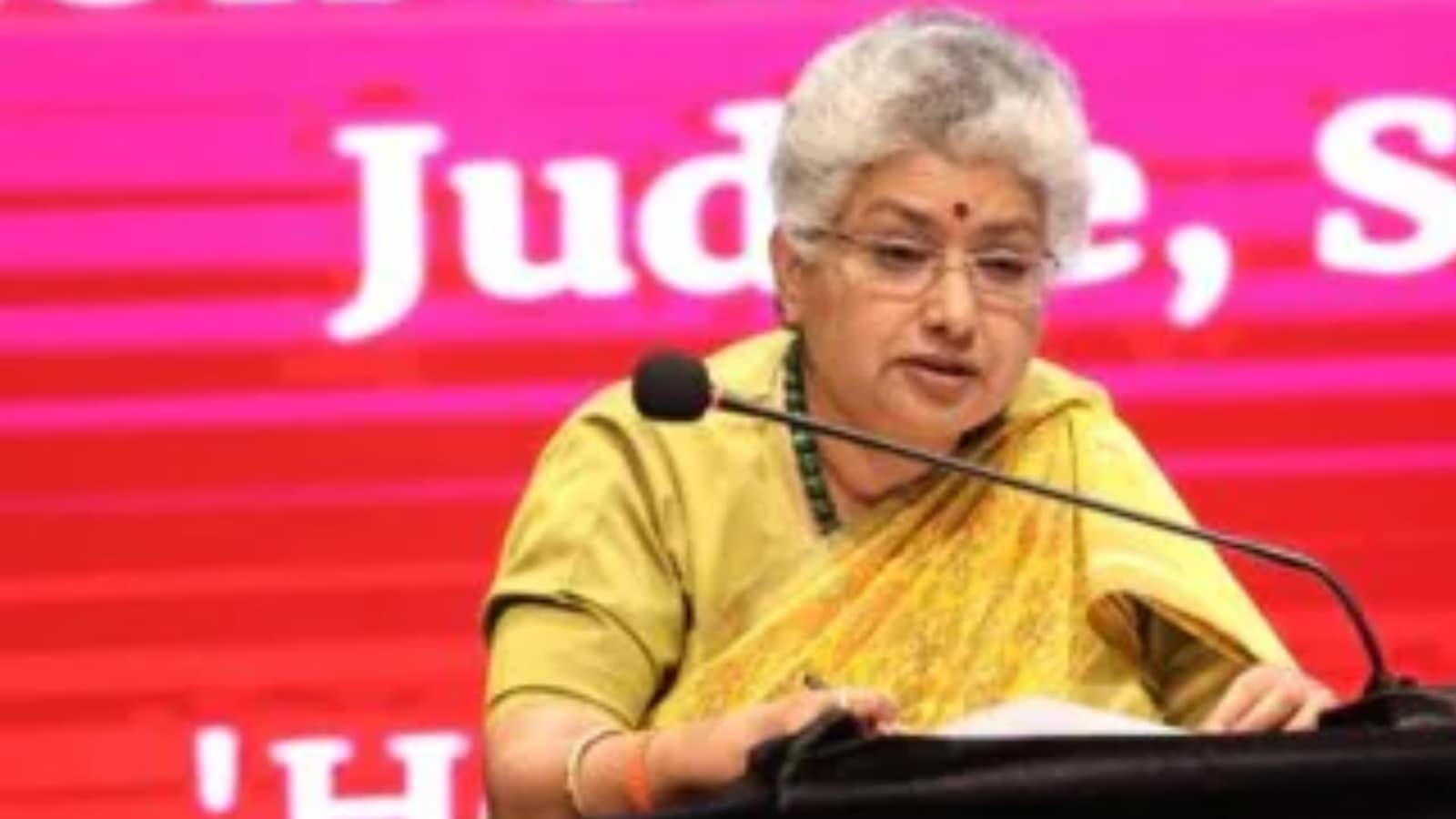
Justice B V Nagarathna, the only female member on the nine-judge panel currently reviewing constitutional issues stemming from petitions for a reconsideration of the September 28, 2018, Sabarimala verdict, questioned the applicability of the concept of untouchability for just three days each month. “Untouchability has a historical context, and Article 17 was established as a fundamental right to combat it. I find it challenging to comprehend how the notion of untouchability can be argued in relation to Sabarimala… Speaking from a woman’s perspective, it is untenable to suggest that untouchability exists for three days and disappears on the fourth day… Article 17 cannot be selectively applied for just three days,” she remarked.
The bench, led by Chief Justice of India Surya Kant, includes Justices M M Sundresh, Ahsanuddin Amanullah, Aravind Kumar, Augustine George Masih, Prasanna B Varale, R Mahadevan, and Joymalya Bagchi.
Justice Nagarathna’s comments came in response to Solicitor General Tushar Mehta, who voiced strong disagreement with the 2018 ruling that associated the untouchability clause with Sabarimala practices. “I must express my strong objection to the interpretation that Article 17 applies to women, implying that they are treated as untouchables,” Mehta asserted.
The Solicitor General characterized the Sabarimala case as having been incorrectly decided, stating, “It is my position that this ruling is erroneous and should be redefined as an incorrect law.” The petitioners contended that the age restrictions imposed on women aged between 10 and 50 were based on misguided perceptions of impurity. Justice D Y Chandrachud, who was part of the original five-judge bench, concurred with this viewpoint, asserting that such practices constituted untouchability, which is prohibited under Article 17.
On Tuesday, Mehta expressed his agreement with Justice Nagarathna’s line of questioning. He elaborated that the age restrictions at Sabarimala were unique to that particular temple, dedicated to Lord Ayyappa, and noted that other temples dedicated to Ayyappa do not impose similar restrictions. “Let’s be clear: Lord Ayyappa temples worldwide welcome all women, with the exception of this specific temple, which is an exceptional case. To my knowledge, there are three Lord Ayyappa temples in Delhi where women of all ages freely worship,” he stated.
Mehta emphasized the importance of respecting denominational practices, arguing that not all religious customs violate human dignity or individual freedom. He used the example of covering one’s head in certain religious contexts to illustrate that such practices do not inherently detract from one’s dignity or autonomy. He stated that the Sabarimala ruling incorrectly suggested that such practices undermine individual rights.
Furthermore, he indicated that the Sabarimala judgment had overlooked the protections guaranteed by Article 26(b), which affirms the right to manage religious affairs, for the devotees of Ayyappa by stating they did not constitute a denomination. However, the Solicitor General noted that protection is also available to subsets of a denomination.
He clarified that while he would not assert that Article 26 rights are absolute, it should not be interpreted in isolation. “Article 26(b) cannot exist as a standalone provision. It must be read in conjunction with Article 25 and other sections of the Constitution. Some interpretations suggesting that Article 26(b) is unrestricted are overly broad,” he remarked.
Addressing the influence of Western perspectives on Indian law, Mehta commented, “India is not the patriarchal or gender-stereotypical society that the West often perceives. This misunderstanding can lead to issues.”
He added, “India has historically treated women as equals, often elevating their status. We are a society that reveres women, from the President to the Prime Minister and the judges of the Supreme Court, all of whom honor our female deities. Hence, we should be cautious about importing Western notions of patriarchy or gender biases.”
Mehta also highlighted the limitations of constitutional courts in adjudicating matters of faith, asserting that they are not equipped to serve as ecclesiastical courts. “In relation to Lord Ayyappa, the attributes of a deity should not be subject to judicial scrutiny,” he posed.
Justice Bagchi inquired whether a religious practice understood by a particular denomination could be evaluated against the equality provisions outlined in Articles 14 to 16. Mehta responded by stating that neither Article 26 nor Article 25 holds superiority over the other; rather, their interpretation should be purposeful, integrating both articles effectively.
On September 28, 2018, a five-judge bench of the Supreme Court, in a 4:1 decision, revoked the age restrictions on women at the temple and deemed Rule 3(b) of the Kerala Hindu Places of Public Worship Rules, 1965, unconstitutional, which allowed for the exclusion of women based on customs. Subsequently, on November 14, 2019, the Supreme Court, while addressing review petitions related to the case, indicated in a 3:2 ruling that the 2018 decision might have implications for other religions and needed a more thorough evaluation. Thus, the review petitions were held in abeyance until a larger bench could address the issues.