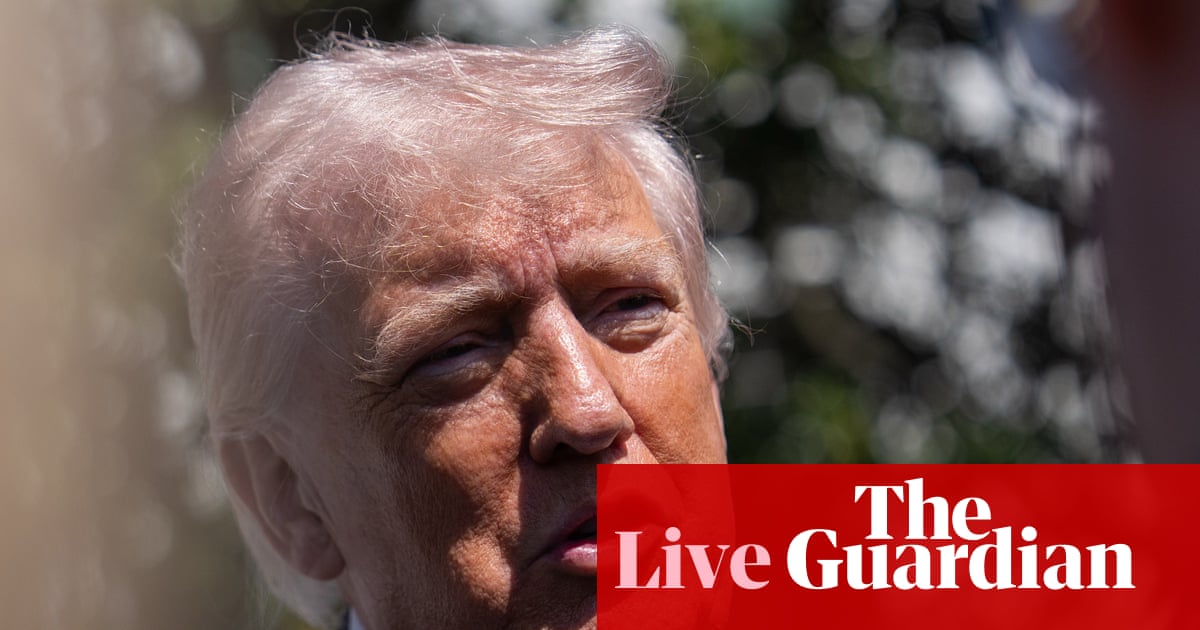

Donald Trump’s recent declaration to potentially obliterate a “whole civilization” if Iran does not agree to a deal that includes reopening the Strait of Hormuz has intensified the existing political divide within the United States.
Members of the Republican Party, along with some former officials, have commended the administration for its assertive stance in the stalled negotiations with Iran, viewing it as a necessary show of strength. Conversely, Democrats have criticized the president’s remarks—particularly striking even amidst his usual inflammatory rhetoric—as justification for his removal from office.
Interestingly, some of the most vocal criticism is emerging from within Trump’s own political circle. Several far-right commentators, who were once staunch supporters, have distanced themselves from him over what is being termed Operation Epic Fury, expressing concerns over his threats to target civilian and energy facilities. Critics argue that Trump has strayed from his campaign promise to avoid foreign entanglements since the onset of the US-Israel conflict with Iran.
Former Fox News host Tucker Carlson labeled the strategy “vile on every level” during a recent episode of his online show, emphasizing that “not even a month and a half into the conflict… we’re going to use our military to kill civilians in that country.”
Marjorie Taylor Greene, once a reliable ally of Trump in Congress, has joined Democrats in advocating for his removal under the 25th Amendment. Right-wing broadcaster Alex Jones also called for Trump’s ouster, stating on social media, “You can have a good leader, and they just go crazy. That’s the madness of a king.”
In a similar vein, Candace Owens, a prominent figure in the MAGA movement, reiterated her opposition to the bombing campaign, branding Trump as “a genocidal lunatic” and urging intervention from Congress and military leaders.
Amid this turmoil, Iran’s Supreme National Security Council has agreed to a two-week ceasefire in its conflict with the United States and Israel. Iranian representatives are scheduled to meet with American officials for discussions in Islamabad starting Friday.
The council released a statement emphasizing that this ceasefire does not equate to the end of hostilities, asserting, “Our hands remain upon the trigger, and should the slightest error be committed by the enemy, it shall be met with full force.”
Even as Trump announced a potential ceasefire agreement, Israel’s military issued warnings that Iran had launched missiles toward its territory.
This warning followed Trump’s announcement of a two-week suspension of military attacks on Iran as part of a ceasefire contingent on Iran’s complete reopening of the Strait of Hormuz.
The Israeli military confirmed the identification of missiles fired from Iran, stating that defensive systems were engaged to intercept the threat, with explosions reported in both Jerusalem and the West Bank.
Trump stated in a post on Truth Social that he had agreed to this “double-sided CEASEFIRE” after discussions with Pakistani leaders, claiming that the U.S. had achieved its military objectives and was progressing toward a lasting peace agreement with Iran and stability in the Middle East. He mentioned receiving a ten-point proposal from Iran, which he believes provides a viable framework for negotiations.
As Trump’s deadline for Iran to reopen the Strait of Hormuz approaches, protests have erupted outside the White House against the ongoing conflict.
Democratic Senator Elizabeth Warren of Massachusetts has called on Senate Majority Leader John Thune to reconvene the Senate to vote on halting the war in Iran, stating, “Congress needs to pull the emergency brake now. We should be voting to stop Trump’s war today.”
Warren urged constituents to contact their representatives and implore them to take action against the war, emphasizing Congress’s power and responsibility in this matter.
Senator Ron Johnson, an ally of Trump, expressed concerns on a recent podcast, indicating that he would withdraw his support if Trump were to target civilian infrastructure in Iran, amid a growing sentiment of unease among some Republicans.
Johnson stated, “I do not want to see us start blowing up civilian infrastructure,” expressing hope that the president was merely using tough rhetoric without intent.
Following Trump’s alarming warning that Iran’s “whole civilization will die,” Johnson conveyed to the Wall Street Journal that it would be a “huge mistake” if Trump acted on his threats, asserting that any military action must adhere to the laws of warfare.
While most Republicans have remained silent regarding Trump’s threats, a few have called for prudence and de-escalation. Jason Carter, grandson of former President Jimmy Carter and current chair of The Carter Center Board of Trustees, publicly condemned Trump’s statements about annihilating a “whole civilization,” invoking his grandfather’s legacy during the 1979 Iran hostage crisis.
Carter remarked, “If my grandfather were here, he would challenge all Americans—Democrats, Republicans, and especially Christians who worship the Prince of Peace—to stand up and say enough is enough.”