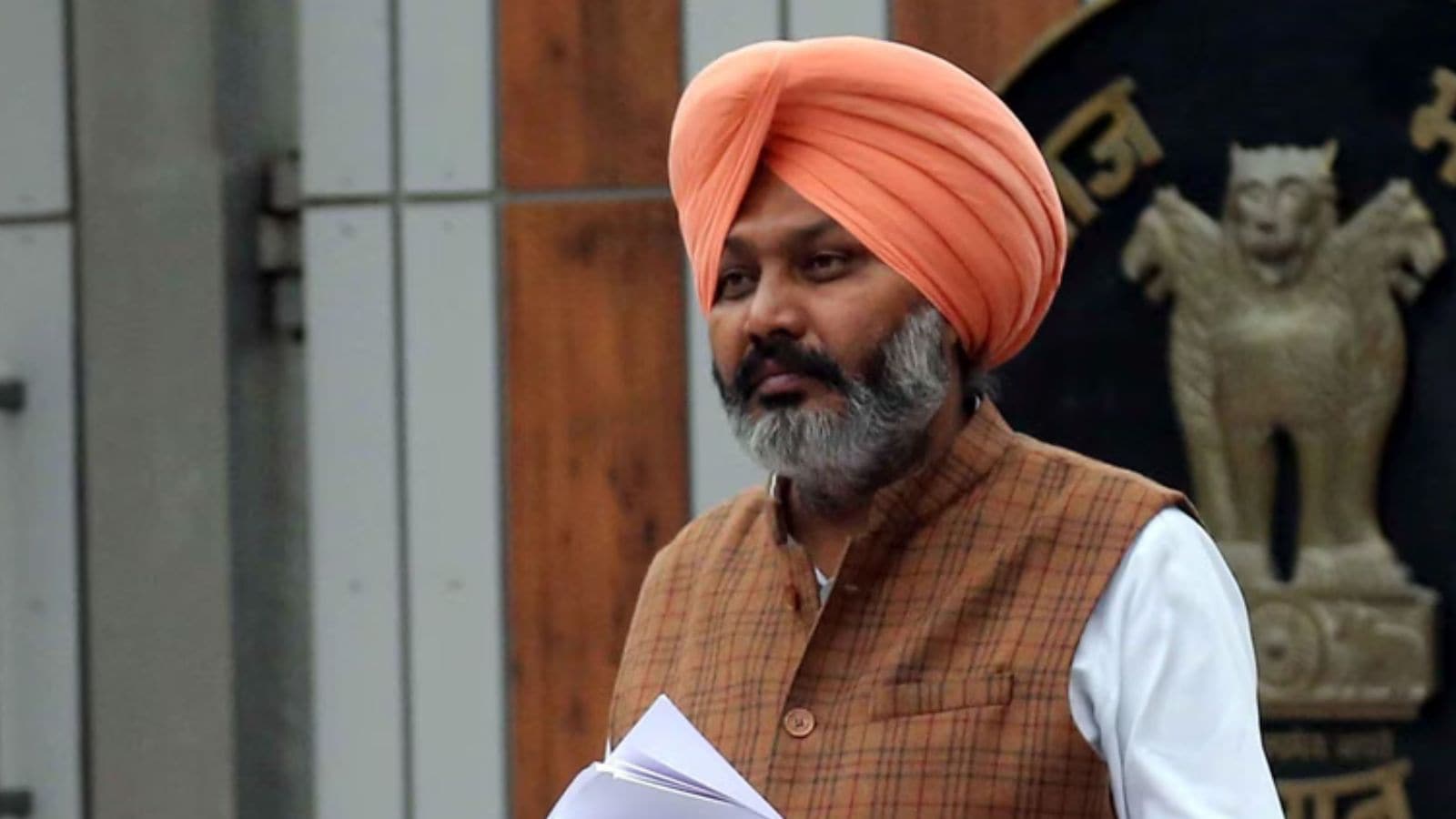

As of Tuesday, employees of the Punjab government had still not received their salaries for March, with Finance Minister Harpal Cheema attributing the delay to a “technical issue” and recent bank holidays. He indicated that some government workers might not receive their salaries until as late as April 15 or later.
Cheema stated, “The salary for March has been delayed annually. There are software-related challenges, and there were two days of bank holidays. Payments will be made soon, although some employees might experience delays beyond April 15. They comprehend the situation and typically do not voice concerns, understanding it is a technical matter.”
The monthly salary expenditure for the Punjab government amounts to Rs 3,260 crore.
Sukhchain Singh Khaira, president of the Punjab Government Employees Association, confirmed that as of Tuesday evening, salaries had not been disbursed. “We have not yet received payment. We have been informed that we will receive it tomorrow,” he remarked.
In other news, the Punjab government has secured a loan of Rs 1,500 crore to support its capital expenditures under ongoing development plans. A Finance Department notification dated April 2, which appeared in the Punjab Government Gazette, outlined that the loan would be raised through a yield-based auction conducted by the Reserve Bank of India. Bids were submitted electronically on Tuesday via the RBI’s e-Kuber platform.
For this auction, up to 10% of the total amount has been allocated for non-competitive bidders, with a limit of 1% per individual bid. The stock will have a tenure beginning on April 8, 2026, with repayment scheduled for April 8, 2036. Interest payments, calculated based on the auction’s cut-off yield, will be made semi-annually on October 8 and April 8, as noted in the notification.
The notification also indicated that the Central Government has granted approval for the borrowing in accordance with Article 293(3) of the Constitution, with payments from successful bidders due by April 8 before the close of banking hours.
Cheema downplayed concerns surrounding the loan, stating, “We have previously communicated in the Budget for 2026-27 that we would be borrowing. This is merely the first installment of the loan. It becomes an issue only if we attempt to conceal it; being transparent means it should not be a problem.”
During the Budget presentation in the Vidhan Sabha on March 9, Cheema projected that the government would borrow approximately Rs 39,970 crore in the 2026-27 fiscal year. According to budget figures, Punjab’s total debt currently stands at Rs 4.07 lakh crore and is expected to rise to Rs 4.47 lakh crore in the current fiscal year after these borrowings.
The swift increase in debt has considerably escalated the state’s interest obligations. For the current fiscal year, Punjab anticipates paying Rs 28,755 crore in interest, alongside Rs 13,725 crore allocated for the repayment of public debt. A significant portion of the state’s revenue is now directed towards managing debt rather than financing new development initiatives or improving essential sectors such as health, education, and infrastructure. The growing financial burden is also evident in the per capita debt, which has reached approximately Rs 1.04 lakh for each resident of the state.
This is not the first instance of salary delays, as similar occurrences were noted three times during the first ten months of the Congress government under Capt Amarinder Singh in 2017 and 2018.
Economist Kesar Singh Bhangu criticized the situation as a clear case of fiscal mismanagement. “If the government is borrowing Rs 1,500 crore in the first week of the new fiscal year, how will it fund its financial assistance program for women? They are already requesting various housing authorities to pay Rs 2,500 crore to the government, money that they are unlikely to return. Last year, they borrowed Rs 52,000 crore,” he stated.
According to the Budget statement, the government’s total expenditure last year was Rs 2.53 lakh crore, with Rs 1.18 lakh crore (46.6%) sourced from its own resources, and the remaining Rs 1.35 lakh crore (53.4%) derived from borrowings, including debt and advances. Bhangu pointed out that the current government inherited a debt of Rs 2.82 lakh crore and is projected to conclude its term with a debt of Rs 4.70 lakh crore.
While acknowledging that previous administrations contributed to the debt, Bhangu highlighted that they had at least not promised to render the state debt-free, noting, “The Aam Aadmi Party (AAP) pledged to eliminate the state’s debt but will likely become the largest contributors to it.”
Bhangu also raised concerns regarding the allocation for the Mukh Mantri Mawan Dhian Satikar Yojana, which aims to provide Rs 1,000 monthly to women, with Scheduled Caste women receiving Rs 1,500. “They have earmarked Rs 9,400 crore for this scheme. Given that there are approximately 1.10 crore women over 18 in the state, I question their intent. They claim they will cover 97% of women under the program, but I suspect they may either fail to deliver throughout the year or impose additional conditions,” he concluded.