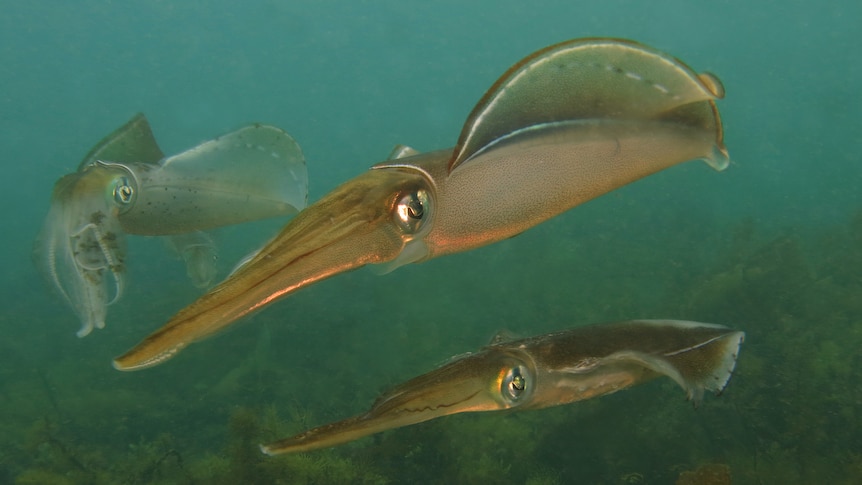

Recent sightings of southern calamari in South Australia have sparked optimism as the species reappears in areas where it had previously disappeared. Despite this positive development, the species continues to face severe challenges due to a harmful algal bloom that has significantly affected the Gulf of St Vincent.
Fishers are advocating for the continuation of fishing restrictions on certain species to facilitate their recovery. Notable recent observations include a large squid near Kangaroo Island and smaller squid at Port Elliot, following a dramatic decline in their population last year due to the algal bloom that emerged in early 2025, leading to the deaths of numerous marine creatures.
The Gulf of St Vincent, as well as surrounding regions such as the Fleurieu Peninsula, Kangaroo Island, and Yorke Peninsula, were particularly hard hit. Research and Discovery Coastal Tours, based on Kangaroo Island, reported a significant sighting of a large squid after nearly a year of absence, highlighting nature’s ability to rebound.
Local fisherman Andy Alford noted that squid have been returning to Encounter Bay over the last month, albeit in smaller sizes. He expressed concern that the recovery has been slow, attributing it to the severe impact the area faced. Alford advocated for a 12-month ban on squid fishing to support the population’s recovery, suggesting that an extended pause on fishing would ultimately benefit the ecosystem.
In light of recent developments, fishers have called for the current bag limit restrictions on recreational fishing in the Gulf of St Vincent and Kangaroo Island to be extended beyond their scheduled expiration in July. Many calamari fishers believe that lifting these restrictions in mid-2026 could jeopardize the viability of the sector.
Asher Dezsery, executive director of RecFish SA, indicated that their network, which comprises around 300,000 individuals and local tackle shops, largely supports giving squid a chance to recover. He highlighted concerns about the limited number of squid observed in the Spencer Gulf and emphasized the need to protect the species in the Gulf of St Vincent, where they are still in a precarious state.
Additionally, reports from the last breeding season revealed a low number of squid eggs, prompting calls for discussions on effective recovery strategies for the species moving forward.
Mike Steer, executive director of the South Australian Research and Development Institute (SARDI), referred to southern calamari as the “rock stars of the ocean,” noting their rapid growth and short life span of approximately 12 to 18 months. He explained that these squid can quickly reproduce, making them adaptable to changing conditions.
Steer stated that calamari spawn throughout the year and can be found in various parts of the gulf, depending on water clarity, which means recovery efforts do not have to wait for a specific season. SARDI monitors squid populations through commercial sampling and divers looking for eggs, and while the algal bloom has lessened, some areas, particularly around the western Yorke Peninsula, still show signs of its impact.
Despite the challenges, data indicates that the catch of southern calamari has decreased since September 2025. SARDI plans to integrate this information with existing recovery plans to guide management decisions. Moreover, anecdotal evidence suggests that the blue swimmer crab population is also showing signs of recovery.