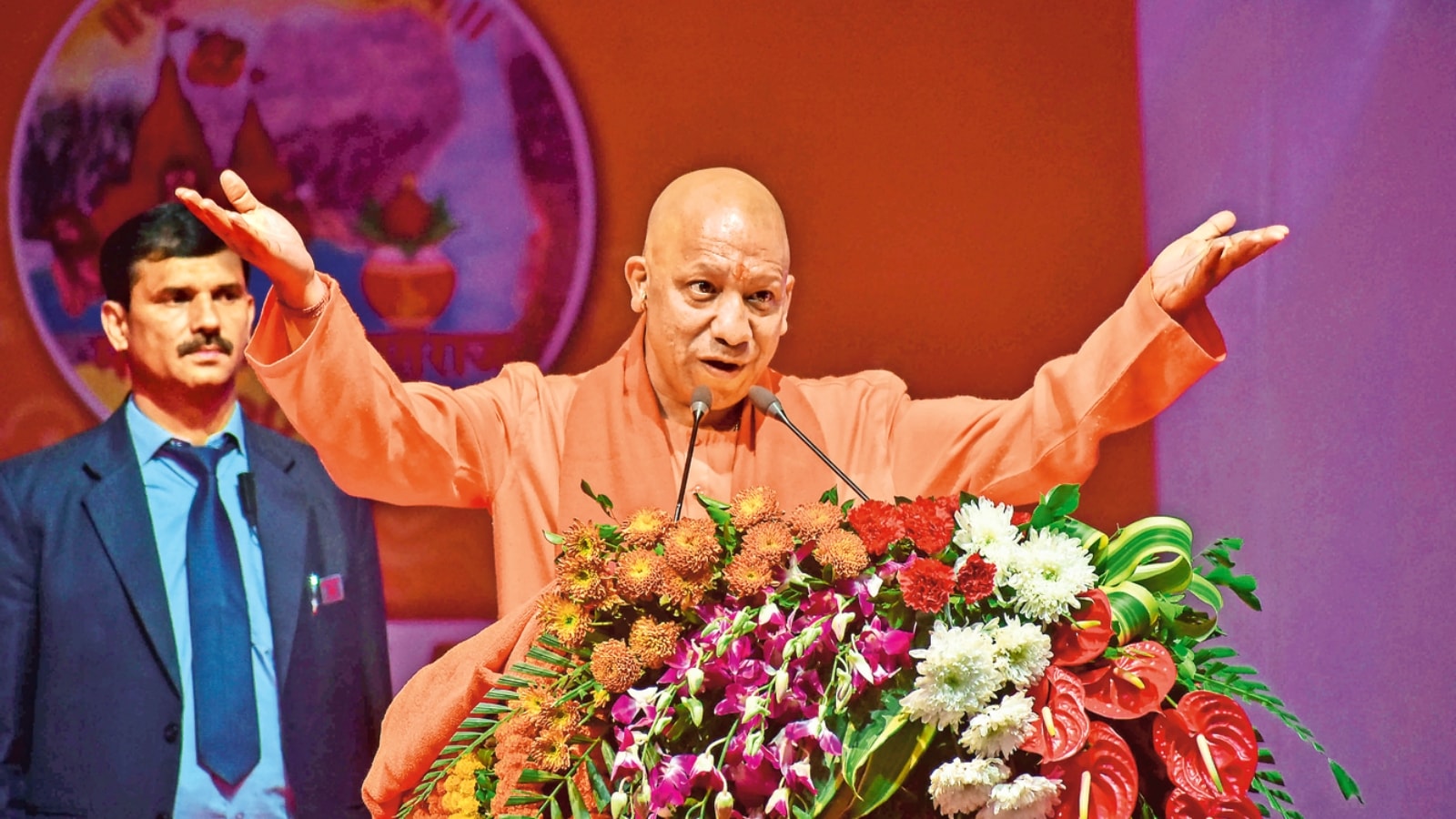

The Uttar Pradesh Cabinet, led by Chief Minister Yogi Adityanath, convened on Tuesday to sanction the redevelopment of 49 bus stations through a Public-Private Partnership (PPP) initiative. This decision is part of a broader strategy to enhance industrial investment and create job opportunities within the state, according to state officials.
Officials revealed that the redevelopment initiative will modernize 49 bus stations operated by the Uttar Pradesh State Road Transport Corporation (UPSRTC) in its second phase, utilizing a Design, Build, Finance, Operate, and Transfer (DBFOT) approach. The project is anticipated to draw investments exceeding Rs 4,000 crore, ensuring that there is no direct financial burden placed on the state government.
The government’s vision is to convert these bus stations into facilities resembling airports, featuring advanced passenger amenities such as upgraded waiting areas, sanitation services, VIP lounges, dining options, shopping centers, cinemas, and lodging accommodations. Approximately 55% of the space will be allocated for public use, while the remaining 45% will cater to commercial purposes, officials indicated.
Dayashankar Singh, the state transport minister, noted that the updated policy framework simplifies the process for investors by lowering technical eligibility criteria and extending project timelines. The lease agreements will span either 35 or 90 years, after which ownership will revert to UPSRTC. This second phase of redevelopment will extend to 52 districts, including Agra, Barabanki, Azamgarh, and Ballia, with plans to include additional districts in the future.
In addition to infrastructural developments, the Cabinet approved several initiatives under the Uttar Pradesh Industrial Investment and Employment Promotion Policy-2022, based on guidance from the High-Level Empowered Committee (HLEC).
The Cabinet has authorized the issuance of Letters of Comfort (LoC), capital subsidies, and project adjustments for various industrial enterprises across the state. Notable beneficiaries include OFC Tech Pvt Ltd in Shahjahanpur, which will receive Rs 589 crore, and AJJ Cane Industries in Hathras, which will benefit from Rs 1,128 crore in SGST reimbursement support. Other approved capital subsidies include those for India Glycols Ltd in Gorakhpur, Viscose International in Prayagraj, and Integrated Batteries India Pvt Ltd in Greater Noida.
A significant Rs 16,000 crore project proposed by Avaada Electro in Gautam Buddh Nagar also received approval for modifications to enhance its implementation process.
With a strong focus on sustainable energy, the Cabinet endorsed substantial investments in the manufacturing of solar cells and modules, aiming to transform the Yamuna Expressway and Greater Noida into clean energy hubs while reducing reliance on imports.
In another important initiative, the Cabinet approved the final bid document for the purchase of 2.5 million tablets under the Swami Vivekananda Yuva Sashaktikaran Yojana, allocating Rs 2,000 crore for the fiscal year 2026-27.
The government also granted land ownership rights to families displaced during the Partition in Pilibhit, Lakhimpur Kheri, Rampur, and Bijnor districts, allowing them to secure institutional credit and legally sell their produce. Additionally, 99 displaced Hindu Bengali families will be relocated in Kanpur Dehat at a nominal lease fee of Rs 1.
The Cabinet further approved the creation of a Forestry and Horticulture University in Gorakhpur, aimed at fostering research, environmental protection, and agricultural innovation.
Cabinet Minister Suresh Khanna stated that a total of 22 proposals were approved during the Cabinet meeting.
Stay informed with the latest updates – Follow us on Instagram.