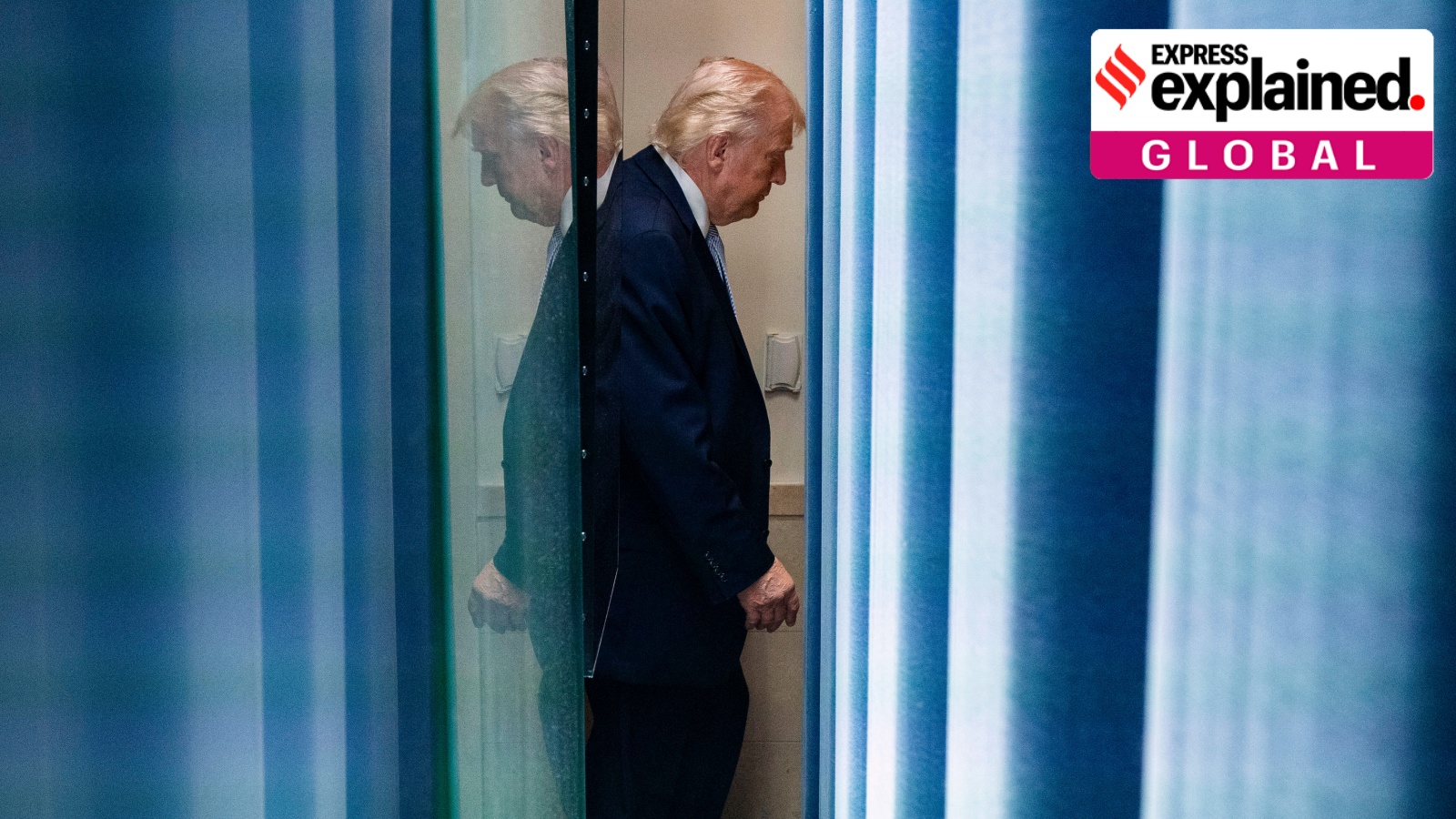

In a significant development, US President Donald Trump declared a two-week ceasefire with Iran shortly before an 8 p.m. deadline on April 7, 2023. The announcement came just an hour and a half prior to the deadline, and Iranian Foreign Minister Seyed Abbas Araghchi promptly consented to the ceasefire approximately 40 minutes later.
This diplomatic breakthrough followed a call for de-escalation from Pakistan’s Prime Minister Shehbaz Sharif, who urged both nations to ease the rising tensions in a post on social media platform X. As a result, after 39 days of conflict, there was global relief as President Trump retreated from his previously aggressive stance, which included threats to dismantle Iran’s energy infrastructure and civilization if the Strait of Hormuz was not reopened.
Trump characterized the ceasefire as a “double-sided” agreement, emphasizing his strategic approach to negotiations. He, alongside Israeli Prime Minister Benjamin Netanyahu, initiated hostilities by launching strikes against Iran on February 28. Following that, Trump had attempted to de-escalate the situation, initially announcing a five-day halt to attacks on Iranian power plants on March 23, which he later extended to ten days, culminating in the announcement of the ceasefire.
In a statement on Truth Social, Trump confirmed that he had agreed to “suspend the bombing and attack of Iran” in exchange for Iran’s commitment to fully open the Strait of Hormuz. This development is viewed as a significant diplomatic victory for the US, especially since European allies had refrained from deploying naval or military resources to facilitate the reopening of the strategic waterway.
A meeting convened by UK Prime Minister Keir Starmer had fostered consensus surrounding the immediate and unconditional reopening of the Strait, while emphasizing the importance of upholding the principles of freedom of navigation and maritime law, without resorting to military intervention.
Historically, the phrase “War is God’s way of teaching Americans geography,” attributed to Mark Twain and popularized by comedian Jon Stewart, resonates particularly in this context. Throughout the conflict, Iran has leveraged its control over the Strait of Hormuz as a potent tool of influence.
The Iranian National Security Council announced that negotiations with the US would proceed under the oversight and approval of Supreme Leader Ayatollah Mojtaba Khamenei. The council urged all political entities and citizens to support the discussions, while also warning that failure to reach a satisfactory agreement could lead Iran to resume hostilities.
In a public statement, Araghchi indicated that Iran was prepared to cease its defensive actions if the US halted its attacks. He noted that, for the next two weeks, safe passage through the Strait of Hormuz would be coordinated with Iran’s Armed Forces, taking into account technical restrictions.
While the United States does not import oil that transits through the strategically important Strait of Hormuz, which is approximately 33 kilometers wide at its narrowest point, this chokepoint carries immense significance as it facilitates around one-fifth of the global energy supply. Consequently, many nations are keenly interested in its reopening.
During the ongoing conflict, Iran had targeted US assets in the region, expanding its focus to include energy and economic infrastructures. The nation strategically utilized the Strait of Hormuz as part of its escalation tactics, rewarding vessels from countries perceived as neutral or supportive of Iran with safe passage.
Diplomatically, this strategy became known as the “Ayatoll booth,” benefiting countries like India and China. For these nations, it served as a safeguard against potential destruction of their own infrastructures, which had already suffered significant damage due to US military actions against Iranian military capabilities and industrial sites.
As Iran continues to employ Shahed drones and missiles against American and Israeli targets in the region, this two-week ceasefire provides a crucial opportunity for negotiations. Iran asserts that it has compelled the US to accept its “10-point plan,” which Trump has described as a “workable basis” for discussions.
Trump acknowledged the receipt of the proposal from Iran and expressed confidence that it encompasses a range of previously contentious issues. He indicated that the two-week period would allow for the finalization of an agreement, marking a critical test of diplomacy in addressing Tehran’s extensive demands, which have consistently included sanctions relief and assurances against aggression in prior negotiations with US officials.
Both sides have recognized Pakistan’s role in facilitating the ceasefire, highlighting its importance in the broader context of international diplomacy.