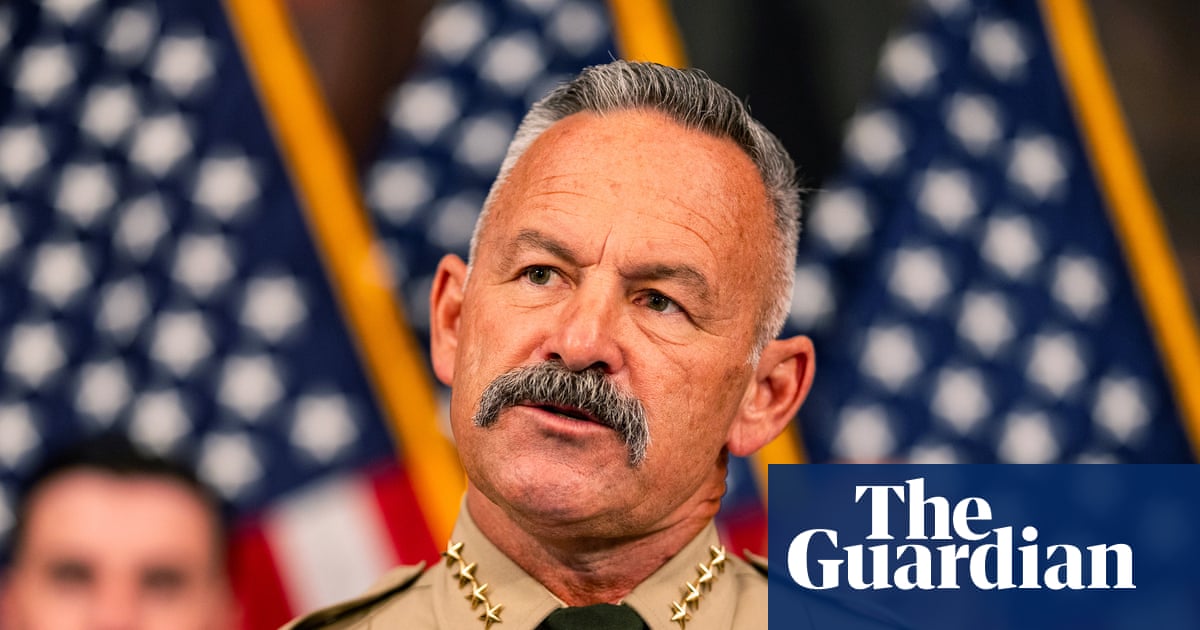

A recent decision by a sheriff in California to confiscate approximately 650,000 ballots due to unfounded fraud allegations has sparked significant concern regarding potential efforts to erode public trust in the electoral process this fall.
This situation highlights how law enforcement officials, including sheriffs, can convert baseless claims of voter fraud into actionable investigations. By executing a warrant to seize ballots, they disrupt the essential chain of custody necessary for ensuring the integrity of the voting process and suggest to the public that criminal activity may have taken place.
Chad Bianco, the sheriff of Riverside County, secured warrants in February and March to seize ballots from a special election held the previous year, in which voters overwhelmingly approved a measure to redraw California’s congressional districts. Although the warrants remain sealed, Bianco cited a citizen activist group’s claims of a discrepancy of 45,896 ballots between those cast and those counted. Proposition 50, the referendum in question, passed statewide by nearly 30 points, and in Riverside County, it achieved a margin of over 82,000 votes, reflecting a difference of nearly 13 points.
No allegations of fraud or misconduct have been made, nor has there been any request for a recount.
Bianco, a Republican candidate for California governor, is currently competing to secure a position among the top two candidates in the upcoming primary election on June 2. This week, former President Donald Trump endorsed Bianco’s Republican opponent, Steve Hilton.
Art Tinoco, Riverside County’s registrar of voters, has stated that the county investigated the allegations and found them to be unfounded. He informed the county’s board of supervisors in February that the basis for the claims was misleading. Activists had relied on a raw count of submitted ballots without accounting for the fact that the county first verifies signatures and other information to ensure that ballots can be counted. When the data is accurately analyzed, it shows there were actually 103 more ballots counted than the number of recorded voters, a minor discrepancy consistent with what other counties have experienced and within state allowances, according to Tinoco.
Bianco mentioned to the San Francisco Chronicle that his office intended to conduct a hand recount of the ballots—a method that can be error-prone—and anticipated that the numbers would align precisely. He also indicated to the Washington Post that he might consider seizing ballots during the June 2 primary if questions arose about the results.
California Attorney General Rob Bonta, a Democrat, filed a lawsuit last month to cease Bianco’s investigation, labeling it an “amateur and dubious ‘recount’.” He expressed concern that Bianco’s actions could undermine public confidence in the forthcoming primary and general elections, not only in Riverside County but throughout California. Shortly thereafter, Bianco announced he was pausing the investigation due to the politically motivated lawsuits and court filings, though the attorney general’s legal efforts to halt the investigation are still in progress.
Bonta criticized Bianco’s decision to seize ballots based on vague and unsubstantiated allegations regarding the November special election, warning that such actions set a perilous precedent and would only foster distrust in the electoral system.
In response, Bianco asserted that politics did not influence his investigation. He stated, “I value everyone’s opinion, particularly those who have gained expertise through media outlets. Any investigation is a fact-finding endeavor to ascertain the truth of the allegations and identify if anyone is responsible. Politicians and sensationalist media have distorted this into a political issue. Investigations must continue regardless of potential emotional reactions.” He further claimed that his investigation had been conducted discreetly, and that it was Bonta’s interference that politicized the situation.
In a broader context, Bianco’s actions mirror those of the Justice Department, which has faced criticism for its investigation into the 2020 election in Fulton County, Georgia. There, the FBI relied on unsubstantiated claims presented by citizen activists to secure a search warrant for ballot seizures from that election.
To obtain a search warrant, prosecutors must demonstrate to a judge that there is probable cause to believe a crime has occurred. Experts have indicated that the affidavit supporting the search warrant in Fulton County did not establish probable cause. In Riverside County, the sealed nature of Bianco’s warrants prevents any assessment of the validity of his claims.
Darius Kemp, executive director of the California chapter of Common Cause, a nonpartisan watchdog organization, remarked, “Until actual evidence is presented, it appears that the Riverside sheriff is pursuing unfounded allegations.” He stressed the importance of transparency and integrity in the election process for Californians.