
Despite the recent arrival of wheat in some grain markets following last week’s adverse weather conditions, a significant issue is emerging in the mandis of Punjab. Commission agents, known as arhtiyas, are escalating their calls for the reinstatement of the full 2.5 percent commission rate, which they believe has been undermined by the introduction of the phrase “up to 2.5%” in a notification from 2020.
The arhtiyas contend that the inclusion of “up to” fundamentally changed their commission framework. Previously, the Punjab Agricultural Produce Markets Act mandated a fixed 2.5% commission on procurement activities. However, an amendment made by the Punjab government on January 15, 2020, at the request of a senior official from the state procurement agency, Pungrain, altered this to “up to 2.5%.” Subsequently, a central government notification in April 2020 adopted the same wording, allowing authorities to pay any amount below this ceiling, which has resulted in a consistent per quintal payment of approximately Rs 46 until last year. This year, the payment has been increased by Rs 4.75 to Rs 50.75, yet this still translates to less than 2% commission rather than a percentage-based structure, according to Ravinder Singh Cheema, president of the Punjab Arhtiya Association.
The arhtiyas maintain that this change has severely impacted their earnings amid rising inflation and operational costs. “With the annual revision of the Minimum Support Price (MSP) and the continued calculation of statutory levies like the Market Development Fee (MDF) and Rural Development Fund (RDF) as percentages, why is our commission capped and fixed?” questioned Prem Goel, president of the Arhtiyas Association Punjab.
They argue that the shift to a fixed payment system has disrupted the balance, especially since procurement volumes remain high. Their role in facilitating government purchases of wheat and paddy is crucial, and the previous percentage-based system ensured that their income was in line with procurement levels. In contrast, the current fixed structure fails to accommodate inflation or rising operational costs.
The situation has also escalated to a legal dispute. Goel noted that when they attempt to challenge this issue in court, the interpretation of “up to 2.5%” is often used against them, as it legally permits payments at lower rates. “This single phrase has undermined our legal standing, as the court considers it a ceiling rather than a guarantee,” remarked Vijay Kalra, president of the Federation of Arhtiya Association of Punjab.
Additionally, the commission agents have expressed frustration over administrative shortcomings and internal resistance to resolving the matter. They allege that despite assurances from a ministerial group regarding the removal of the “up to” clause and the legal support for their case, the necessary amendments have not been enacted. Some have accused a senior official in the state procurement agency of obstructing the process and misleading higher authorities, which hampers corrective measures.
Cheema urged the Punjab government to strongly advocate with the Centre, emphasizing that procurement payments are dictated by central notifications. The discontent has already manifested in public demonstrations, with arhtiyas holding a significant protest on March 16 and submitting multiple requests to the government. Kalra warned that if their demands are not addressed, protests could escalate in the upcoming days.
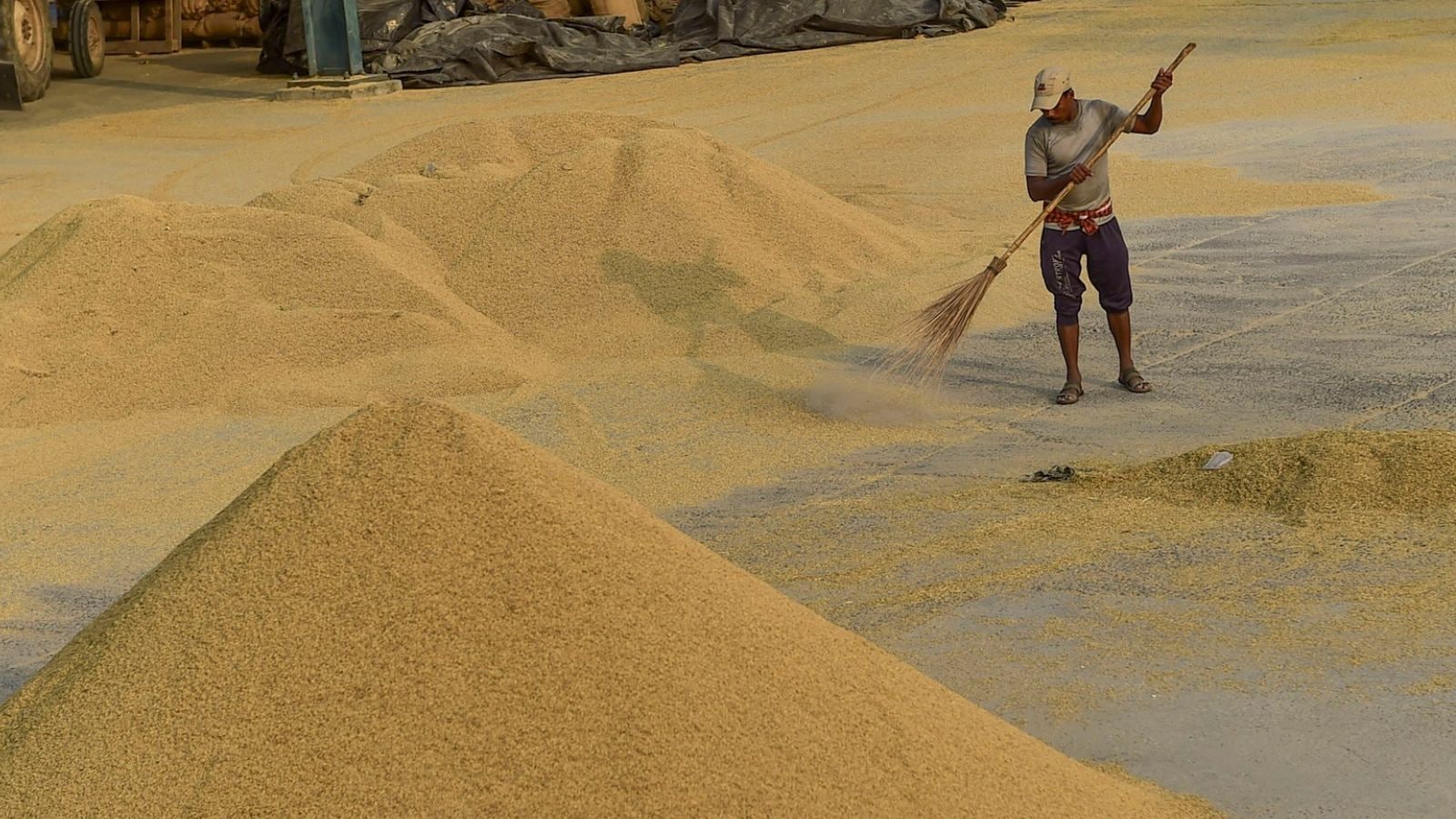
The timing of this conflict is critical, as rising wheat arrivals in mandis mean any disruptions in procurement could adversely affect farmers, traders, and the overall grain management system in the state. “We manage substantial quantities of wheat and paddy each season, yet our commissions are being curtailed. It feels like we are not being treated fairly,” Goel added.
As the procurement season continues, the dispute over the “up to 2.5%” clause is expected to remain a contentious issue. Without a policy-level intervention to clarify or amend this wording, the situation may lead to ongoing legal disputes and protests, potentially jeopardizing the efficient operation of Punjab’s crucial mandi system.
In response to inquiries, Food, Civil Supplies and Consumer Affairs Minister Lal Chand Kattaruchak stated that Chief Minister Bhagwant Mann had discussed the request for an increase in arhtiya commissions with Union Home Minister Amit Shah, resulting in an increase of Rs 4.75. He urged the arhtiyas to engage in the procurement process to ensure that farmers do not face difficulties. Regarding the demand for a 2.5 percent commission, he mentioned that their representations have been acknowledged and the matter is under consideration by the central government.
Stay informed with the latest updates by following us on Instagram.