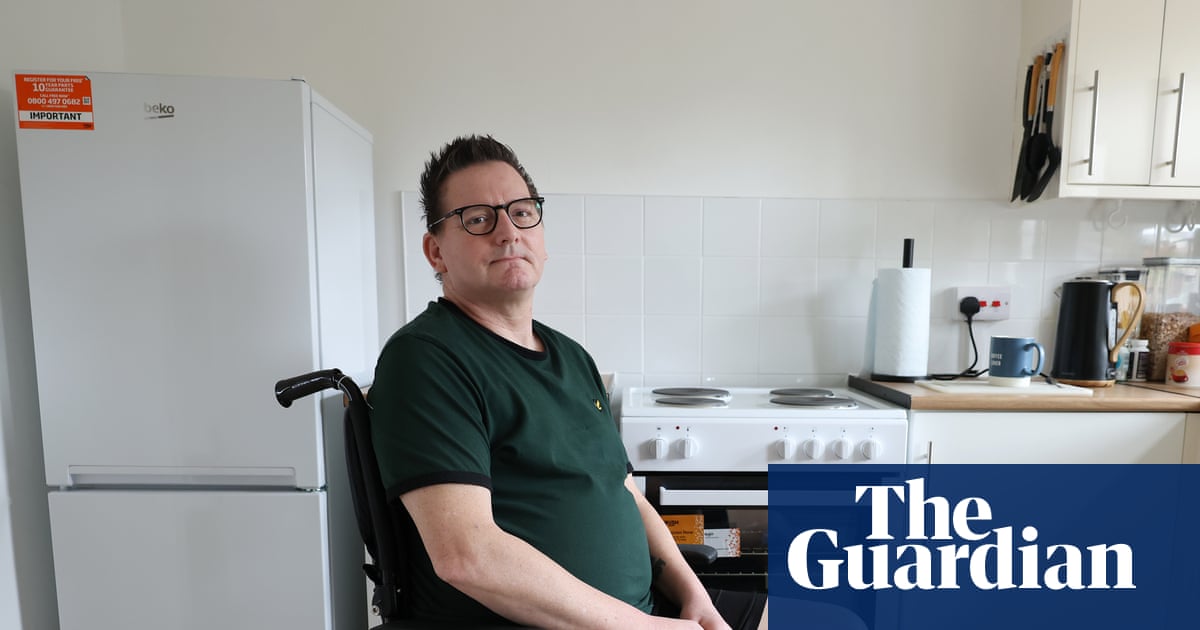

Following the breakdown of his relationship, Richard Hewett found himself needing to leave his partner’s council house. Unfortunately, he discovered that his disability benefits were insufficient to secure a flat in his hometown of Essex, leading him to the difficult decision of sleeping in his car.
At the age of 59, this was not the life he envisioned. Standing at 6 feet 2 inches, Hewett struggled to find comfort in his Ford Focus. His situation worsened when he suffered an ankle injury that became infected, resulting in sepsis and ultimately the amputation of his leg.
The most painful aspect for Hewett, however, is the sense of shame he feels. His inability to maintain his appearance—a source of pride—has been distressing. He resorts to using public restrooms in parks, often facing judgment from passersby who question why he doesn’t find somewhere more appropriate.
“It was horrendous,” he reflected. “People are incredibly judgmental… It significantly affected my mental health.”
Hewett’s experience reflects a troubling trend: an increasing number of older adults facing homelessness as housing benefits fail to keep pace with rising rents. Recent statistics from the Office for National Statistics reveal that 15,690 households led by individuals aged over 65 are at risk of homelessness, marking a staggering 79% increase over the past five years.
Hewett believes that life is becoming increasingly challenging for older individuals, particularly those reliant on state support who missed the opportunity to purchase council homes and are now feeling the impact of the limited housing availability that resulted from those sales.
Sarah Elliott, the CEO of Shelter, highlighted that as the population ages and rental prices continue to soar, the charity is receiving more inquiries from older individuals who have been uprooted from their long-standing communities and relocated to inadequate temporary housing.
“Pensioners should be enjoying their well-deserved retirement, not facing the threat of homelessness,” she argued. “To ensure that older adults have dignity and stability in their later years, we need to curb rent increases for tenants and, fundamentally, construct a new generation of social rental homes.”
Various homelessness organizations have reported an uptick in individuals over 55 seeking assistance. The Combined Homelessness and Information Network noted a rise in rough sleepers aged 55 and older in London, increasing from 450 at the start of 2024 to 713 by the end of 2025.
Alexander Brown, director of Soup Kitchen London, has observed a “clear increase” in the number of individuals over the age of 65 seeking help from the charity. This age group now comprises about 20% of the 200 individuals the organization assists daily. Contributing factors include surging food and utility costs, declining health, and social isolation.
The Greater Change charity, which has provided aid to Hewett, noted that the median age of those it supports has risen by over eight years in the past four years. Its CEO, Jonathan Tan, first noticed this trend in 2024 when the number of individuals aged over 55 receiving assistance surged from 6% to 12%. This figure has consistently remained above 10% since then.
Tan explained that older individuals seldom become homeless due to a single incident. Instead, it is a combination of loss, health issues, financial strain, and systemic shortcomings that lead to crises, further complicated by increasing living expenses, job loss later in life, and minimal chances for re-entering the workforce.
Many older adults also find navigating benefits and pensions through complex online platforms to be overwhelming, with support often arriving too late, once they are already in crisis.
“We anticipate that the situation will worsen… temporary housing is already under significant strain, and the system lacks flexibility,” he warned.
Jess Harris, a researcher at King’s College London, identified two main groups of older homeless individuals: those who have faced multiple adversities—including addiction, mental illness, and childhood trauma—who have lived intermittently on the streets for years, and those who have more recently found themselves in temporary homelessness.
The issue is further complicated by an insufficiently explored “social care gap,” which contributes to homelessness by failing to adequately manage complex health challenges, with older adults living in hostels receiving care in environments that are ill-equipped for their needs.
According to Morgan Vine, director of policy at Independent Age, the rise in homelessness among older adults is linked to the increasing number of seniors residing in the private rental sector, with one-third of older private renters living in poverty after paying housing costs.
Despite a 10.5% rise in average UK rent since April 2024, housing benefits have been frozen since 2024, a situation Vine urges the government to rectify.
Sarah*, a woman in her mid-60s, shared her own struggles after a relationship ended, leaving her to couch surf among friends and family. Like Hewett, she found her benefits insufficient to cover rent or a deposit and faced the additional challenge of having her benefits halted due to not having a permanent address.
“I wouldn’t wish it on anyone; it involves sleeping on sofas and constantly moving around,” she lamented. “It’s particularly tough for older people now, especially if they lack a support network. With rising prices, it’s hard to make ends meet… The government should provide more assistance to help older individuals find stable housing.”
A spokesperson from the Ministry of Housing, Communities & Local Government stated, “No one should have to endure homelessness. That’s why we are actively working to prevent it and investing £3.6 billion in services for homelessness and rough sleeping.”