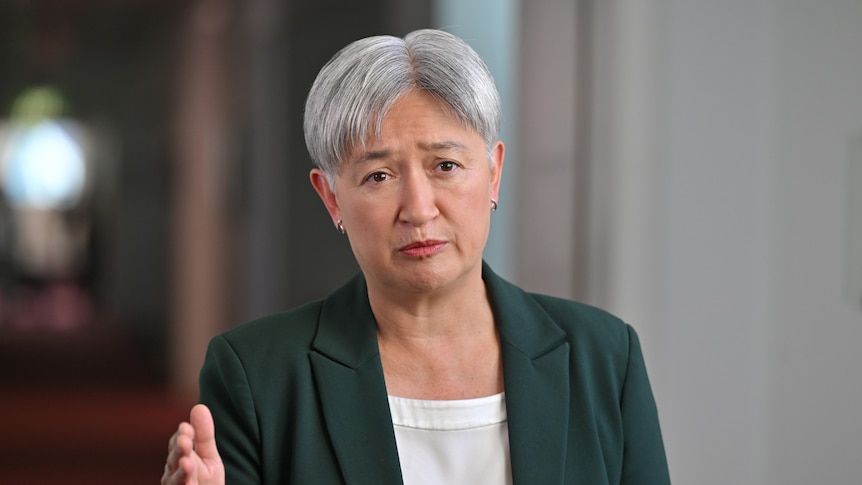

Australian Foreign Minister Penny Wong has asserted that the recently established 14-day ceasefire involving the United States, Israel, and Iran should also be extended to include Israel’s military activities in Lebanon.
This ceasefire was announced today by US President Donald Trump and Iranian officials, generating optimism for broader peace in the Middle East. However, Israeli Prime Minister Benjamin Netanyahu quickly dashed these hopes by declaring that, although he supported the ceasefire in Iran, it would not extend to Lebanon.
Netanyahu stated on social media that “Iran no longer poses a nuclear, missile, and terror threat to America, Israel, Iran’s Arab neighbors, and to the world,” but emphasized that the ceasefire “does not include Lebanon.” His comments followed an announcement from Pakistani Prime Minister Shehbaz Sharif, who indicated that the US, Iran, and their allies had reached an agreement for an immediate ceasefire, applicable in Lebanon and other areas.
When interviewed on the program 7.30, Senator Wong firmly expressed that the ceasefire should indeed apply to Israel’s operations in Lebanon. “Our position is that the world expects the ceasefire to encompass the entire region,” she asserted.
While Wong expressed hope for the ceasefire’s success, she noted the fragility of the situation. “The ceasefire is precarious, yet it is crucial for the world to see it upheld,” she added. Wong pointed out that significant differences exist among the parties involved, but the ongoing turmoil is negatively impacting the global economy and energy markets, underscoring the necessity for the ceasefire to be maintained.
As the agreement appears unstable and oil shipments have been disrupted, Wong mentioned her discussions with several Asian counterparts to ensure continued oil imports to Australia. “We have seen a notable decrease in oil passing through the Strait of Hormuz in recent weeks,” she remarked. “This supply gap in our region must be addressed. I have engaged with officials from Singapore, Korea, and Malaysia, and just prior to this interview, I spoke with the Japanese foreign minister. It’s vital that we remain in contact, as this situation presents a significant shock to global energy markets that will persist in its effects.”
Wong also joined the chorus of criticism directed at President Trump’s recent rhetoric regarding Iran. His comments have fluctuated dramatically, with recent threats to return Iran “to the Stone Ages” and declarations that “a whole civilization will die tonight.” Prime Minister Anthony Albanese and other global leaders condemned this language.
“I believe no one should be advocating for the annihilation of a civilization,” Wong stated during her interview. “This represents the views of Australia and its citizens. Leaders must recognize that their words hold substantial weight. As referenced by the Prime Minister, such statements are unacceptable.”
Wong reiterated that Australia now faces a more unpredictable US administration. “Since President Trump’s election, I’ve made it clear that he envisions a markedly different role for America on the world stage,” she explained. “We are witnessing this shift, and it’s essential that we continue collaborating with the US through effective institutional frameworks.”
Usually, the US utilizes Australian resources, such as the Pine Gap facility, for intelligence gathering, and both nations are part of the Five Eyes intelligence alliance. However, given the context of Iran’s alleged nuclear capabilities, which have been a stated justification for the US’s military actions, the issue of uranium stocks remains critical. When pressed about the status of the threat posed by enriched uranium, Wong was unable to provide a direct answer.
When further questioned regarding the uranium issue, Wong admitted that she lacked access to the intelligence available to the United States. “I do not have access to the intelligence that the United States possesses,” she responded.
For the latest updates on this ongoing story, readers are encouraged to connect with the 7.30 team.