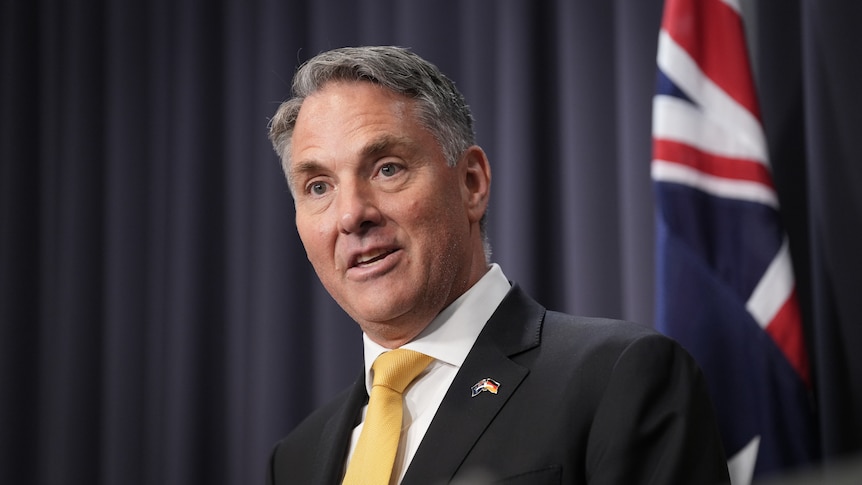

Defence Minister Richard Marles has stated that discussions regarding the maintenance of the Strait of Hormuz will persist as a ceasefire is enacted. Iran has announced that this crucial maritime route will be accessible for the duration of a two-week truce arranged with the United States and Israel.
Australia is actively participating in diplomatic and military dialogues alongside the UK, France, and numerous other nations concerning potential measures to safeguard the strait. Minister Marles emphasized that ongoing conversations are crucial to ensuring the Strait of Hormuz remains operational during this ceasefire, as well as identifying Australia’s potential role in these efforts.
During his visit to Japan, Marles engaged with Japanese officials about regional security and the continuing supply of fuel to Australia amidst current global shortages. The ceasefire agreement among the United States, Israel, and Iran includes the reopening of the vital Strait of Hormuz.
Australia is one of over 30 nations that endorsed a joint statement led by the UK, pledging support for the security of the strait. Last week, Australian representatives participated in diplomatic discussions focused on actionable steps to achieve this goal.
While Australia has been involved in conversations regarding possible military actions, no further commitments for additional military support have been made. In an interview with ABC during his Japan trip, Marles indicated that discussions on maintaining access to the critical waterway would continue throughout the ceasefire period. “That’s a conversation that we will have,” he noted, emphasizing the importance of monitoring developments related to the ceasefire and subsequent actions by the UK, France, and other leading nations.
An Australian E-7 Wedgetail surveillance aircraft has already been deployed to the region, providing defensive support to the United Arab Emirates for four weeks and will remain in place during the ceasefire. Marles refrained from speculating on whether Australia would increase its military presence in the region.
Experts have cautioned that while the reopening of the Strait of Hormuz may offer temporary relief to the global fuel crisis, the ramifications of the initial disruptions will likely persist. Marles acknowledged the government’s cautious optimism regarding the ceasefire but recognized the long-term implications of the energy crisis. He highlighted discussions on fuel and energy supplies during his meetings in Tokyo.
Japan, a key oil refiner, currently supplies only 6.8% of Australia’s diesel and a mere 0.7% of its petrol. While assurances for continued supply were given, Marles did not commit to discussions about increased Japanese energy supplies in exchange for more gas from Australia. “We are focused on fulfilling all the obligations and contractual requirements that we have in being that reliable provider of both gas and coal to Japan,” Marles stated, reinforcing Australia’s commitment to a dependable partnership.
Prime Minister Anthony Albanese is also traveling to Singapore to strengthen supply lines, with South Korea being another significant energy supplier for Australia. When questioned about potential agreements with Seoul similar to those with Japan and Singapore, Marles noted that “all the circumstances are different” but emphasized Australia’s role as a reliable provider.
Asia’s vulnerability to the fuel crisis is notable, given that approximately 60% of its oil imports originate from the Middle East. Countries like the Philippines have declared energy emergencies, while Vietnam has sought assistance from Japan and South Korea. Marles remarked that regional nations are striving to collaborate during these challenging times, highlighting the goodwill to navigate the crisis collectively.
During his brief visit to Japan, Marles met with Defence Minister Shinjiro Koizumi to discuss the Middle Eastern situation and broader regional security concerns. He remarked on the increasing significance of the Australia-Japan relationship in today’s geopolitical landscape.
Concerns have been raised regarding the potential instability in the Indo-Pacific due to the conflict in Iran and a preoccupied U.S. administration. Marles reassured that the United States continues to be a dependable ally in the region, though he refrained from commenting on President Trump’s recent controversial remarks regarding civilization. He acknowledged that while the global rules-based order may have its flaws, it has been instrumental in providing agency to middle and smaller powers like Australia. “That agency is denied if we simply live in a world that is defined by power and might,” he stated, a sentiment he noted is shared by Japan.