
The global community expressed relief following a last-minute agreement between the United States and Iran to implement a two-week ceasefire, facilitated by diplomatic efforts from Iran. This development came shortly after former President Donald Trump issued a stark warning of potential widespread bombing targeting Iran’s infrastructure, stating that “a whole civilization will die tonight.” In a surprising turn, both nations consented to a temporary halt in hostilities, and Iran announced a limited reopening of the Strait of Hormuz.
The ongoing conflict has brought to light critical, and at times uncomfortable, insights regarding the United Kingdom’s geopolitical position and military preparedness, regardless of future developments.
During his initial year as Prime Minister, Keir Starmer made significant efforts to establish a positive rapport with the U.S. president, earning a reputation as a reliable interlocutor with Trump. Just over a year ago, Starmer was seen alongside Trump in the Oval Office, enthusiastically presenting an “unprecedented” invitation for a second state visit from the King. Trump remarked that their relationship was “famously” amicable.
However, that cordiality now appears to be a thing of the past. In the aftermath of the conflict’s escalation in Iran, the once-strong bond has deteriorated significantly. Trump has expressed intense frustration over Starmer’s refusal to back the initial military actions in the Middle East, frequently ridiculing him as “no Winston Churchill” and questioning the UK’s military capabilities, accusing Starmer of attempting to join conflicts only after victories have been secured.
In a subtle yet pointed manner, Starmer has distanced himself from Trump while asserting that the relationship between the two nations remains robust. He emphasized, “Sharing intelligence daily to ensure our citizens’ safety is what defines the special relationship. Clinging to President Trump’s latest comments does not exemplify that relationship.”
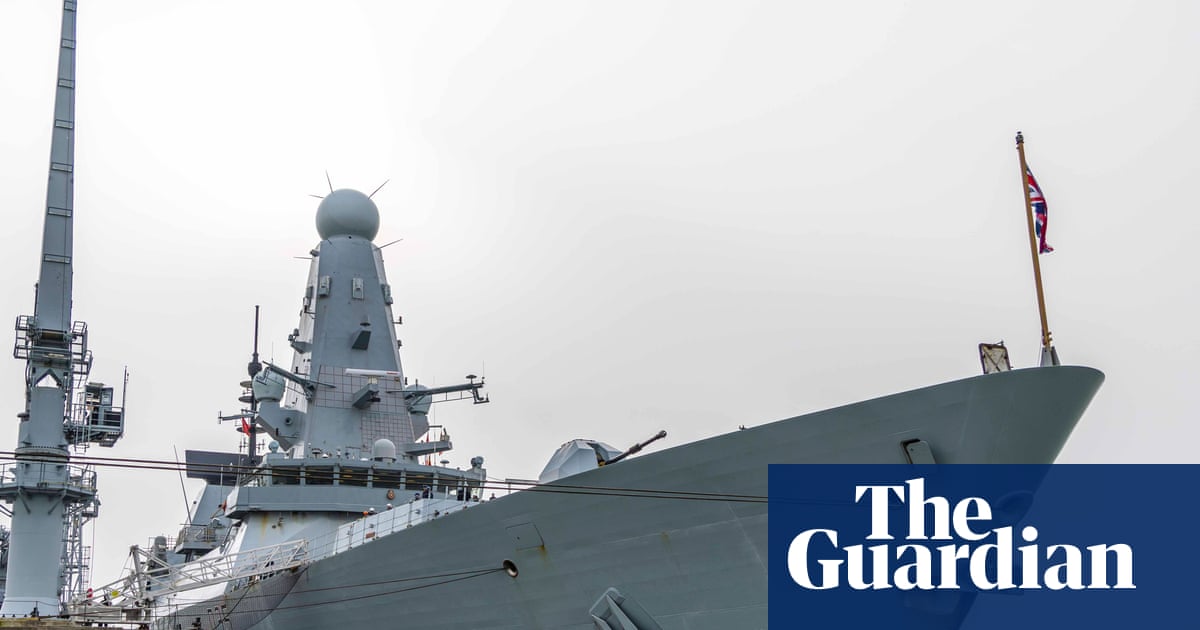
Analysts have noted that the conflict has underscored the UK’s inadequate military capacity and relative defensive vulnerabilities. The HMS Dragon, for instance, arrived in the eastern Mediterranean only three weeks after an Iranian drone struck the British base at RAF Akrotiri, and it has since docked in the region after experiencing issues with its water systems.
Matthew Savill, director of military sciences at the Royal United Services Institute, pointed out that the delayed deployment highlights a significant issue within the military: “One of the main challenges is providing the government with contingency options.” Former First Sea Lord, Admiral Lord West of Spithead, has asserted that the Navy is currently in its most precarious condition in 60 years, citing size constraints, underfunding, and an inability to adequately safeguard the nation.
At the conclusion of the Cold War, the UK allocated 3.2% of its GDP to defense and boasted a fleet of 51 destroyers and frigates. By 2007, that figure had decreased to 25, and analysts now report an aging fleet of just 13 vessels. The UK currently spends 2.4% of its GDP on defense, with the Labour party committing to a modest increase to 2.5% by April 2027.
At the NATO summit last summer, Starmer pledged to raise defense spending by approximately £30 billion, targeting 3.5% of GDP by 2035. In the recent spring budget, Chancellor Rachel Reeves indicated ambitions to achieve 3% “for the next parliament.” However, a detailed 10-year defense investment plan has been delayed since last autumn, with no timeline for its release.
Military experts have long contended that successive administrations have been hesitant to confront the “rhetoric to reality gap,” where the UK projects itself as a formidable military power but lacks the necessary resources to fulfill that image.
Even with the potential reopening of the Strait of Hormuz, energy analysts caution that the conflict in the Middle East may exacerbate the cost of living challenges for the British public, with rising fuel prices already being felt. Goldman Sachs has projected that fuel costs could reach levels seen in 2022. Continued disruptions in global gas supplies might result in the energy price cap in the UK increasing by £900, bringing it to £2,500 annually.
The UK’s exposure to energy price fluctuations is heightened by its increasing reliance on imports. According to a recent report from the energy department, by 2024, the UK is projected to derive 75.2% of its primary energy requirements from fossil fuels—predominantly oil and gas. The net import dependency is expected to rise to 43.8% in 2024, reflecting an increase of 3.4 percentage points from 2023, and has remained around the 40% mark since 2010. Although there is growth in domestic energy production through renewables, nuclear, and battery sources, the UK is far from achieving energy independence.
Prior to the U.S.-Israeli military actions against Iran, Starmer’s hold on power appeared increasingly precarious. He successfully thwarted a challenge from Andy Burnham by preventing him from contesting the Gorton and Denton by-election, yet many MPs were warning that his tenure could be short-lived, with concerns that a poor performance in the upcoming local elections could instigate a Labour leadership contest.
Nonetheless, Starmer’s measured approach to the Iran situation—choosing not to hastily engage in military action alongside the U.S. and Israel—has garnered praise among his party members and resonates with public sentiment. A recent YouGov poll indicated that 60% of Britons opposed military intervention, while only a quarter supported it. Emily Thornberry, the Labour chair of the foreign affairs committee, remarked that the crisis “could be a turning point” for Starmer.
Currently, Starmer’s position appears somewhat more stable, though this could shift depending on the outcomes of May’s elections.
While Starmer seems to have bolstered his leadership for the time being, other political figures have occasionally appeared uncertain about their stances, a situation that Starmer and the Labour party have sought to exploit.
At the conflict’s outset, Conservative leader Kemi Badenoch and Nigel Farage, leader of Reform UK, advocated for a closer alliance with the United States. Farage remarked as the hostilities began, “We should…”