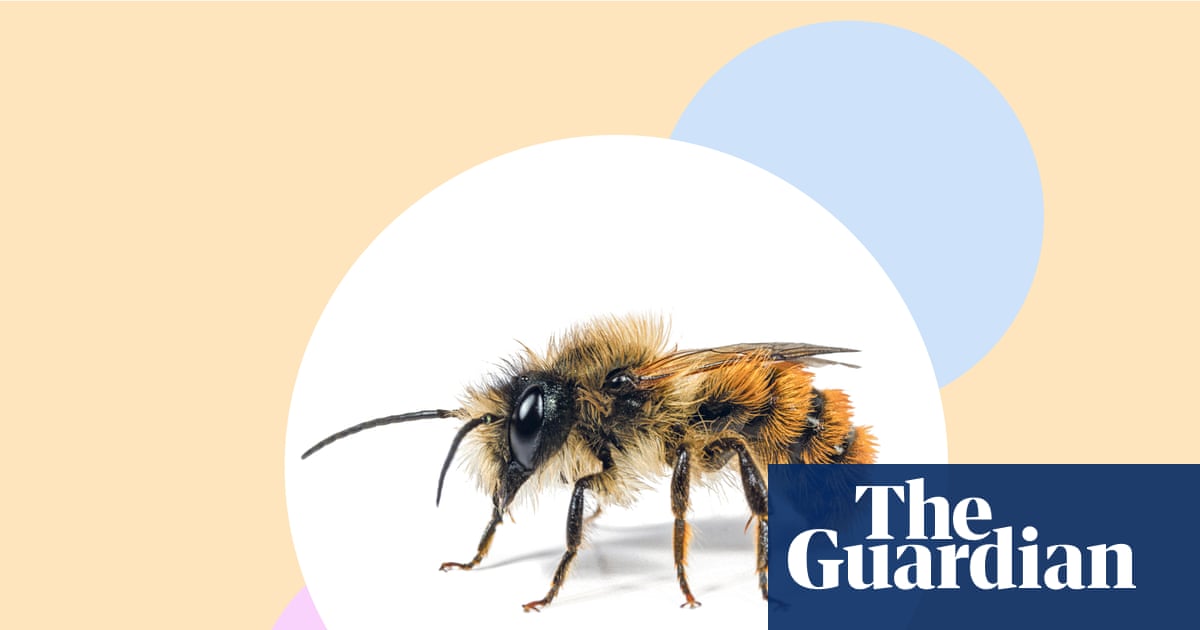

While many people are familiar with honeybees and bumblebees, the majority of the bee population in the UK consists of solitary bees. These independent insects come in a stunning variety of shapes, colors, and sizes, with over 240 known species. Laura Larkin, the chief conservation officer at Buglife, highlights one interesting variety, the hairy-footed flower bee, noting, “They are among the first bees to appear each spring, and the males have charming, fluffy tufts on their feet.”
Other notable solitary bees include leaf-cutter bees, which create perfectly round holes in leaves for nest construction, as well as tawny mining bees and wool-carder bees. Kate Bradbury, a wildlife gardener and author of “One Garden Against the World,” shares her ongoing fascination with these diverse species: “There are so many, and I’m continually learning about them. Each occasion seems to call for a different solitary bee.”
These bees play a crucial role in pollination. Larkin explains, “Their pollination style is quite chaotic, leading them to become covered in pollen.” This loose pollen is more likely to fall off as they move between plants, enhancing their efficiency as pollinators compared to other bee types. Research indicates that a single red mason bee can achieve the same level of pollination as 120 worker honeybees, showcasing the valuable contributions of solitary bees.
However, Larkin warns that the situation for these bees is not optimistic. Although specific data on solitary bee populations is scarce, Buglife’s annual Bugs Matter survey indicates a troubling annual decline of 19% in flying insect populations over the past five years. A significant drop of 59% was recorded between 2021 and 2025, a trend corroborated by long-term studies, such as a German report from 2017 that documented a 75% reduction in flying insect biomass over the previous 27 years.
Anyone with a vehicle can participate in Buglife’s Bugs Matter survey, regardless of whether they are driving. Larkin explains the process: “Participants simply log their journeys, count the number of insects that have splattered on their number plates, and submit the data. An app, which includes a ‘virtual splatometer,’ makes it easy to capture and report any bug counts, even if there are none. The survey runs until September, and the more trips recorded, the better the data quality.”
To support solitary bees, it’s essential to provide suitable nesting spaces. Different species have unique nesting preferences. For instance, cavity-nesting bees, or mason bees, typically inhabit hollow plant stems, old masonry, or decaying wood. Conversely, around 70% of solitary bees are mining bees that burrow into the ground, favoring warm, sunny locations. Creating and maintaining these conducive environments in gardens will help ensure they can establish their underground nests.
Bradbury emphasizes the benefits of varied lawn heights: “Short lawns can be beneficial for mining bees like buffish and tawny mining bees.” An ideal garden would feature both shorter, sunlit areas for nesting and longer grasses for foraging. Additionally, when mowing, it’s wise to watch for small mounds of loose soil—referred to as “volcanoes”—as these are signs of mining bee nests that should be left undisturbed temporarily.
In terms of garden maintenance, delaying the removal of plant stems and stalks can provide habitats for cavity-nesting bees. Bradbury advises against clearing out these areas too early in the autumn: “By leaving some dead plant material, you increase the chance of attracting more bees to nest in your garden.” A practical solution is to trim dead stalks to a height of about 30cm, preserving nesting opportunities.
One way to further attract solitary bees is by creating bee hotels, which are relatively simple to construct. Bradbury suggests using a box at least 16cm deep, filled with dry stems from plants like alliums and sunflowers. It’s important to place these boxes in sheltered locations that receive morning sunlight. For those who prefer purchasing ready-made options, ensure they meet the specifications of being at least 12cm deep, with holes ranging from 2mm to 10mm in diameter.
As autumn approaches, it’s best to store bee hotels in a dry and cool location to protect them from potential predators, such as birds. Bradbury points out that many solitary bees have specific relationships with native plants. For example, the large scabious mining bee thrives on field scabious, while leaf-cutter bees are drawn to great knapweed. Even individuals with limited space can help by planting beneficial flowers like crocuses and pulmonaria in window boxes. For more guidance on supporting solitary bees in gardens, resources are available on the Buglife website.