
The Trump administration has labeled its military initiative as “Operation Epic Fury.” Conversely, allies such as Australia have taken to referring to the ongoing conflict in Iran over the past five weeks as “Operation Awkward Recalibration.”
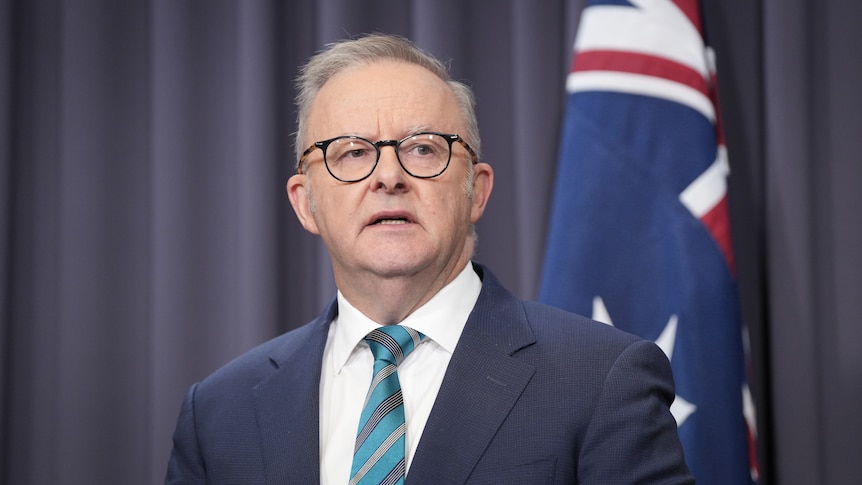
In the initial stages of the conflict, following the rapid bombing campaign and the swift assassination of Iran’s Supreme Leader, the Albanese government refrained from expressing any significant criticism. Prime Minister Albanese stated, “We support the United States in its efforts to prevent Iran from acquiring a nuclear weapon and to thwart its ongoing threats to international peace and security.”
Concerns regarding international law were dismissed as issues pertinent only to the United States, not Australia.
However, the early military triumphs concealed a more complex situation, as the prospects for a quick resolution began to diminish. While Iran’s leadership faced substantial military pressure, the country managed to disrupt the global economy through the Strait of Hormuz, prompting frustration from President Trump, who resorted to extreme threats and rhetoric, causing unease among U.S. allies.
As the conflict entered its third week, with Trump hinting at the possibility of deploying ground troops, Albanese began to subtly indicate that the “original objectives” of the war had been achieved, suggesting a need for an exit strategy.
As the war extended into its fourth and fifth weeks, with Trump oscillating between indifference and vehement demands for Iran to “Open the F***in’ Strait,” Albanese shifted from gentle suggestions of off-ramps to explicitly requesting “greater clarity” regarding the goals of the military action.
Foreign Minister Penny Wong emphasized the necessity of incorporating Israel’s actions in Lebanon into any ceasefire agreement.
Then, President Trump made a statement that crossed a line that a reliable ally could not overlook. His alarming threat to obliterate a “whole civilization” was deemed both “inappropriate” and “extraordinary” by Albanese in an interview with Sky News. This marked a rare moment of public criticism from the Australian Prime Minister towards a U.S. President during wartime.
This condemnation resonated across the political spectrum in Australia, with Nationals leader Matt Canavan stating that Trump’s comments “went way too far and beyond the realms of acceptability.”
Despite the temporary ceasefire that emerged following Trump’s remarks, neither side of Australian politics has expressed overwhelming enthusiasm. “The ceasefire is fragile,” acknowledged Foreign Minister Wong, “but it is essential for the world that it remains intact.”
Iran has announced that it is permitting “controlled” passage through the Strait of Hormuz during the ceasefire, but the specifics of this arrangement remain uncertain, according to Wong. Additionally, the fate of Iran’s estimated 440 kilograms of uranium enriched to 60 percent is unclear. Trump has claimed that this uranium is stored deep underground and will be subject to satellite monitoring, but experts remain skeptical.
Ernest Moniz, who served as U.S. Energy Secretary under Obama and played a crucial role in negotiating the now-defunct nuclear agreement with Iran, raised alarms regarding the ongoing nuclear threat. He emphasized that uranium enriched to 60 percent can still be used to create a nuclear weapon, referencing the fact that the bomb dropped on Hiroshima did not contain weapons-grade uranium yet caused catastrophic destruction.
Moniz also expressed doubts about whether all of Iran’s enriched uranium is located in a single, secure location. He asserted that effectively locating and securing this material necessitates the return of international weapons inspectors and cooperation from the Iranian government, rather than mere satellite oversight.
Foreign Minister Wong refrained from making any definitive statements on whether the war has been worthwhile. Her caution is understandable, as the Iranian regime remains intact, along with its uranium reserves and control over the Strait of Hormuz.
Unless Trump and his negotiating team can persuade Iran to concede significant ground on both its nuclear program and the Strait of Hormuz within the next two weeks, U.S. allies will find themselves in a challenging predicament. While Wong avoided directly blaming Trump for the complications arising from this costly military engagement and the ensuing global energy crisis, she noted, “We are witnessing a much more unpredictable United States under Donald Trump,” a diplomatic understatement that captures the current climate.
David Speers serves as the national political lead and host of Insiders, which airs on ABC TV at 9 a.m. on Sundays or is available for viewing on iview.