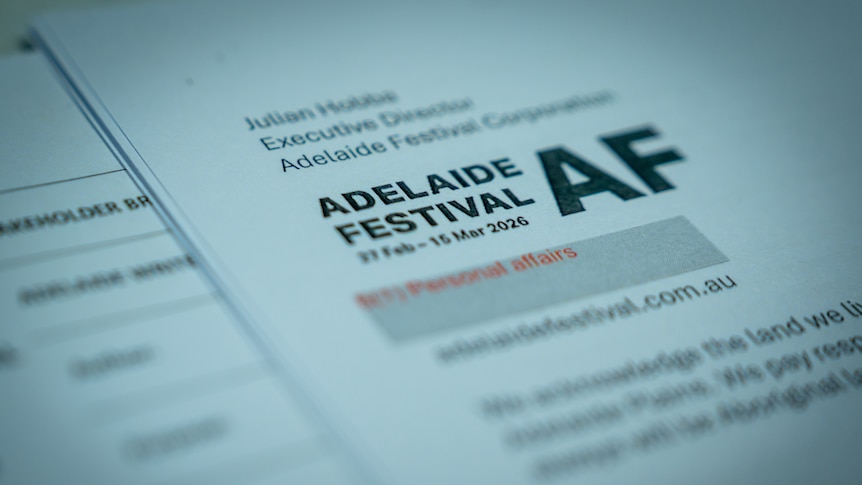

An exceptional collection of emails acquired through a Freedom of Information request has revealed the early alerts and extensive repercussions following the decision to withdraw Randa Abdel-Fattah’s invitation to the Adelaide Writers’ Week. In the weeks leading up to the public announcement, Julian Hobba, the executive director of the Adelaide Festival, communicated with the South Australian Premier’s Department, warning that a significant boycott could potentially “decimate the program.”
Karishma Reynolds, the festival’s chief financial officer, later noted that the decision to remove the author from the lineup had initiated a “cultural crisis” that was evolving rapidly and had left employees feeling unsafe in their workplace. Internal emails disclosed by the ABC indicate that, after the festival rescinded the invitation to the Palestinian-Australian author, staff members faced direct threats and were “personally targeted,” prompting the locking of office doors.
The released emails detail how the Adelaide Festival cautioned the Premier’s Department about the possible backlash that could arise from dis-inviting Abdel-Fattah, who had previously made contentious remarks regarding Israel and Zionism. On December 22, following an attack in Bondi, Hobba sent an email to the department’s CEO, along with other executives and the festival’s chairperson, Tracey Whiting. In this message, he expressed gratitude for the opportunity to discuss the programming of Dr. Randa Abdel-Fattah and provided an assessment of the potential fallout from her cancellation.
Hobba asserted that the situation, while it might appear exaggerated, was realistic. He warned that the withdrawal of Abdel-Fattah could lead to the loss of between 80 and 90 writers from the Adelaide Writers’ Week. On January 2, South Australian Premier Peter Malinauskas expressed his “surprise” at Abdel-Fattah’s inclusion in the event and conveyed his serious concerns regarding the festival’s reluctance to remove her after the Bondi incident.
Abdel-Fattah had previously asserted that Zionists had “no claim or right to cultural safety,” and she made further remarks about decolonization and the end of what she termed a “murderous Zionist colony” on social media in 2024. Shortly after the Premier’s correspondence, the Adelaide Festival board officially announced the cancellation of her invitation, which subsequently sparked a large-scale boycott by writers, leading to the cancellation of this year’s literary event and the resignation and replacement of the entire board.
In his email, portions of which were redacted before being disclosed to the ABC, Hobba referenced a similar boycott at last year’s Bendigo Writers Festival, which resulted in over 50 writers withdrawing from that event. He projected that, for Adelaide Writers’ Week, a realistic estimate would be 80-90 of the approximately 170 authors. He elaborated that the absence of certain key presenters would significantly impact the program and noted that one of the prominent Jewish writers was among those likely to withdraw, indicating that the narrative would not simply support the decision. He also anticipated that First Nations artists across the festival would likely withdraw.
Former Writers’ Week director Louise Adler, who resigned in protest against what she described as “an act of cultural vandalism,” indicated that around 180 authors ultimately withdrew from the event. In his communication, Hobba stressed to Whiting and the department executives that his concerns were not dismissive of the genuine public outrage regarding anti-Semitism. He emphasized that the decision would reflect whether the Adelaide Festival chose to censor artists critical of the Israeli government due to political pressures.
In response to Hobba’s email, department executive Clare Mockler acknowledged his thorough analysis and sought his input on other invited writers whose participation could potentially undermine community cohesion.
Another partially redacted email revealed that, a day following the announcement to dis-invite Abdel-Fattah, the former board members were alerted to safety concerns for staff. Karishma Reynolds informed them that festival employees had received direct threats, which had led to the suspension of incoming calls. She stated that security measures were heightened, and some staff members were being “personally targeted” for their opinions on the decision.
Although Reynolds did not specify the sources of the threats, she expressed worry that the cancellation of Abdel-Fattah had triggered a “cultural crisis” involving issues of free expression, racism, staff safety, and the credibility of the institution. She conveyed in her email that staff members did not feel safe either physically or psychologically, labeling the situation as an active workplace health and safety issue requiring immediate attention. Reynolds asserted that the Adelaide Festival must not legitimize harassment or coercive actions and urged the board to be fully informed about the unfolding crisis.