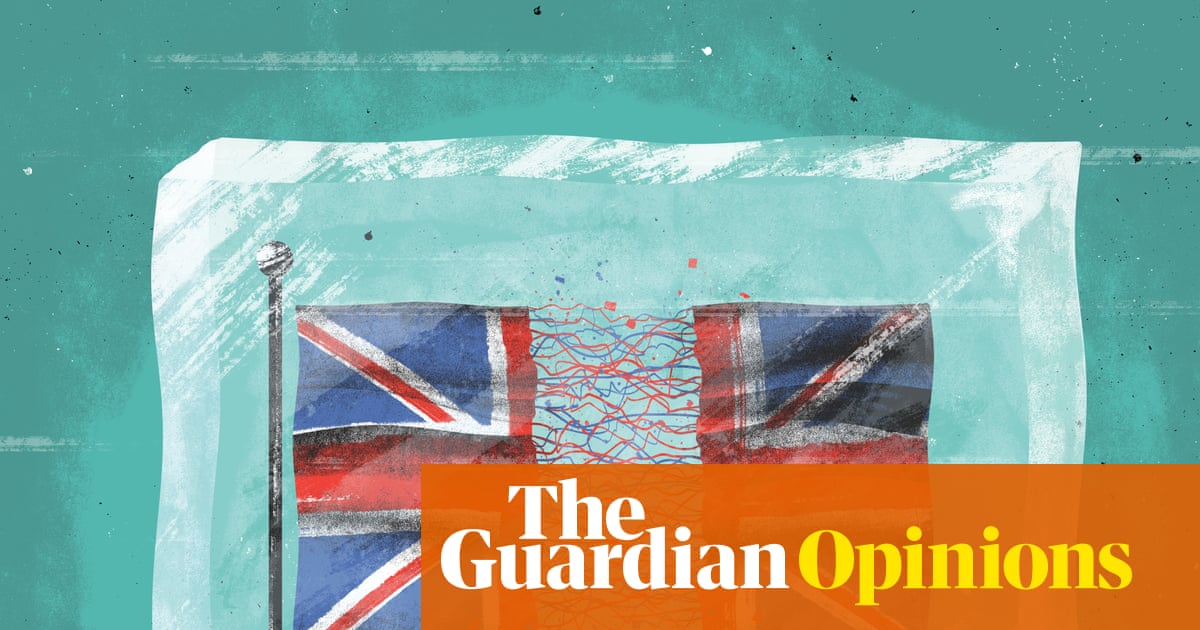

On June 23, 2016, the political landscape in Britain underwent a significant transformation. Prior to this date, voters typically aligned themselves with traditional parties, predominantly Labour or Conservative. However, as the votes were cast that day, the electorate was sharply divided into two distinct factions: those in favor of remaining in the European Union and those advocating for leaving. This division has persisted long after the referendum results were announced, leading individuals to identify themselves not by party affiliation but by their stance on Brexit, adopting labels such as “remoaners” or “Brexiters.” Even a decade later, approximately 60% of the British public continues to define themselves based on their choice made during that single referendum.
When discussing the impact of Brexit, the focus often shifts to policy implications or the political turmoil among Conservative Party members. Yet, the consequences of this decision extend far beyond the personalities of political leaders like Boris Johnson and David Cameron. The divisiveness of Brexit has deeply affected the national discourse, drawing nearly everyone into one camp or the other. These effects are still evident in contemporary elections and media narratives.
Prior to the murder of George Floyd and the introduction of the Covid vaccine, Brexit represented a significant facet of identity politics in modern Britain. It was a pivotal event that catalyzed a generation of voters. The referendum’s influence is so profound that without it, platforms like GB News and discussions on political podcasts would likely not exist. The cultural dynamics surrounding Brexit have also altered the political landscape, diminishing the relevance of figures like Nigel Farage and Tommy Robinson, who now occupy a more marginal position in public discourse. The roots of these modern issues trace back to the summer of 2016.
This analysis is supported by a new publication by political scientists Sara Hobolt and James Tilley, titled Tribal Politics: How Brexit Divided Britain. They conducted extensive surveys over several years, revealing a narrative that diverges from the perspectives often articulated by Brexit proponents.
For instance, when considering the motivations behind Brexit, it is a misconception to view it as a unified sentiment among all Britons. Prior to the referendum, the general public showed little interest in the EU, with only a mild skepticism expressed in polls. When then-Prime Minister David Cameron urged his party to “stop banging on about Europe” in 2006, it was indicative of the electorate’s indifference to the issue. This indifference shifted dramatically as the referendum approached, transforming a niche concern into a primary national issue.
As voters aligned themselves with one of the two camps, discourse surrounding Brexit intensified in social settings, from pubs to family gatherings. This shift in identity is reminiscent of principles highlighted in self-help literature, where changing one’s self-perception is crucial for lasting behavioral change. James Clear, author of Atomic Habits, emphasizes that to effect meaningful change in behavior, individuals must adopt new identities, a process that Brexit catalyzed for many.
Importantly, the debate surrounding Brexit did not conclude on polling day. The narrow margin of victory, coupled with the shock experienced in Westminster, ensured that discussions continued to flourish. Activism surged, with street events and public demonstrations becoming commonplace. Notably, during a Proms concert in 2017, tensions flared between those waving EU flags and traditionalists brandishing Union Jacks.
The aftermath of the referendum proved to be more significant than the campaign itself in shaping new identities. Hobolt and Tilley’s research illustrates a marked increase in emotional attachment to Brexit identity following the vote, indicating that the fervor surrounding these identities only grew stronger post-referendum.
This tribalism has persisted over time, influencing perceptions of Brexit’s success or failure. Interestingly, it has also colored views of opposing factions, with remainers often perceiving leavers as selfish and vice versa. By 2025, approximately 40% of leavers reported discomfort discussing politics with remainers, a sentiment that reciprocates on the other side. Such statistics reflect more than mere political dissent; they indicate a deeper societal rift, with individuals on each side reluctant to engage with the other in personal contexts.
The authors note, “Remainers and leavers did not just disagree over Brexit; they increasingly disagreed over reality itself,” highlighting the extent to which the two sides continue to clash over fundamental issues, including economic performance.
Underlying this new political dynamic is a lingering specter of class. The 20th century was dominated by class-based politics, a trend that began to shift with Tony Blair’s leadership. Previous studies co-authored by Tilley suggest that the working class was a reliable voting bloc until the 1990s when the Labour Party repositioned itself towards the center. Although Keir Starmer emphasizes his working-class roots, many argue that his gestures do not translate into substantial change in policy.
In an environment where class is sidelined, political discourse devolves into cultural conflicts. While Brexit was fundamentally about redefining economic and trade relations with the EU, the leave campaign lacked a coherent vision for the future, contributing to the protracted chaos that followed the vote. For proponents of Brexit, immigration emerged as a decisive issue, wielding significant influence over public sentiment.