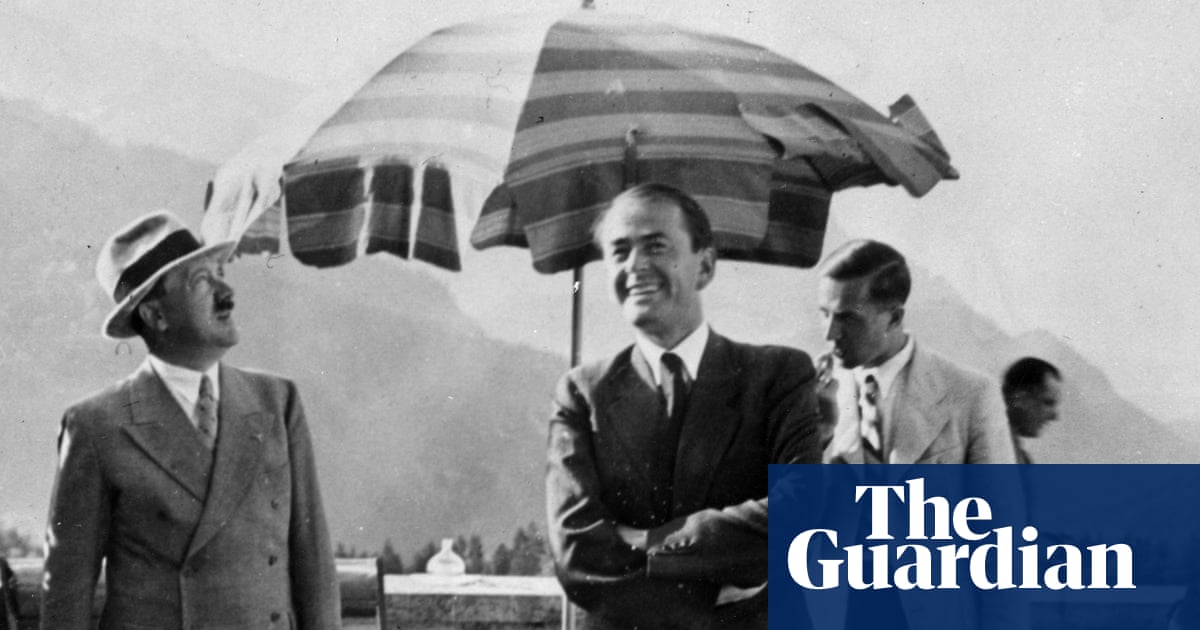

In April 1975, Simon Wiesenthal, a Holocaust survivor renowned for his tireless pursuit of Nazi war criminals, known colloquially as the “Nazi hunter,” reached out to Albert Speer, a prominent war criminal from the Nazi regime. In his letter, Wiesenthal expressed gratitude for a psychology book that Speer had sent him and included a copy of the French version of his memoir. Over the course of a decade, their correspondence included holiday greetings and birthday wishes, concluding with a heartfelt message from Speer’s widow, Margarete, after his passing in 1981, highlighting the significance of their friendship to him.
The connection between Wiesenthal and Speer mirrored the widespread, albeit somewhat superficial, acceptance that Speer experienced as a public intellectual following his release from Spandau prison in 1966. Despite having served as the minister of armaments during Nazi Germany and being convicted of crimes against humanity, Speer was promoting a new book on the BBC in London at the time of his death.
Speer’s reintegration into society was a complex act of deception. At the Nuremberg trials, he uniquely accepted full accountability for the Nazi regime’s actions and, in subsequent writings and interviews, claimed ignorance of the extermination camps. This façade of moral clarity enabled him to convincingly mislead many, including Wiesenthal, who later recognized that he had been misled. Until the truth was unveiled posthumously, Speer successfully established himself as an authority on Adolf Hitler’s character and motivations.
The intricate relationship between Speer and Hitler serves as the focal point of Jean-Noel Orengo’s unconventional novel, You Are the Führer’s Unrequited Love. The narrative explores Speer’s dual existence as both Hitler’s personal architect and a model of the “good Nazi”: articulate, remorseful, and less monstrous than his contemporaries. Rather than functioning as a traditional biography with exhaustive research, Orengo’s work presents a character study that examines how Speer adeptly manipulated powerful figures, including Hitler and his post-war victors, to shape his own image.
This narrative also unfolds as a complex love story, as indicated by the book’s title, which references a remark made by an SS officer to Speer. Though historians do not take this statement literally, it encapsulates the intense and tumultuous nature of the bond between Speer and Hitler. The book commences with their initial encounter and chronicles Speer’s rapid rise from a young stage designer to the minister of armaments within a decade. The narrative flows through various archetypal scenes, showcasing the evolving intimacy, tension, and reconciliations between the two figures, culminating in their final separation in Hitler’s bunker shortly before the latter’s demise. Orengo is less focused on the specifics of their interactions and more on the psychological dynamics at play. Each man embodied qualities that the other desired: Speer, renowned for his striking looks, provided a connection to the arts and the validation of the German cultural elite, which Hitler envied, while Hitler offered Speer a path to fulfill his ambitious aspirations.
The exploration of Speer’s life continues in the second half of the book, where Orengo portrays him as a “merry widower.” This section delves into Speer’s relationship with writer Gitta Sereny, a former French resistance member who initially approached him for an interview for the Times and subsequently became a somewhat skeptical witness to his purported sincerity. Orengo skillfully illustrates how Speer adeptly navigated Sereny’s hopes and desires, transforming his persona to maintain his public success.
Sereny’s book on Speer is titled His Battle with Truth, and truth emerges as a central theme in Orengo’s narrative, which itself is a story intertwined with deception. In the concluding chapter, Orengo reflects on the political implications of literary forms underlying You Are the Führer’s Unrequited Love. He argues that Speer’s various retellings of his life represent history’s most significant instance of autofiction, revealing how Speer recognized that “celebrity operates very much beyond good and evil,” manipulating facts to enhance his notoriety. Orengo interprets Speer’s journey as a cautionary tale about the dangers faced by a society when it blurs the line between reality and fabrication—a prescient warning relevant to the contemporary post-truth landscape. “When you recognize that,” Orengo muses, almost as a refrain, “pessimism is the only wisdom.”
Perfection by Vincenzo Latronico is available from Fitzcarraldo, while You Are the Führer’s Unrequited Love by Jean-Noël Orengo, translated by David Watson, is published by Penguin Classics (£14.99). To support the Guardian, you can order your copy at guardianbookshop.com.