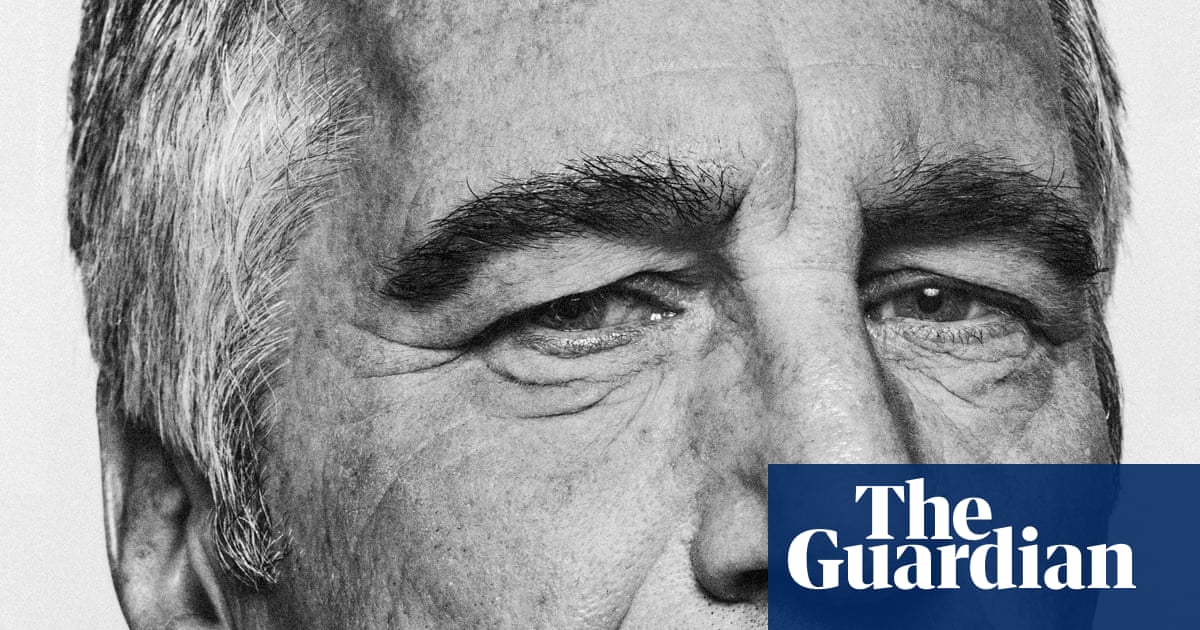

Christopher Anderson was not particularly surprised to discover his name appeared in the Epstein files. In 2015, he was tasked by New York magazine to capture photographs of the American financier for a piece that journalist Michael Wolff was set to write.
Anderson admitted that he had no prior knowledge of Jeffrey Epstein’s background. He often approached his photography assignments without extensive research into the subjects. Unbeknownst to him, Epstein was a convicted sex offender, having been sentenced in 2008 for soliciting prostitution from a minor, for which he served 13 months in a Florida jail. Anderson recalls thinking, “This man is wealthy and influential, connected to other powerful individuals.”
Epstein insisted on a preliminary meeting, which Anderson believes was meant to evaluate him and negotiate the purchase of photo rights for $20,000. Anderson describes Epstein as a “rather unsettling individual,” who employed intimidation tactics to convey his power. “He wanted to make it clear that he was someone you wouldn’t want to oppose,” Anderson said.
The photo shoot took place at Epstein’s residence in New York City, where one room featured a taxidermied tiger. Anderson described Epstein as having an eerie demeanor and peculiar taste in home decor reminiscent of Donald Trump. Other observations he made during the visit, such as a young woman with an Eastern European accent answering the door and dismantling a massage table, have taken on a more troubling significance over time.
Ultimately, the article for the magazine never materialized. Anderson reported that Epstein began demanding the photographs, leading to email exchanges that are now part of the 3.5 million pages released by the U.S. Department of Justice. The correspondence reached a point where Epstein sent a man named Merwin—described by Anderson as “very large with very large, black leather-gloved hands”—to his studio in an apparent attempt to intimidate him and retrieve the hard drive containing the images.
Recently, Anderson found copies of the photos he had saved on another hard drive. One particular image taken inside Epstein’s mansion displays a printed email on a desk, which seems to indicate a claim for $60,000 in unpaid wages owed to staff members connected to Andrew Mountbatten-Windsor and Sarah Ferguson. The documents suggest that the former royal couple sought Epstein’s help, possibly requesting that he cover the outstanding payment. “I took a few photos in his home,” Anderson noted. “I wish I had captured many more.”
These photographs are now included in Anderson’s latest publication, “Index,” which showcases a diverse portfolio spanning 30 years. This collection features impactful images from locations such as Haiti and Afghanistan, street photography from China, family vacations, and notable public figures, including Donald Trump and his inner circle.
Born in 1970 in Kelowna, British Columbia, Anderson spent his formative years in Abilene, Texas. In 1999, he joined journalist Michael Finkel on a small boat carrying 44 Haitian refugees attempting to reach the United States. The boat began to sink, but they were rescued by the U.S. Coast Guard. The photographs he captured during this harrowing experience earned him the Robert Capa Gold Medal in 2000 and opened doors for his work in conflict zones, including Afghanistan, Gaza, Lebanon, and Iraq. “As a photographer, my goal is to document the most compelling aspects of my time on this planet,” he stated.
Now residing in Paris, Anderson primarily focuses on celebrity portraiture, working with names like George Clooney, Jeremy Allen White, and Rosalía for magazines, while also pursuing personal projects, including filmmaking. When Vanity Fair approached him to photograph Trump’s White House team, he initially assumed they wanted a glamorous portrayal, leading him to decline the assignment. He only accepted when they clarified that they wanted him to adopt a journalistic approach. Despite the controversy, he felt it was important to accurately depict his experiences. “That is the role of a photographer,” he asserted.
When asked whether his journalistic duty would extend to photographing known sex offenders, many photographers might refuse such an assignment. However, Anderson expressed that he would accept a similar opportunity with Epstein if he were alive today. “I believe it is my responsibility to create an image that reveals something significant about that individual,” he remarked. “That is what I am trained to do.”
In discussing his portrait of Epstein, Anderson explained that it captured a moment where the financier’s gaze conveyed intimidation rather than celebrity allure. “I aimed to create a portrait that offered insight into his character,” he said.
One of his notable works features the Staten Island Ferry, illustrating themes of immigration and the American experience amid contemporary complexities. Anderson described the challenge of capturing group shots, especially with the pressure associated with photographing prominent figures within Trump’s inner circle.
Reflecting on his experience in Haiti during a time of political turmoil, he recounted a moment of violence in a market that led to a fire. “I worked extensively in Haiti,” he said, “and this image symbolizes the reality of life there during that turbulent period.”