
Welcome to this week’s overview of federal politics, where we bring you the latest developments from Parliament House, presented by Courtney Gould.
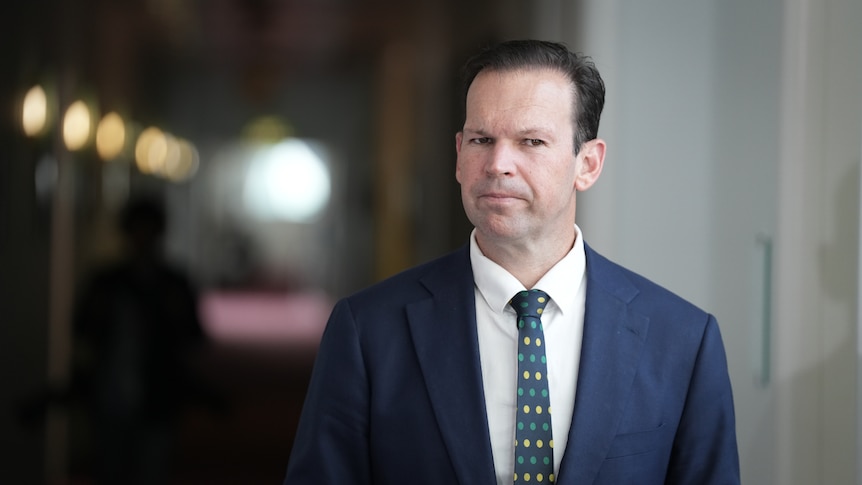
Shortly after Matt Canavan assumed leadership of the Nationals, he updated his Facebook profile picture. The previous four-year-old image, which depicted him at a local rally for a ring road, was replaced with a more lighthearted photo of him wearing Pit Viper sunglasses at a local Conservative Political Action Conference (CPAC) event. This new image reflects a nostalgic nod to the culture of 1990s Australia.
Canavan humorously acknowledged this throwback style, attributing the sunglasses to a gift from his children. While he dismissed the idea of reverting Australia to the 1950s, he suggested that revisiting the 1990s might not be entirely unwelcome.
Since taking the helm, Canavan has achieved several notable victories. The Coalition has abandoned its commitment to net-zero emissions, and the Nationals have created discord within the Coalition by opposing the government’s proposed hate speech legislation, all while transitioning from the backbench to a leadership role.
At a National Press Club address, Canavan reflected on his journey, stating, “You wouldn’t have believed I could turn opinions on net zero. I was seen as a fringe figure, yet now even the Prime Minister avoids the term.”
Continuing his opposition to the net-zero climate goal, Canavan has rebranded his vision as “hyper Australia,” a name reportedly inspired by one of his sons, and referred to it as “Australia on steroids.” He believes that enhancing affordability in Australia requires a return to a “pioneer spirit,” advocating for increased domestic oil and gas production, a push for higher birth rates, and the implementation of tariffs. He also suggested that looking towards space exploration could be beneficial.
Canavan is now facing his first significant challenge as leader. His initial test will come in the upcoming Farrer by-election, where Pauline Hanson’s One Nation party may outperform both Coalition parties.
His economic perspective appears to diverge from that of Angus Taylor, the opposition leader, who has not publicly acknowledged these differences. Canavan’s stance aligns more closely with Andrew Hastie, who recently faced criticism from Taylor for straying from party lines during a media interview. Both Canavan and Hastie aim to communicate directly with voters, avoiding the political jargon typically associated with figures like Taylor and Prime Minister Anthony Albanese.
Meanwhile, former Greens MP Max Chandler-Mather has resurfaced this week after a period of relative obscurity following his defeat in the Brisbane seat of Griffith. He is relaunching the Greens Institute, intended as a counterpart to Labor’s Chifley Research Centre and the Liberal-aligned Menzies Research Centre, with an emphasis on policy development.
As the cost of living continues to rise, public sentiment is understandably discontented. The ongoing conflict in Iran and the resulting fuel crisis have exacerbated these concerns. In response, Prime Minister Albanese has accelerated plans for a trip to Singapore, aiming to strengthen ties with one of Australia’s major fuel suppliers. The Australian government is also working to assist local refiners, Ampol and Viva, by securing additional oil shipments through newly granted powers to cover any financial losses they might incur.
While the government is hesitant to speculate on future developments or the potential longevity of the ceasefire, it has indicated that this uncertainty will delay the finalization of the budget.
In a shift regarding its stance on former President Trump, the government has begun to address the rising tensions more openly. Previously, it avoided commenting on Trump’s social media remarks concerning Iran. However, as the situation escalated, Albanese publicly called for Trump to clarify his objectives. By Wednesday, he characterized Trump’s threat to annihilate a “whole civilization” as “inappropriate” and “extraordinary,” marking a rare direct criticism of a U.S. president during wartime.
The government is aware of the prevailing negative sentiment towards Trump among voters and seeks to emphasize that any economic difficulties are not attributable to Labor’s policies. Treasurer Jim Chalmers remarked, “These decisions were made in the Situation Room in Washington, while Australians are at home trying to manage their budgets.”
While Labor may currently be insulated from backlash, the lessons learned from the pandemic emphasize the importance of remaining vigilant in the face of shifting public opinion.