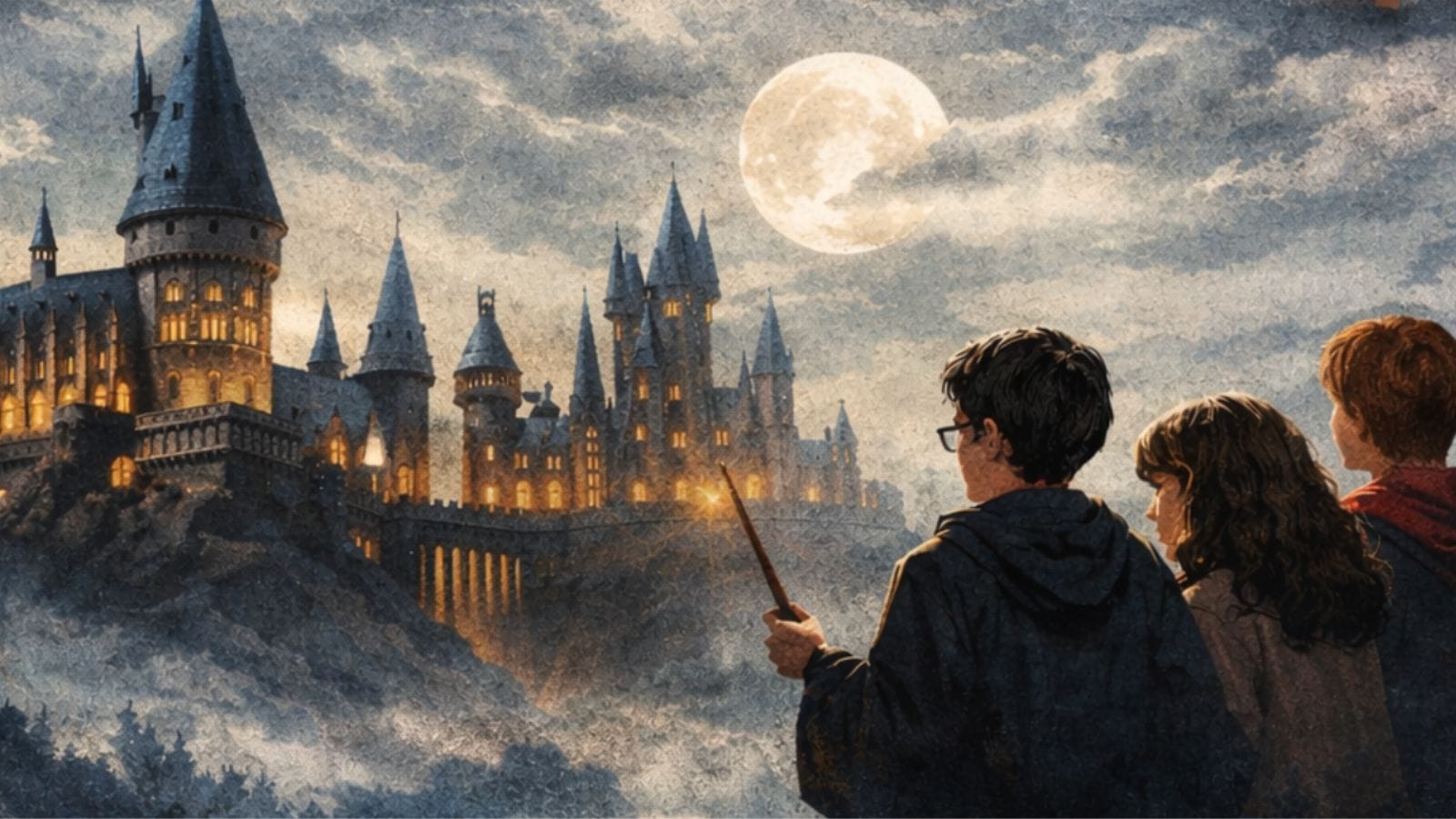

The recent unveiling of the new Harry Potter trailer elicited an immediate and largely unfavorable response, with calls for a boycott surfacing among some viewers. This reaction raises an interesting question: can we truly judge the overall quality of an entire series based solely on a two-minute preview?
Central to this backlash is a sense of nostalgia. The original Harry Potter films are undeniably iconic and have left a lasting impression. However, does this sentiment imply that the books cannot be reimagined? The forthcoming series aims to adhere more closely to the original material and delve into aspects that the films may have overlooked. Not every individual has read the books, and many may never do so. For this audience, the series presents an opportunity to explore the universe in a more expansive manner, while longtime fans may discover new dimensions to appreciate.
This scenario is not new; every adaptation faces skepticism initially but often finds its audience over time. Just as with adaptations like A Star is Born and Dune, new interpretations do not replace the originals but rather coexist, frequently altering how future generations relate to the narrative. Audience reactions can be unpredictable, and they seldom hinge solely on trailers.
Complicating matters further is the controversy surrounding JK Rowling and her views on the transgender community, which have faced substantial criticism—criticism that is entirely warranted. For many, engaging with the Harry Potter franchise has become uncomfortable and even contradictory.
However, the situation becomes intricate when considering the franchise’s deep-rooted presence in popular culture. The books, films, and merchandise remain prevalent, often without facing the same level of scrutiny. Although it may seem reasonable to draw a line at the new series emotionally, it underscores the challenge of disentangling the art from its creator in practice.
There is no straightforward resolution to this dilemma. For some, stepping away from the franchise is essential; for others, the connection to the story proves difficult to sever. Both perspectives can coexist.
Moreover, some of the backlash reveals inconsistencies. The discussions advocating for inclusivity often contradict themselves, particularly regarding diverse casting choices that include actors of color. If inclusivity is to be upheld as a principle, it must be applied uniformly.
This reaction ultimately highlights our propensity to jump to conclusions. Before a work has had the opportunity to fully unfold, many have already formed their judgments. I am not asserting that the series will be good or bad, as I have yet to see it. That is, in fact, the crux of the matter.
The notion that “magic cannot be replicated” seems restrictive. While it may not take the same form, why should it? As millennials who grew up with the franchise, we have already experienced that particular brand of magic. It remains with us, irrespective of what lies ahead. A new adaptation does not erase the previous one; it simply exists alongside it. Life moves forward, allowing for the creation of new memories without diminishing the value of the old ones.
In conclusion, the argument that nothing can rival the original feels hasty, particularly when based on a brief trailer. The original Harry Potter films were groundbreaking in their time, and their legacy remains intact.
One can cherish the significance of the original while also embracing the potential for something new. The two are not mutually exclusive.