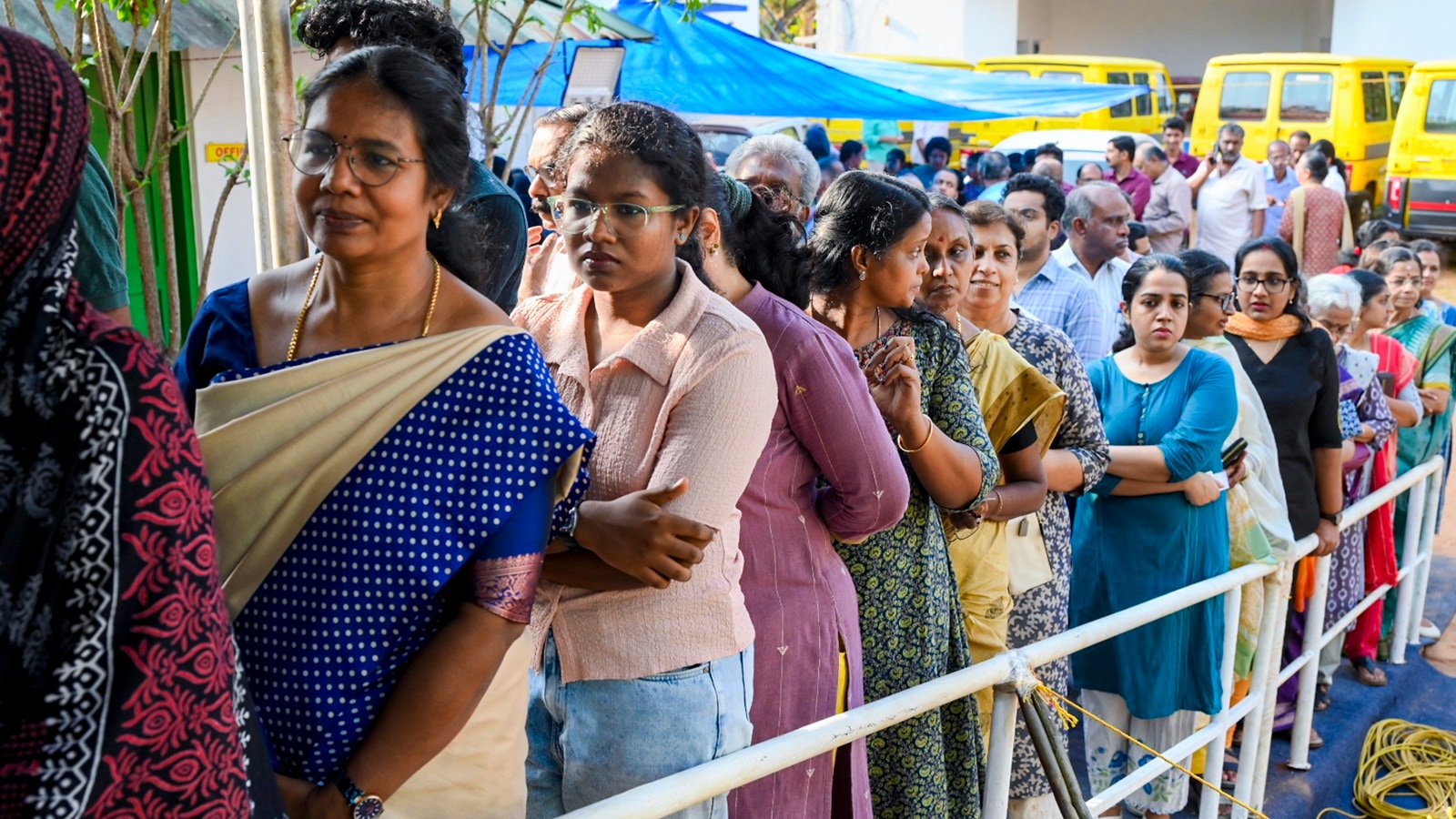

The Kerala High Court has decided against issuing specific directives regarding security measures for the ongoing assembly elections in the state, instead emphasizing that the Election Commission of India (ECI) must proactively monitor and take necessary actions to ensure the elections are conducted fairly and freely.
Justice Bechu Kurian Thomas presided over a hearing involving seven petitions that expressed apprehensions about potential violence, booth capturing, and voter intimidation affecting candidates, polling agents, and voters. The petitioners were requesting police protection, the deployment of security forces, and various monitoring measures to safeguard the electoral process.
The court stated on April 7 that there was no need for specific instructions, reiterating that the ECI is responsible for ensuring that elections are conducted in a manner that fosters voter confidence and encourages participation. The court acknowledged that the majority of claims made by the petitioners were general and did not present specific scenarios that warranted judicial intervention. It also noted that the ECI had already implemented extensive measures to mitigate any potential threats and enhance transparency.
The high court highlighted that the assurances provided by the ECI, which included the deployment of armed forces, adequate police personnel, and the installation of web cameras at all polling stations across Kerala, were satisfactory given the circumstances. Additionally, the court pointed out that webcasting had been introduced at polling locations statewide, rendering some of the petitioners’ requests unnecessary.
In instances where specific threats were mentioned, such as one involving a candidate in Taliparamba, the court confirmed that police protection had already been arranged to address those concerns.
The seven writ petitions were submitted by a diverse group of candidates, election agents, and political officials associated with various constituencies in the assembly elections. This group included independent candidates (some with support from political alliances like the United Democratic Front), a Left Democratic Front convener, chief election agents, and polling agents from constituencies including Payyannur, Taliparamba, Nadapuram, Trikaripur, and Ambalappuzha. They raised concerns about safety and sought security enhancements to ensure that the elections were conducted properly.
The petitioners raised allegations of potential electoral violence, booth capturing, voter impersonation, and intimidation of voters and agents. Some requests included the deployment of Central Armed Police Forces (CAPFs), installation of surveillance cameras in sensitive polling booths, and improved monitoring systems.
One independent candidate, who had shifted political alliances prior to the elections, claimed he faced a direct threat to his safety. Other petitioners referenced a history of violence and unusually high voter turnout in specific booths as indicators of possible electoral misconduct.
The ruling reinforced the plenary powers of the ECI under Article 324 of the Constitution, which grants it the authority to oversee, direct, and control the electoral process. The court noted that once elections are underway, decisions regarding police and central force deployment are the responsibility of the ECI.
In response to the concerns raised, the ECI presented comprehensive plans detailing the extensive security measures already enacted, including vulnerability assessments, identification of critical polling sites, deployment of micro observers, and webcasting across polling stations.
The ECI also mentioned that CAPFs and state armed police had been dispatched according to assessments made on the ground, with additional measures like route marches, patrolling, and initiatives to build public confidence being conducted in sensitive areas.
Moreover, various mechanisms such as flying squad teams, static surveillance teams, and enforcement units for the model code of conduct were actively monitoring election-related activities to prevent any violations.
The judgement referenced an earlier case, Reghunath K M vs Inspector General of Police, which underscored the ECI’s obligation to take decisive actions to ensure that voters can exercise their rights without obstruction. Reiterating this principle, the court deemed that the assurances from the ECI in this instance were adequate, especially given the detailed security framework outlined.
Ultimately, the court concluded that there were no extraordinary circumstances justifying judicial interference, dismissing all seven writ petitions while reinforcing the ECI’s responsibilities. This ruling underscores the need for judicial restraint in electoral matters and bolsters institutional confidence in the ECI’s capability to manage the complexities of election logistics and security challenges.
Vineet Upadhyay serves as an Assistant Editor at The Indian Express, where he oversees specialized coverage of the Indian legal system.