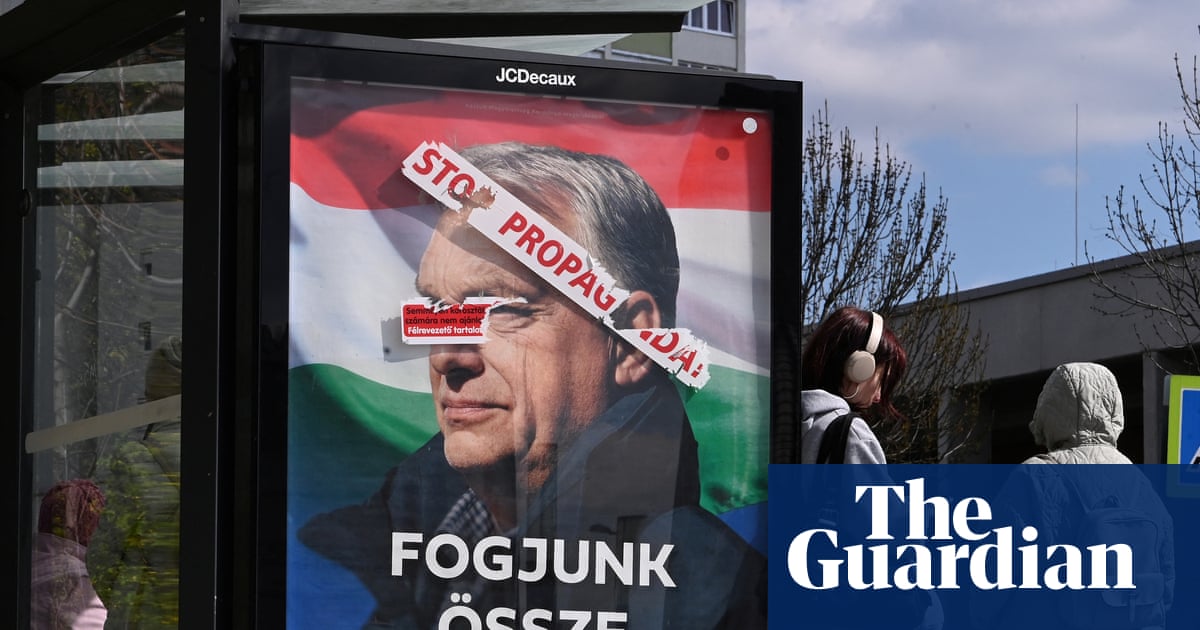

Despite years of criticism from Hungary’s nationalist and illiberal prime minister, Viktor Orbán, a significant majority of Hungarian citizens support their country’s membership in the European Union. Recent polling indicates that many voters, including those who typically back Orbán, are advocating for a new strategy in Hungary’s relationship with Brussels.
As Hungary approaches elections where Orbán, who has portrayed the EU as a foe to the Hungarian populace, faces the possibility of losing power after 16 years, a survey conducted by the European Council on Foreign Relations (ECFR) has revealed a strong desire for a shift in the nation’s engagement with the EU. The poll found that 77% of respondents favor EU membership, 75% express trust in the bloc, and 68% seek changes in Hungary’s EU policies.
Orbán has been at odds with the EU over various issues, including judicial reforms, migration policies, LGBTQ+ rights, and aid to Ukraine, leading to the suspension of billions of euros in EU funding. While EU leaders have largely refrained from commenting on the upcoming elections to avoid accusations of interference, Orbán’s prominence as a far-right figure makes this election particularly significant for the EU.
The desire for a new approach is most pronounced among supporters of Péter Magyar, the center-right challenger, who is leading Orbán’s Fidesz party in recent polls by a substantial margin. Among Magyar’s supporters, 91% expressed a need for change, while nearly half (45%) of Fidesz voters also indicated a desire for a reset in relations with the EU.
Support for continued EU membership remains strong among Fidesz voters, with 65% in favor, and 64% expressing trust in the bloc. Additionally, a notable minority (43%, compared to 66% overall) support Hungary adopting the euro. The survey results suggest a disconnect between the prevailing sentiments of the Hungarian populace and Orbán’s portrayal of the EU, indicating that the next government could pursue a markedly different strategy regarding EU relations.
Researchers from ECFR noted that the findings reveal that most Hungarians do not align with Orbán’s view of the EU as an adversary, nor do they consistently echo his grievances and preferences.
However, the poll also highlighted that many voters prioritize domestic issues over EU relations. Among Tisza voters, 40% cited a desire for change as their primary reason for voting, while 27% of Fidesz supporters mentioned “peace and security” as their main concern. When identifying the most pressing issues facing Hungary, Tisza voters predominantly pointed to corruption and governance (31%), public services (18%), and inflation (17%). In contrast, Fidesz supporters highlighted energy security (22%) and inflation (20%) as their top concerns.
Conducted between March 26 and April 1, the survey indicated that Orbán’s confrontational stance towards the EU has not galvanized his supporters as effectively as his rhetoric against Ukraine. Tisza voters view Ukraine as a partner rather than an adversary, diverging from Fidesz supporters’ perspectives, yet both groups exhibit skepticism regarding future financial aid for Ukraine and its EU membership aspirations.
While a majority (57%) of Tisza supporters desire a markedly different strategy regarding the ongoing conflict in Ukraine, their views on specific policies do not diverge significantly from those of Fidesz voters. For instance, 85% of Fidesz supporters reject further financial assistance to Ukraine, while Tisza voters are more divided (48% in favor, 45% opposed). Similarly, while 83% of Fidesz voters oppose Ukraine’s EU membership, Tisza supporters are split (50% in favor, 40% opposed).
Significant differences emerge in how each group perceives Russia, with only 6% of Fidesz supporters viewing Moscow as a threat, compared to 40% of Tisza voters. These disparities are also evident in other foreign policy issues.
Overall, the authors of the survey suggest that should Tisza win, Hungary may adopt a more cooperative stance towards the EU. However, they caution that the country may not fully overhaul its foreign policy, particularly regarding Ukraine, due to potential divisions among Tisza supporters and lingering negative sentiments among the broader Hungarian population.
The authors urged EU partners to temper their expectations for a radical shift in Hungary’s foreign policy and emphasized the necessity for the new government to first address domestic issues before engaging in a constructive dialogue with European leaders about future relations.